
A joke can reveal more about a society than the person telling it.
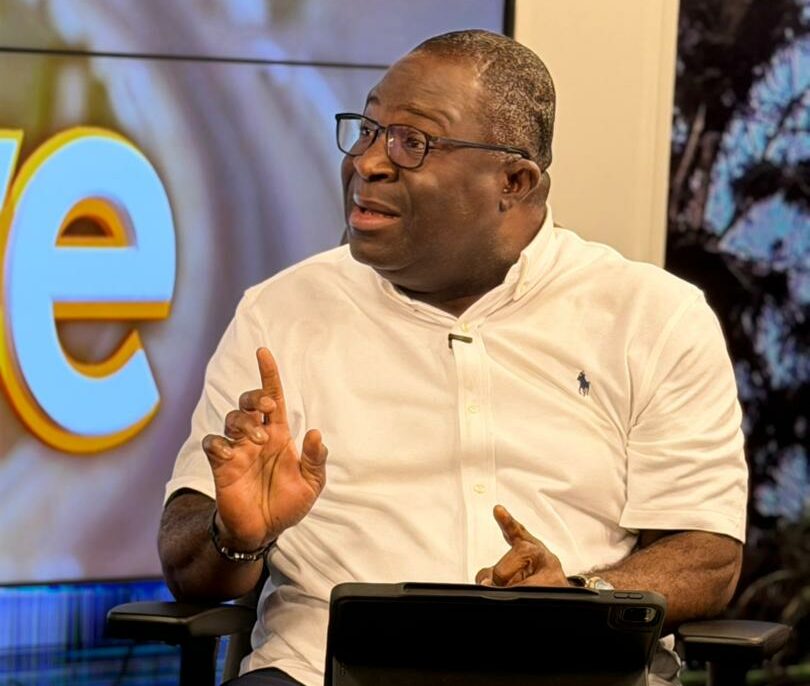
During a recent appearance on Onua Maakye, former Subin Member of Parliament and aspiring General Secretary of the New Patriotic Party (NPP), Eugene Boakye Antwi, made a campaign promise to delegates.
According to the aspirant, if elected General Secretary, he would provide each constituency with GH₵5,000—and possibly more.
In an apparent attempt to demonstrate the seriousness of his commitment, he declared:
“I, Yaw Boakye Antwi, promise to give each constituency GH₵5,000 and even more.”
He indicated that this amount will be used to manage the party at the grassroots level.
He then reportedly added:
“If I am unable to deliver on this promise, call me Yaa Boakyewaa.”
Perhaps it was intended as humour. Perhaps it was a familiar expression delivered without much thought. But that is precisely the problem with much of our public discourse: some of the most damaging stereotypes survive because we have become accustomed to treating them as harmless jokes.
I do not believe every careless statement must become a national scandal. Neither do I suggest that every public figure who makes an unfortunate remark is irredeemable. But public language deserves public scrutiny—especially when it is spoken by individuals seeking influential positions in political parties and government.
The question, therefore, is simple: what does it mean when being called a woman becomes a metaphor for failing to keep one’s promise?
The Stereotype Hidden in the Joke
Language is never entirely innocent.
Words carry history, culture and assumptions. They shape how we understand ourselves and how we perceive others.
When femininity is casually invoked as a symbol of unreliability, weakness or failure to honour a commitment, it reinforces an unfortunate stereotype about women—even if the speaker did not consciously intend to do so.
That is why we must learn to interrogate language beyond the intention of the person speaking.
The impact matters too.
For decades, women have had to fight against the suggestion that they are too emotional to lead, too weak for politics, too indecisive for positions of authority or too unreliable to be entrusted with major responsibilities.
These stereotypes do not always appear in formal speeches or official policies. Sometimes, they survive in jokes. Sometimes, they are hidden in everyday expressions. And because they are familiar, we rarely stop to question them.
But familiarity does not make prejudice harmless.
Would We Say the Same About an Ethnic Group?
Let us consider the issue from another perspective.
Would Mr Boakye Antwi—or any Ghanaian public figure—be comfortable if someone said:
“If I fail to fulfil my promise, call me an Asante.”
Such a statement would immediately attract criticism because it would appear to attach a negative trait to an entire ethnic group.
So why should the same logic not apply when the negative comparison is made using womanhood?
If we recognise that ethnic stereotyping is problematic, then we should also recognise the dangers of gender stereotyping.
Respect for one group cannot exist alongside the casual degradation of another.
Where Was the Necessary Interrogation?
The media also has a responsibility in moments like this.
A television studio is not merely a platform where politicians are given unlimited freedom to speak without challenge. Journalism requires interrogation. It requires follow-up questions. It requires context.
When a public figure makes a statement that may reinforce a harmful social stereotype, the interviewer has every right—and, arguably, a professional responsibility—to ask:
“What exactly do you mean by that?”
A simple question can create an opportunity for clarification, reflection or even a retraction.
Unfortunately, problematic statements sometimes pass without challenge because they are considered normal expressions within our culture.
But journalism must do more than reproduce what politicians say. Journalism must examine the ideas behind what they say.
Political Communication Is Not a Comedy Stage
Politics is serious business.
Political communication is even more serious.
The words of political leaders shape public attitudes. Their expressions become campaign slogans. Their jokes are repeated by supporters. Their prejudices—whether conscious or unconscious—can become part of the political culture.
This is why those who seek public office or influential party positions must exercise greater responsibility.
A politician cannot demand the confidence of the public while treating public communication as an arena where anything can be said without consequence.
Freedom of expression does not mean freedom from accountability.
We should be able to criticise a statement without being accused of attacking the person who made it.
That distinction is important.
This is not an attack on Eugene Boakye Antwi as an individual. It is an interrogation of a statement and the broader social assumptions that such language may reinforce.
Women Are Not a Metaphor for Failure
Women have kept promises.
Women have built institutions.
Women have governed nations.
Women have managed businesses, communities and families under circumstances that many of their male counterparts would find difficult to navigate.
To reduce womanhood to a metaphor for unreliability is therefore not only unfair—it is intellectually lazy.
Women are not less capable because they are women.
They are not less trustworthy because they are women.
They are not less qualified to lead because politics has historically been dominated by men.
The question Ghana must continue to ask is this: what would our politics look like if women were given the same access, opportunities and institutional support that men have historically enjoyed?
Perhaps we would discover that many of the qualities we claim are necessary for political leadership—resilience, negotiation, discipline, empathy and courage—are qualities women have demonstrated throughout history.
The problem has never been a lack of competent women.
The problem has often been a political system that does not create enough room for them.
Democracy Demands Inclusion
As a journalist with a background in Political Science and Development Communication, I understand that communication is not simply about transmitting information.
Communication constructs social realities.
It can empower communities.
It can legitimise institutions.
It can encourage participation.
But communication can also exclude, stigmatise and dehumanise.
Ghana’s democratic project cannot be reduced to the act of voting every four years. Democracy also requires meaningful participation, representation, access and inclusion.
How inclusive is our politics if women continue to be represented through stereotypes?
How accessible is political leadership to young women when public discourse repeatedly suggests—directly or indirectly—that femininity is incompatible with competence and reliability?
And how can we encourage more women to enter politics if the language of politics itself sometimes becomes hostile to their dignity?
These questions matter.
We Must Raise the Standard
It is time for Ghana to raise the standard of political communication.
Our politicians must become more conscious of the words they use.
Our journalists must become more willing to interrogate problematic statements.
And the public must learn to distinguish between criticism and hostility.
Calling attention to a sexist or gender-biased remark is not an attempt to cancel anyone.
It is an invitation to do better.
Political leaders are human beings. They will make mistakes. They will occasionally say things they later regret.
But leadership requires the humility to reflect, learn and, where necessary, apologise.
That is not weakness.
That is maturity.
If Ghana is serious about building an inclusive democracy, then we cannot continue to excuse every harmful expression simply because it has become culturally familiar.
Some traditions deserve preservation.
Some expressions deserve reconsideration.
And some jokes are worth questioning.
Because when womanhood becomes a punchline, women are not the only ones diminished.
Our political discourse is diminished too.
By Ishmael Oduro-Acheampong