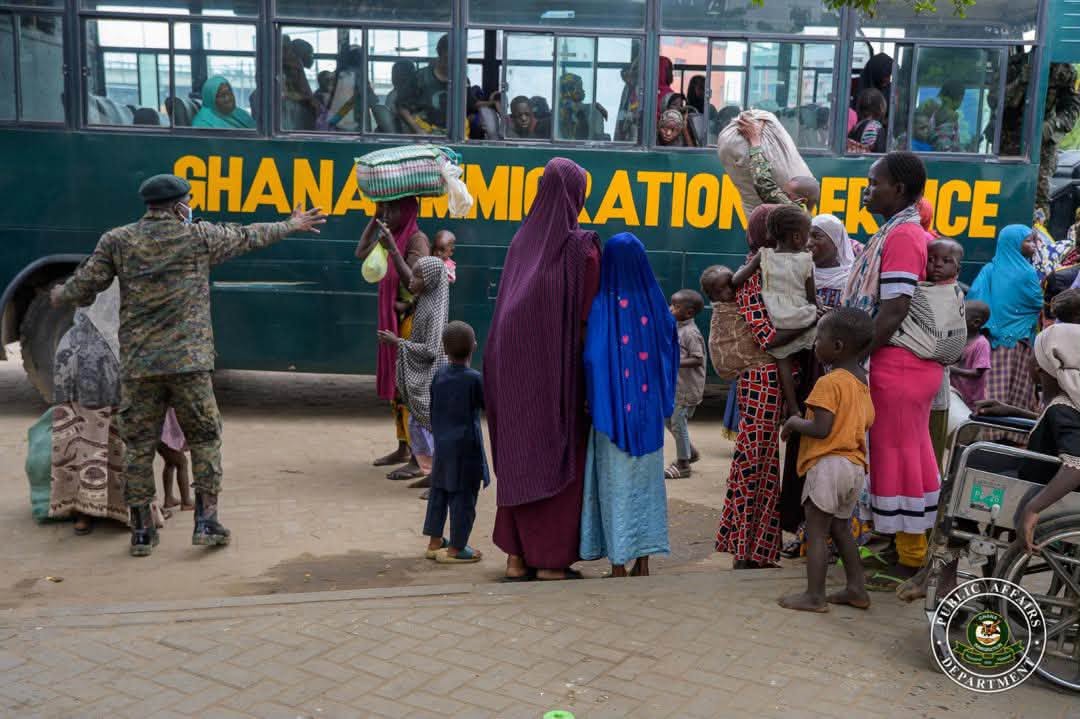

The Ghana Immigration Service (GIS) has apprehended 1,055 persons, including 662 children, in an intelligence-led operation targeting suspected human trafficking and exploitative street begging networks in the Greater Accra and Ashanti regions.
The operation, conducted in the early hours of Saturday, August 29, 2026, targeted alleged criminal syndicates suspected of using organised begging as a cover to traffic, control and exploit vulnerable foreign nationals, particularly women and children.
According to a press release issued by the GIS, the operation focused on several hotspots across Accra, including Abossey Okai, Sabon Zongo, Madina Zongo Junction, Madina, Ashaiman and Tema.

In the Ashanti Region, the exercise covered major areas within the Kumasi Metropolis, including Asawase, Aboabo, Alabar, Akwatia Line, Dagomba Line, Sabon Zongo and Airport Junction.
The Immigration Service said more than 1,000 West African nationals engaged in suspected illicit activities were apprehended during the operation, while several Ghanaians were also identified as suspected local agents facilitating the exploitative begging networks.

Out of the 1,055 persons apprehended, 662 were children, 145 were men and 248 were women.
The GIS said the large number of children rescued underscores growing concerns over the trafficking and exploitation of minors for forced begging on Ghana’s streets.
The Service described the operation as part of its broader efforts to rescue victims, protect vulnerable persons and dismantle networks allegedly involved in human trafficking and exploitative street begging.

The GIS said investigations would continue to establish the identities of those behind the alleged networks and determine the appropriate action against persons found to have facilitated or participated in the activities.
All rescued individuals have been transferred to a designated holding centre for profiling and immigration processing in line with established protocols.
The Service said it is collaborating closely with relevant stakeholders including the Ministry of Gender, Children and Social Protection to ensure that victims, especially children, receive appropriate care, protection, and support throughout the removal process.
“This operation follows previous major enforcement actions and demonstrates the sustained commitment of the GIS to combating human trafficking, upholding immigration law, and safeguarding the dignity and rights of all persons within the borders of Ghana,” GIS stated.
GIS expressed serious concerns regarding the rising incidence of migrant street begging, which contravenes Section 2(1) of the Beggars and Destitutes Act, 1969 (NLCD 392), and Section 8(1)(b) of the Ghana Immigration Service Act, 2011 (Act 750).
In view of this, the Service has called for the cooperation and support of Metropolitan, Municipal, and District Chief Executives (MMDCEs) in sustaining the Service’s continuous efforts to clear the streets of migrant beggars.
The Comptroller General of Immigration (CGI) Samuel Basintale Amadu urged the public to refrain from giving alms directly to migrant beggars, especially children.
“Removing financial incentives reduces the profitability of organized begging and discourages traffickers from exploiting vulnerable persons on the streets,” GIS noted.
Members of the public who wish to support vulnerable individuals have been encouraged to channel their donations through the Department of Social Welfare, recognized children’s homes, credible NGOs, or other authorized charitable organizations.