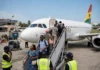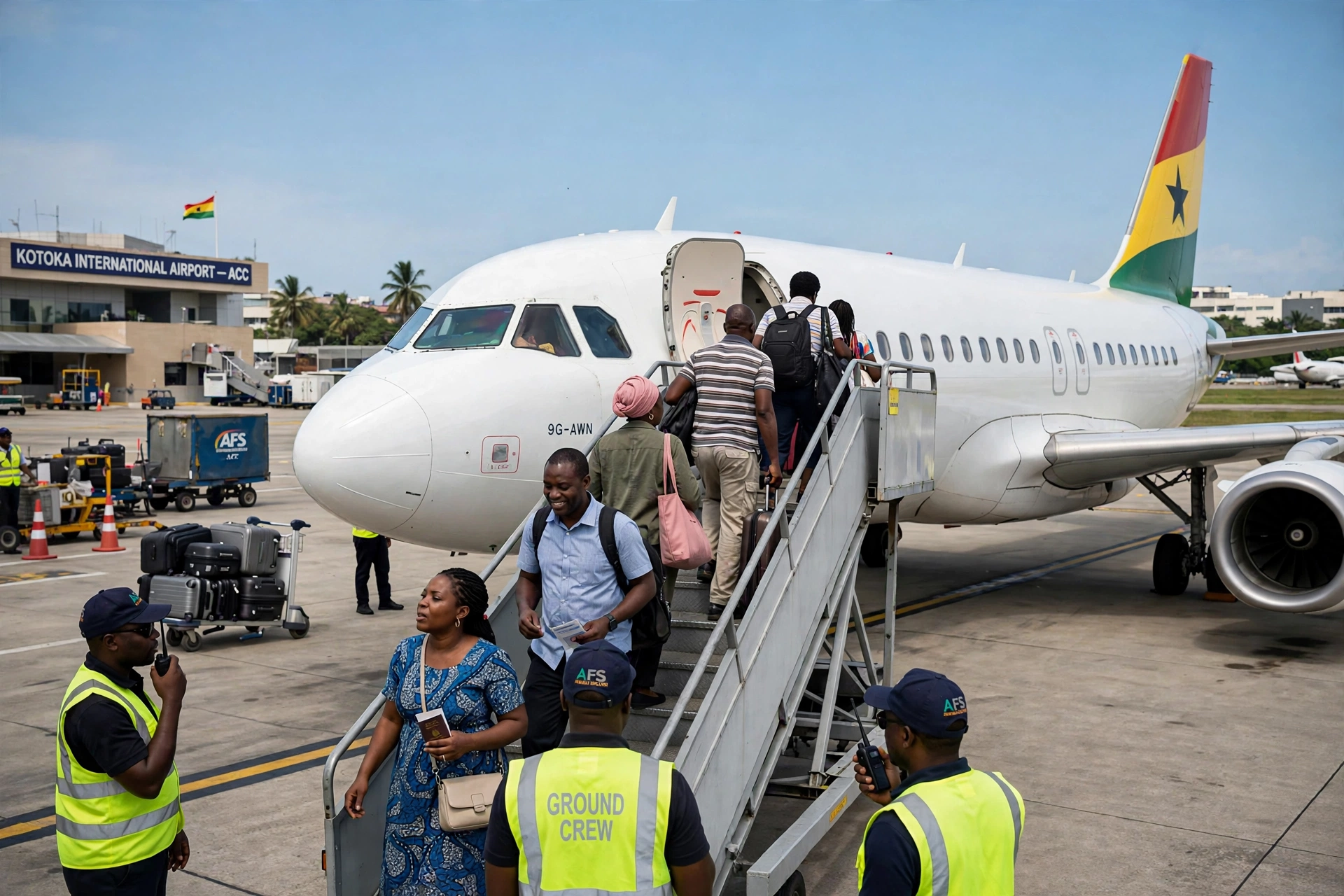

For a journey that takes less than an hour by air, travelers are increasingly asking whether flying within Ghana is becoming a luxury.
A return ticket between Accra and Kumasi can now cost as much as GH¢5,000, according to recent reports — a sharp increase that has reignited debate over the cost of domestic air travel.
The concern comes at a time when some key economic indicators, including inflation and the exchange rate, have improved compared with 2024.
But passengers are now paying an additional cost.
Since April this year, a GH¢100 Airport Infrastructure Development Charge has been added to each one-way domestic journey.
While the charge adds to the cost of flying, industry players say it does not, on its own, explain the significant increases in airfares.
Airlines continue to contend with fuel, aircraft maintenance, leasing, insurance, staffing and other operational expenses.
Then there is the issue of competition.
Only two major carriers currently operate daily direct services on the Accra–Kumasi route, raising questions about whether limited competition is also contributing to higher fares.
For many travelers, the impact is already being felt.
“It has generally affected the volume of travelers using air travel. It’s still of a major concern because domestic air travel shouldn’t be something like a luxury.”
Another traveler said lower fares would make it easier for people to use air travel for business and tourism.
“It should be more affordable for everyone or should I say some group of people to be able to purchase air tickets to enhance their businesses and tourism among the regions. So, it’s still a major concern.”
For travel agents, the concern goes beyond expensive tickets. They want greater transparency about exactly what travelers are paying for.
The President of the Ghana Association of Travel and Tourism Agents, Mr Frank Anim-Bonsu said:
“It would be okay for everyone, especially as practitioners, to have some transparency in how the price buildup is. We cannot just conclude that the fares are just high and we should just accept that. But maybe if we look at the YQ tax, which stands for the fuel tax, the breakdown, I’m sure it will give us some understanding of why the fares are very high.”
Dr Dominic Andoh, an Aviation expert says, “It is the imbalance between demand and supply. We have too many domestic airline operators in the country at the moment. Africa World Airlines and Passion Air. There’s a lot of demand, but we don’t have a lot of available seats. So just like if you have 10 people chasing one particular commodity, what happens?
This is the same thing that’s happening. There are lots more people who want to fly, but we don’t have a lot of available seats on the market. Demand exceeds supply. For airlines, the key cost elements or cost lines are fuel, the importation of spare parts, the taxes they pay when they import spare parts, and then the general aviation operating environment.”
“So, what government can do is what we have done. One, it has waived or removed the taxes that domestic airlines would have paid if they import spare parts to fix their aircrafts. Two, the domestic passenger service charge is just about 100 cedis. It’s not much compared to the international service.
It hadn’t been increased for about a decade until recently when the law was amended. Three, they get some rebates in terms of flying to the domestic airports,” he stated.
The bigger question, therefore, may not simply be why domestic airfares have increased, but whether Ghana’s aviation market is competitive enough to bring them down.
The choice could increasingly come down to this: spend several thousand cedis to save a few hours or take the road.
By Enyonam Haligah