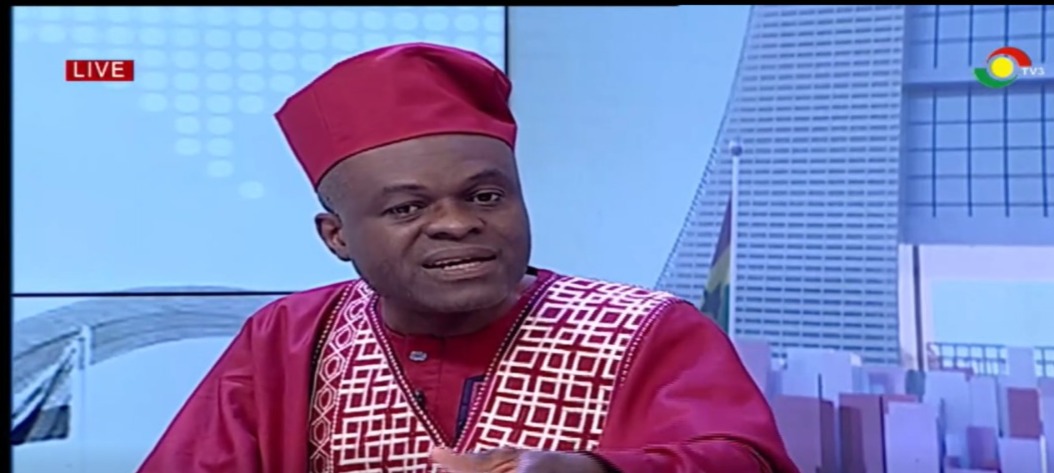

Private legal practitioner Martin Kpebu has argued that the Council of State can effectively function without a serving Chief Justice, citing the council’s history between 1993 and 2017.
Mr Kpebu said the Council of State operated for more than two decades without a Chief Justice, suggesting that the absence of one currently does not necessarily prevent the body from performing its constitutional functions.
“This is a council that functioned from 1993 to 2017 without a Chief Justice, so that tells you that usually the absence of a Chief Justice is not a problem,” he stated on TV3 Key Points, Saturday, September 12.
A Private Citizen, Samuel Bryan Buabeng has sued the State at the Supreme Court, seeking an order for a declaration that President John Dramani acted unconstitutionally for not up until now replacing former Chief Justice, Sophia Akuffo on the Council of State after her resignation in September 2025.
The writ filed on September 9, 2026 argues that per the dictates of Article 89(1) and (2)(a)(i), the President ought to have appointed a former Chief Justice to replace Sophia Akuffo after her resignation.
Although Kpebu viewed the absence of a CJ on the Council of State as not of a big issue, he, however placed more importance on the broader constitutional questions raised by the legal action, arguing that it provides an opportunity to renew calls for comprehensive constitutional reforms.
“Rather, what is good about this lawsuit is that it gives us the opportunity to once again drum home our humble plea that we should do a revolutionary constitutional amendment,” Mr Kpebu said.
According to him, the proposed reforms should strengthen the system of checks and balances by giving institutions greater counterweight to the powers of the Executive President.
“One that gives a lot of counterweight to the Executive President,” he added.
Mr Kpebu said the current constitutional framework gives the Council of State largely advisory functions and does not provide it with sufficient authority to override presidential decisions.
“Right now, the Council of State, if you look at Article 89, 90 thereabout, from the way it acts, it is an advisory council. It does not have strong powers to override the President,” he said.
He therefore cautioned against expecting the Council of State to exercise powers beyond those assigned to it under the Constitution.
“So such a body is not one we are looking forward to do some magic,” Mr Kpebu said.