
Northern Ashanti Mines Limited (NAML) has rejected claims by the Minerals Commission that its takeover of the company’s Konongo concession in the Ashanti Region was lawful, describing the Commission’s statement as loaded with “falsehoods, untruths and half-truths.”
The response comes after the Minerals Commission issued a press release on Tuesday, October 27, 2026, defending its decision to terminate NAML’s mining leases and prospecting licences.
In that release, the Commission said it had acted strictly in accordance with the Minerals and Mining Act, 2006 (Act 703) and the Minerals and Mining (Licensing) Regulations, 2012 (L.I. 2176).
According to the Commission, NAML, formerly Owere Mines, acquired a mining lease covering 595 cadastral blocks in January 2010 and owed outstanding Annual Mineral Right Fees (AMR) of US$8.33 million for the period 2010 to 2025, plus US$49,928 for prospecting licences from 2019 to 2025.
The Commission said it issued Notices to Remedy Breach on April 14, 2025, under Section 68(2) of Act 703 and Regulation 200(3) of L.I. 2176, but the company failed to comply. It also accused the company of failing to undertake meaningful mining operations for more than two years, contrary to Section 69(1) of Act 703.
The Commission said it subsequently notified the Minister for Lands and Natural Resources on April 7, 2026, obtained approval on April 24, and terminated the mineral rights on April 30, 2026. The termination was enforced on October 22, when officials of the Commission, accompanied by military personnel, entered the Konongo concession.
But in a press statement issued on October 27, NAML says the Commission’s account is inaccurate and driven by “an ulterior motive to destroy a Ghanaian company which has invested over two hundred million dollars (US$200,000,000) in a mine it took over in 2020.”
NAML’s Response:
On due process: The company denies that the Commission satisfied Section 68 of Act 703. It says no letter alleging a statutory breach was ever issued before the revocation. “The only letter received by the Company was the 30th April 2026 letter by which the Commission purported to revoke the Mining Lease and Prospecting License,” the statement said.
On indebtedness: NAML describes the US$8.332 million and US$49,000 claim as “extremely bizarre.” It says an audit communication from the Minerals Commission itself as recently as May 2026 pegged NAML’s total debt at about US$2.4 million, separate from a legacy debt of US$8.3 million standing in the name of Owere Mines, the previous operator. The company says it has paid over US$1 million to reduce its own arrears and had proposed time to clear the balance while it was building a gold processing plant and was not yet earning revenue, a proposal to which the Commission never objected.
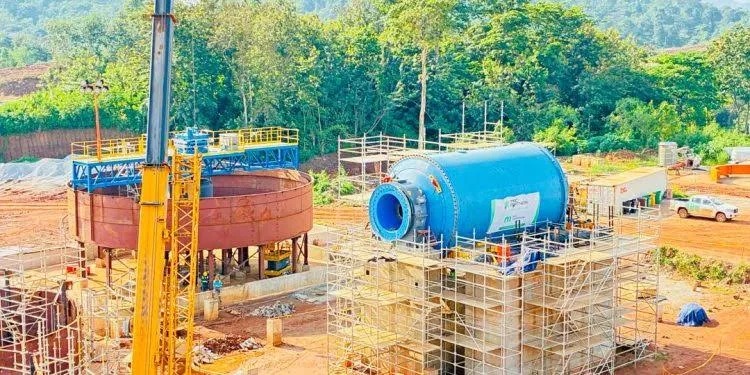
On mining activity: NAML rejects the claim that it has not undertaken meaningful operations for over two years. The company says responsible mining involves mine development and investment, and that the Minerals Commission itself granted permits for a new plant and for mining to stockpile ore, including two permits on February 7 and 17, 2026. It says it is currently running both day and night shifts with its mining fleet and that Commission representatives pay frequent visits to the site.
Court Action
NAML confirms it has resorted to the court to protect its investment and its ambition to build an indigenous Ghanaian mining company, as touted by President John Mahama. It says it observes “an emerging trend of horrible, unlawful takeovers of gold mining assets owned by Ghanaian enterprises and instigated or seemingly engineered by the Minerals Commission.”
The company, which says it employs about 400 workers, says it remains open to dialogue and a process “that will not sour the investment climate for mining in Ghana.”
The Minerals Commission, in its release, had said that the mining rights had reverted to the State without affecting NAML’s outstanding liabilities, and that it “shall pursue” the company for all sums owed. It also criticised NAML for going to court while appealing to the “court of public opinion.”
The dispute is now before the court.