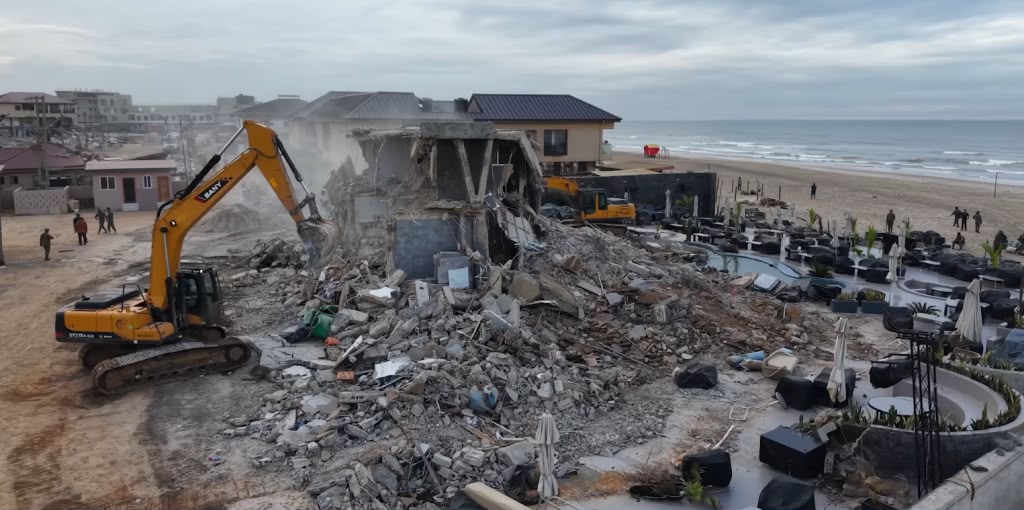

The Post Flood Mitigation Task Force on Sunday, September 13, 2026, began the demolition of illegal structures built on silted land along the Kpeshie Lagoon at an area now known as Laboma.
This marks another enforcement phase of the government’s flood prevention campaign in the Greater Accra region.
The exercise followed a directive issued by the Greater Accra Regional Security Council (REGSEC) on August 6, after an inspection of the Laboma Beach enclave, ordering occupants within what used to be a protected lagoon buffer zone to vacate within 21 days.
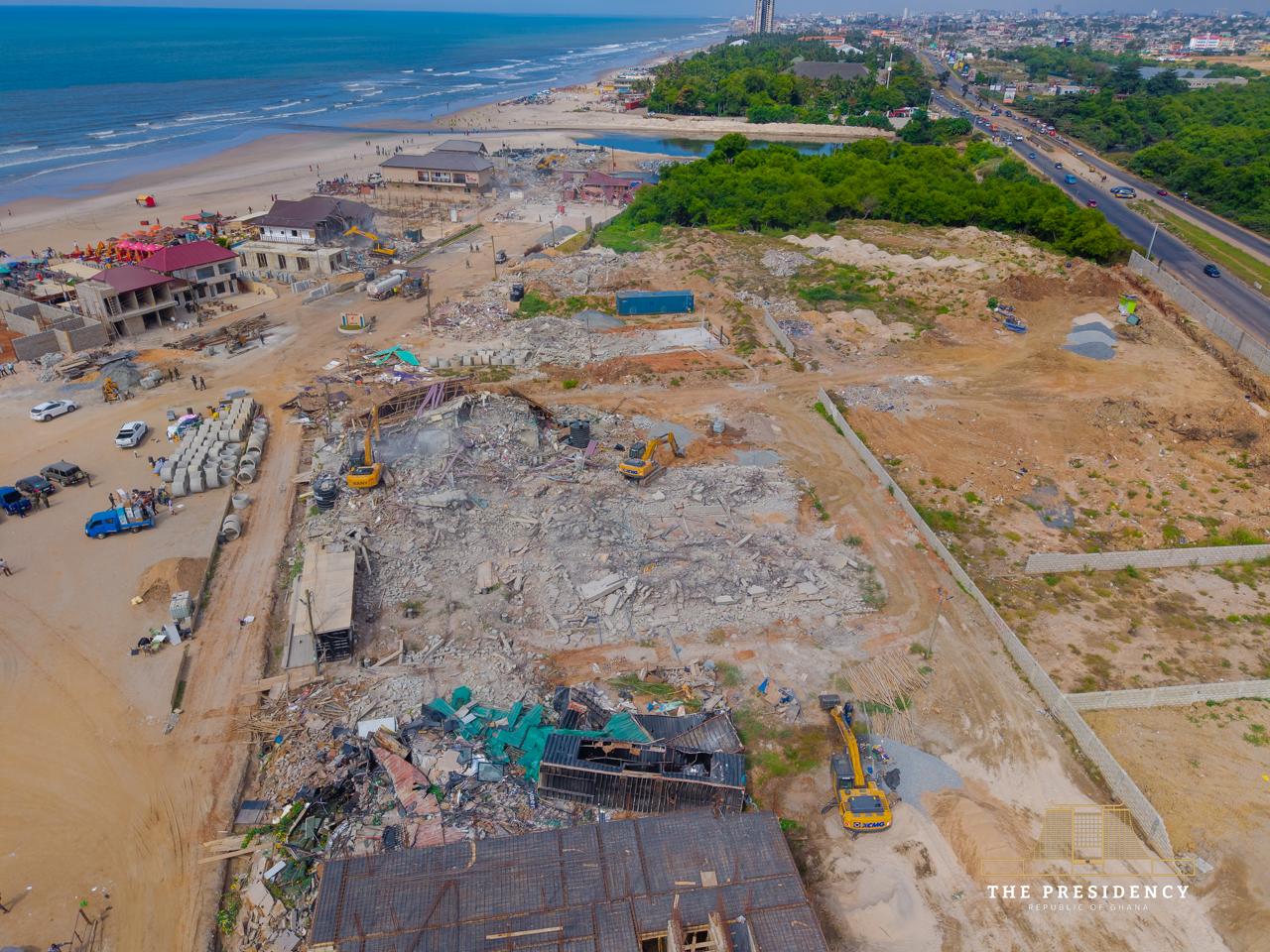
Physical structures built on land that previously served as a water reaction basin with lush vegetation but now pulled down, silted and developed were pulled down by the Task Force led by the 48 engineer regiment.
The team, however, explained that their action is not affecting the entire area called Laboma, but only the identified structures.
The demolition team also pulled down a fresh wall built along the Labadi – Teshie road, to block off an area where the vegetation has been destroyed and filling with solid materials was ongoing.
The Kpeshie Lagoon has been identified as one of the most critical intervention points under the post-flood mitigation programme because years of illegal reclamation, sand filling and uncontrolled development have significantly reduced its natural capacity to retain floodwaters.
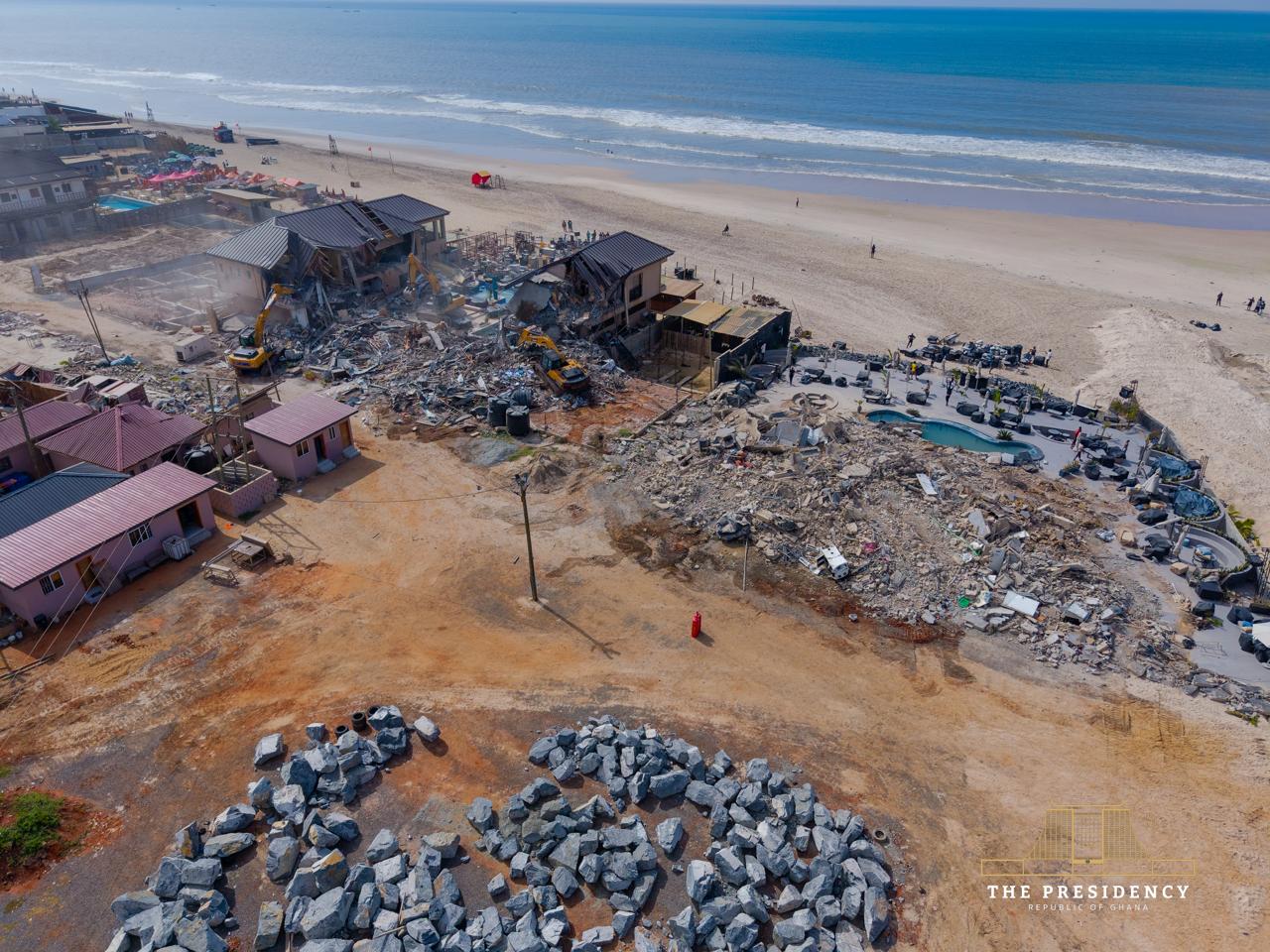
According to a risk assessment by the Greater Accra Regional Coordinating Council, the conversion of the lagoon’s floodplain into commercial plots contributed to the severe flooding experienced in the Tse Addo area during recent heavy rains.
Over the years, portions of the lagoon were sold for private development after trees were cleared and wetlands filled with sand, construction debris and solid waste.
Residential and commercial structures subsequently occupied areas that were once an active water body.
Speaking at the demolition site, Greater Accra Regional Minister Linda Ohenewaa Akweley Ocloo said the operation had proceeded peacefully and forms part of a broader strategy to restore the region’s waterways and prevent future flooding.
She revealed that developers used heavy boulders as foundation material to reclaim portions of the Kpeshie Lagoon for construction.
The rocks were dumped into the water body before being covered with sand and other fill materials, creating artificial land on the lagoon’s natural floodplain for commercial developments.
“Everybody knows Laboma. All this place used to be Mangrove, it’s a wetland and that’s the sea. They cut the trees, filled this place and sold the land to developers including businesses to build hotels and other things” – she told the media.
She added – “ We did a risk assessment and we realised that for the first time there was flooding at Tse Addo, it was because of these illegal structures. We engaged them, issued a 21-day ultimatum and we have to secure this basin and sobgar there has not been any resistance”
Sunday’s exercise is the latest stage of a coordinated, multi-location flood mitigation programme being implemented across Greater Accra.
On July 24, the Task Force demolished illegal retaining walls and unauthorised structures along the banks of the Tesa Dam and the Legon Boundary Road watercourse after serving affected residents with three weeks’ notice.
The demolition was followed by dredging to restore the dam’s storage capacity.
The operation later moved to the Lafa Water Retention Basin at Mallam, where the 48 Engineer Regiment deployed heavy equipment to remove large volumes of compacted solid waste that had heavily silted the natural reservoir.
Illegal structures within the water reserve were also demolished, while protective embankments were constructed and debris transported to a designated landfill at Nsawam.
The 48 Engineer Regiment has also been undertaking extensive dredging works at the Kpeshie Lagoon using excavators and tipper trucks acquired to support the post-flood mitigation effort.
The Task Force is led by Deputy Chief of Staff, Operations, Stan Xoese Dogbe, with operational coordination by Brigadier General Okae-Yeboah, Director General, Joint Operations of the GAF.
The exercise combines dredging, demolition and restoration of retention basins to improve stormwater flow and reduce flood risks across the Greater Accra Region.
Authorities say similar enforcement and restoration operations will continue at identified flood-prone locations as government intensifies measures to safeguard lives and property.
Flood mitigation task force begins phased dredging, desilting and demolition exercise across Accra