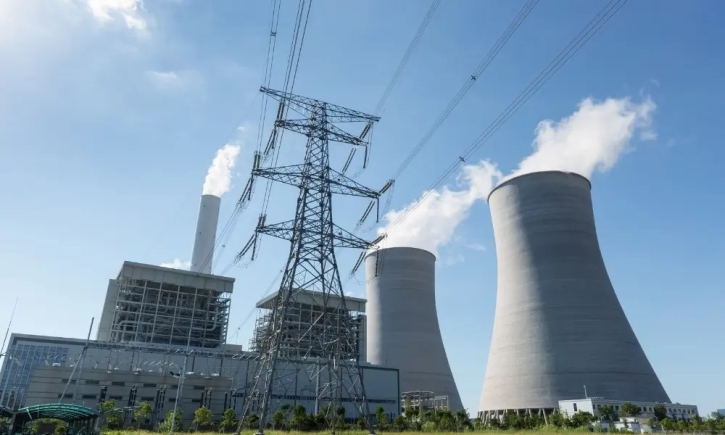

Ghana is set to build its biggest power plant yet, a 1,200-megawatt state-owned gas-fired thermal plant that will overtake the 1,020MW Akosombo Hydroelectric Dam as the country’s largest.
Government is finalising the agreement for the new capacity, which is aimed at securing stable baseload power as the global energy transition accelerates.
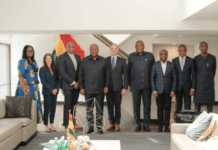
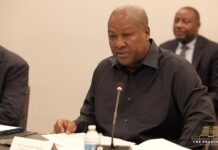
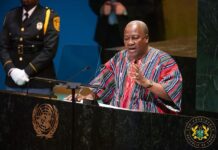
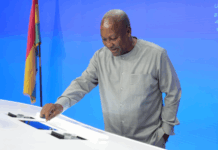
President John Dramani Mahama disclosed the plan when he addressed a town hall meeting with the Ghanaian community in New York on Friday, September 26, 2026, following his visit for the 81st UN General Assembly.
He said the agreement will be signed before the end of this year, explaining that the country needs to avoid stranded assets as renewables and electric vehicles gain ground, and that “we are going to build the biggest thermal capacity in Ghana” and “before the end of this year, we’re going to sign 1,200 megawatts of gas thermal power.”
The President said the move was part of a broader shift to prioritise state-owned generation over reliance on Independent Power Producers, who previously threatened to shut down plants but are now offering to invest an additional 500MW.
On the energy sector debt, President Mahama said government had cleared the arrears and reorganised the Electricity Company of Ghana to stabilise supply, stating that “we have paid off our energy debts” and “we are current with the payments.”
He explained that the turnaround was because government had reorganised ECG such that “the first charge on any money they collect is to pay the power generators” instead of spending on procurements like cables and street lights that cannot be used for 10 years.
He said when his administration took over, the oil and gas sector was in despondency, with Eni moving operations to Côte d’Ivoire and Jubilee production dropping to about 60,000 barrels per day, but that investor confidence had been restored.
He said Jubilee Partners were investing $2 billion to drill 20 new wells and Eni was investing $1.5 billion to bring the rest of its Sankofa field on stream, noting that “already oil production has risen by almost 38 per cent since 2025.”
Touching on the economy, President Mahama said government inherited an IMF programme that was off-track and had to take difficult measures to restore it.
He explained that “we had to work before the next IMF mission came to bring the programme back on track, which we did.”
This, he said, was after the previous government failed to honour commitments despite receiving the next tranche of the $3 billion loan by June 2024.
Ghana Gas courts investors for new processing plant and strategic pipeline expansion