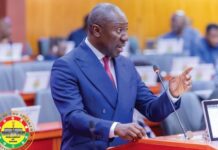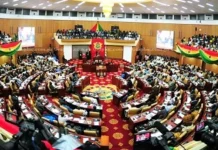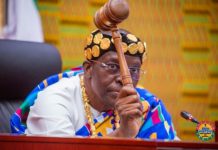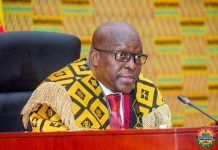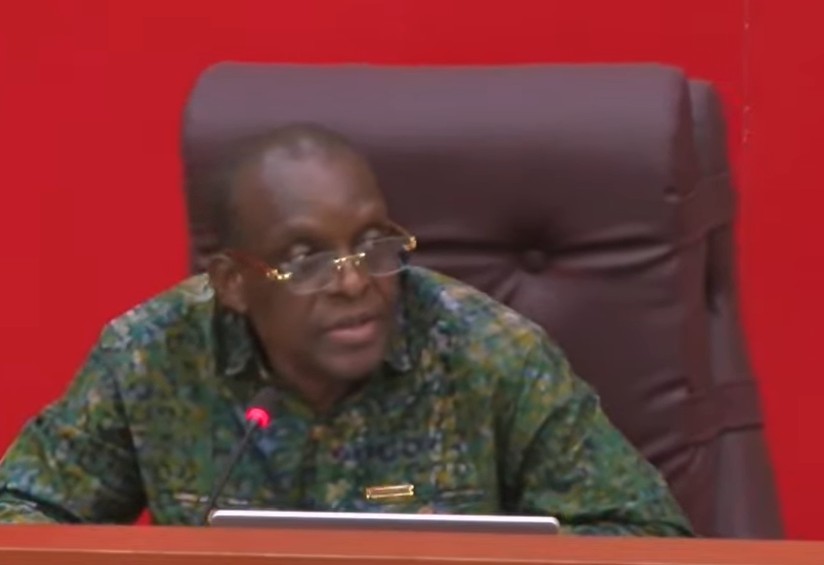

Speaker of Parliament Alban Bagbin has urged Parliament to examine its own conduct as part of efforts to promote responsible speech in Ghana.
He said Parliament could not credibly demand higher standards and conduct from journalists, broadcasters, bloggers and content creators without holding its own members to similar standards.
“I believe Parliament itself must take a look within. As we call upon journalists, broadcasters, bloggers, content creators to exercise responsibility in their speech, Parliament must be prepared to look inward,” Bagbin stated while addressing the MPs on Tuesday September 29.
He stressed that Parliament must lead by example in the national conversation on freedom of expression and responsible communication.
“We cannot credibly demand higher standards of public discourse from the society if we are unwilling to demand those standards of ourselves,” he added.
President John Dramani Mahama has called on the Media Foundation for West Africa (MFWA) and the Ghana Journalists Association (GJA) to jointly convene a national stakeholder engagement on hate speech, abusive online content and responsible digital communication.
The move is aimed at addressing the growing incidence of hate speech, threats, abusive language and other harmful content on social media and emerging digital platforms while protecting freedom of expression.
In a letter from the Office of the President dated September 22, 2026 and signed by Dr. Callistus Mahama, Secretary to the President, the President noted that Ghana’s media environment has changed significantly with public discourse increasingly shaped not only by traditional media organisations, which operate within established professional and regulatory frameworks, but also by individual bloggers, content creators, influencers and users of platforms such as TikTok.
The letter noted that many of these bloggers, influencers and actors command substantial audiences but are not necessarily subject to recognised editorial standards or clear accountability mechanisms.
The President described the development as a “difficult but important public-policy challenge”, underscoring the need to address hate speech, threats, incitement and other unlawful conduct without criminalising legitimate criticism, political commentary, satire and dissent.
The President further expressed concern about about what he described as “disproportionate arrests over mere criticism or politically charged commentary” noting that arguing that such actions could be counterproductive, create “undeserving martyrs” and undermine public confidence in state institutions.
The President stressed that there is therefore “an urgent need for a coherent national roadmap that protects freedom of expression while providing an appropriate and proportionate response to genuinely harmful digital content.”