
The Public Accounts Committee of Parliament has suspended consideration of two high-profile audit reports; the forensic audit of Ghana’s Embassy in Washington, D.C. and the audit of the 13th All African Games.
This comes after the Auditor-General withdrew both documents for corrections.
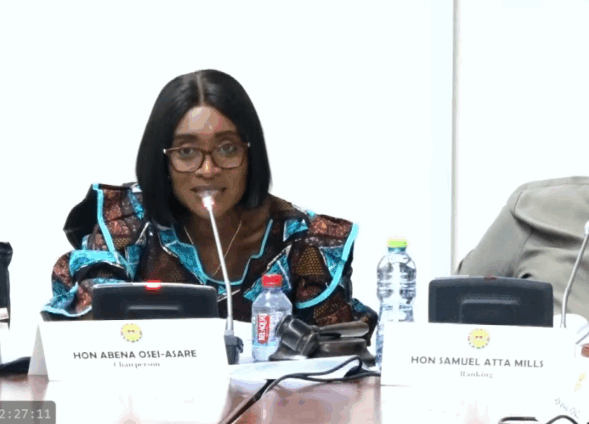
Chairperson of the Committee, Abena Osei-Asare, announced the decision at the start of PAC sittings, explaining that the Committee cannot proceed until revised and properly authorised versions are laid in Parliament.
She said the Auditor-General formally wrote to Parliament to withdraw the Embassy report, while the All African Games report was stepped down following a debriefing with his office.
“We will not be looking at these two reports until they are brought back to us again,” the Atiwa East MP said.
The two audits had generated intense public interest.
The Washington Embassy audit, which covered January 2017 to June 2025, flagged about US$19.38 million in irregular transactions related to visa and passport support services, mailing fees and other charges.
It followed allegations that a former locally-recruited ICT staff, Fred Kwarteng, created an unauthorised link that charged applicants extra fees.
The scandal forced government to temporarily close the mission on May 26, 2025, recall home-based staff and suspend local staff.
The All African Games audit, on the other hand, cited procurement and spending irregularities across accommodation, catering, transport, equipment and infrastructure, with the Auditor-General recommending the recovery of over GH¢579 million plus US$44.35 million and €629,070 from three former officials.
Abena Osei-Asare stressed that the withdrawal does not end parliamentary scrutiny.
“Our position is that accountability requires agency, but credibility requires accuracy. And we will insist on both,” she noted.
She said when the corrected reports return, PAC will focus on recovery of funds, whether system weaknesses have been fixed, whether past recommendations have been implemented and whether sanctions have been applied where wrongdoing was established.
She added that the Committee will also acknowledge institutions that have reformed, noting that accountability must be firm but fair.
“Public money must have a public account. Standards must lead to action, action must lead to results, and wrongdoing must lead to consequences,” she said.