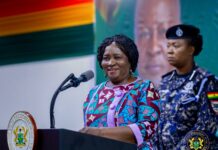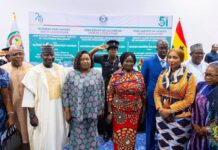



Vice President Professor Naana Jane Opoku-Agyemang has urged the international community to ensure that global climate arrangements take account of the different economic circumstances and development priorities of countries in the Global South.
She said developing countries must have a stronger voice in shaping international policies, particularly those that affect their ability to pursue economic growth, address climate challenges and improve the livelihoods of their populations.
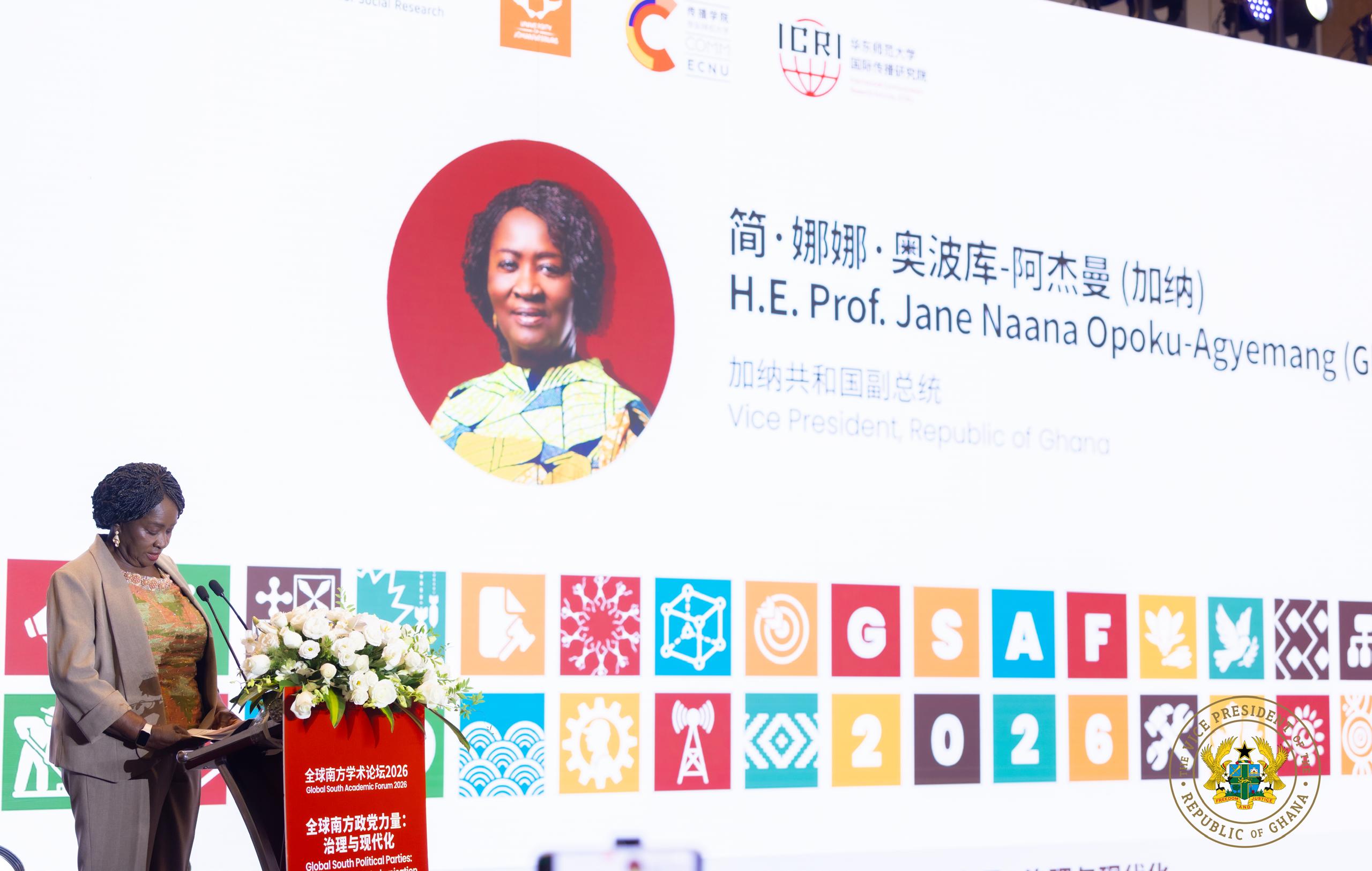
The Vice President made the remarks on Saturday, October 17, 2026, when she delivered the opening address at the Global South Academic Forum in Shanghai, China, under the theme “Global South Political Parties, Governance and Modernization.”
Professor Opoku-Agyemang argued that countries across Africa, Asia, Latin America and the Caribbean must move beyond implementing decisions shaped by powerful nations and play a more active role in determining global priorities.
She observed that despite the Global South’s significant population, natural resources and economic contributions, developing countries continue to face concerns over their representation and influence in international institutions.
Her position highlights the need for global decision-making processes to recognise the different challenges confronting developing economies, including the resources required to pursue sustainable development while responding to climate change.
The Vice President also advocated reforms to the international financial system to ensure that it supports development without deepening the economic vulnerabilities of developing countries.
Professor Opoku-Agyemang called for stronger cooperation among countries of the Global South, stressing the importance of partnerships that build local productive capacity, strengthen research and innovation, and create opportunities for young people.
She encouraged developing countries to learn from one another’s experiences without assuming that they must adopt identical political systems or development models.
The Vice President also highlighted the need for greater collaboration among universities and research institutions, particularly in science, technology and artificial intelligence, as countries seek solutions suited to their development needs.
On governance, Professor Opoku-Agyemang underscored the role of political parties in shaping national development and sustaining democratic institutions.
She said political parties must go beyond mobilising citizens for political power and strengthen policy development, political education, democratic accountability and the participation of women and young people.
The forum, initiated by the International Communication Research Institute of East China Normal University, brings together scholars, policymakers and media professionals from Africa, Asia and Latin America to examine governance, political development and modernisation in the Global South.
The discussions provide a platform for participants to consider how developing countries can strengthen cooperation, contribute to global policy debates and pursue development approaches that reflect their own circumstances.
By Evelyn Tengmaa