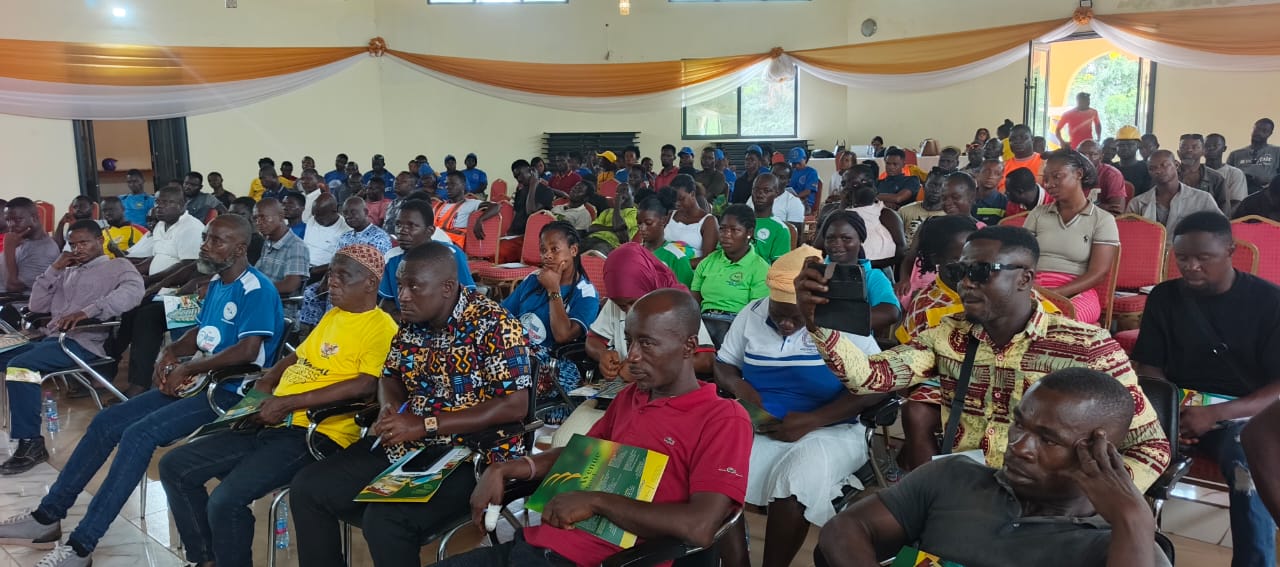
The Bank of Ghana (BoG) has intensified its financial literacy campaign by organising a one-day educational programme for stakeholders from the informal sector including, traders, mechanics, drivers and other stakeholders at Sefwi Wiawso and Juaboso in the Western North Region.
The programme was to educate them on how to manage money.
The initiative forms part of the central bank’s efforts to promote financial inclusion and strengthen financial literacy among the public by exposing them to key banking concepts and responsible financial practices.
Participants included taxi drivers, mechanics, traders, carpenters and other stakeholders from the informal sector.
The programme covered a wide range of topics, including responsible savings and investment, identifying Bank of Ghana-licensed financial institutions, safeguarding personal banking information, recognising fraudulent financial schemes, complaint resolution procedures, proper handling of the Ghana cedi and protecting the security features of genuine banknotes.
Traders and mechanics who participated also received training to enhance their understanding of financial literacy as they undertake personal and professional financial transactions.
Mr Albert Fynn, a representative from the Financial Stability Department of the Bank of Ghana, said the programme formed part of the Bank’s broader financial education strategy aimed at empowering citizens with the knowledge required to make good financial decisions.
He said the central bank had, over the years, undertaken several public education campaigns through television, radio and direct engagement with market women and other groups to educate the public on their rights and responsibilities when dealing with financial institutions.
He said the training focused on the rights and responsibilities of customers of regulated financial institutions, the importance of protecting banking credentials such as passwords and personal identification numbers, and the proper procedures for lodging complaints with financial service providers.
He further stressed the issue of dormant accounts and unclaimed balances, with officials explaining how regular account activity could prevent accounts from becoming dormant.
Presentations also revealed the implications of loan guarantees, illegal digital lending services, responsible borrowing, including mobile money loans, and the consequences of loan defaults on future access to credit.
Mr Fynn therefore urged the general public to treat the national currency and coins as legal tender for transactions.
“Another thing we mentioned today is that we are entreating all Ghanaians that the Ghana cedi coin is still legal tender. They are supposed to accept them and also give them out as legal tender in exchange for goods and services.”