
The Managing Director of the Tema Oil Refinery (TOR), Edmond Kombat, has said fuel price stability can be guaranteed in Ghana if the Petroleum Management Act is amended to allow the refinery to purchase Ghanaian crude in cedis instead of dollars.
He says ramping up local refining with Ghanaian crude and eliminating dollar exposure will ease pump price pressures.
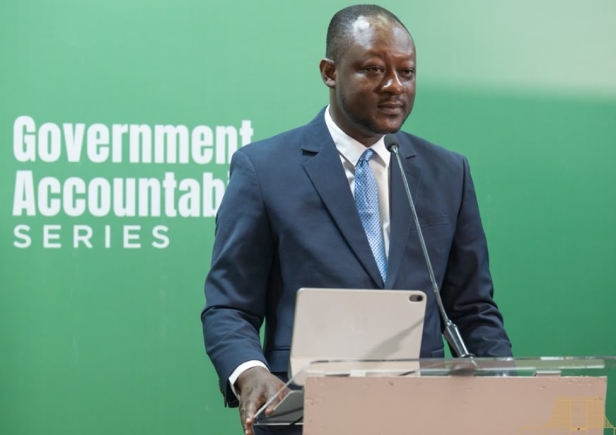
Speaking at the Government Accountability Series on Monday, October 26, 2026, Kombat explained that TOR currently buys crude from the Ghana National Petroleum Corporation (GNPC) and its partners in US dollars, a situation that exposes the refinery to foreign exchange pressures.
According to him, if the law which mandates crude purchase in dollars is changed, Ghanaians should expect lower fuel prices.
“TOR buys crude from GNPC in dollars. Ghanaians should expect lower fuel prices when Cabinet and Parliament approves for GNPC to accept cedis,” he stated.
“The Minister is working very hard to go to Cabinet and then Parliament for them to change that law and allow us to be able to buy the crude in cedis,” he added.
Kombat said amending the Act would ensure the impact of the dollar is not felt at the pump.
He said if TOR is able to buy crude oil in Ghana cedis, “the impact of the dollar, you will not feel it at the pump, we will be able to guarantee price stability in a way that will be more beneficial to Ghanaians.”
The TOR MD also said ramping up production to meet almost 100% of domestic needs would allow the National Petroleum Authority (NPA) to move away from international benchmarks.
“When we [TOR] also ramp-up production and we can guarantee the security of almost 100% of the domestic need, instead of using Platts and Brent, NPA can start using TOR cost benchmark to be able to predict the price and there will be stability,” he explained.
He disclosed that without TOR’s operational restart, fuel prices could have hit GH¢22 to GH¢32 per litre in the last two pricing windows due to global crude disruptions.
CEMSE calls for strategic petroleum refinery policy to strengthen Ghana’s energy security