
The Ghana Statistical Service has said in its ‘Ghana in Numbers’ that Ghanaians are living longer, and more mothers and children are surviving.
According to the report, life expectancy rose from 40.3 years in 1960 to 65.1 years in 2021.
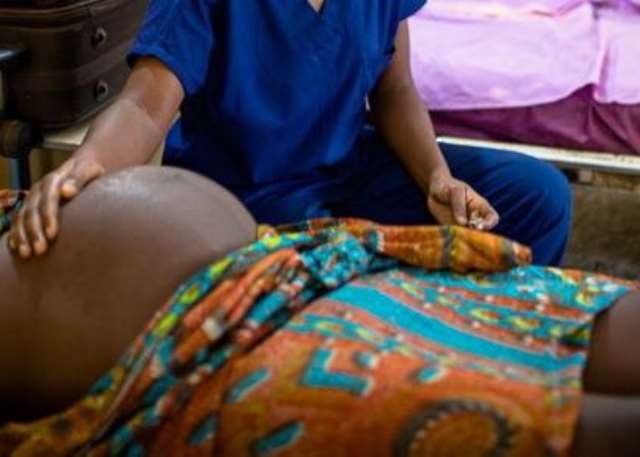
“Maternal mortality fell from 485 to 301 deaths per 100,000 live births between 2010 and 2021, while under-five mortality halved from 80 to 40 per 1,000 live births between 2008 and 2022,” it said.
Ghana’s population and economy grew, and life expectancy rose over time. At the same time, many young people could not find work.
According to the report, Ghana’s population reached 33.7 million in 2025, but it is growing more slowly than before: the growth rate fell from 2.7 percent in the 1984–2000 period to 2.1 percent in the 2010–2021 period, so the time it takes to double stretched from 26 to 33 years.
“More than half the country now lives in towns and cities, and people are living longer: life expectancy rose from 40.3 years in 1960 to 65.1 years in 2021. Young people aged 15 to 35 now number about 12 million, the largest group of young people in the country’s history,” the report said.
On the economy, the report said that in nominal GDP terms, it reached about GH¢1.4 trillion in 2025, and income per person rose from GH¢4,710 in 2013 to GH¢42,502 in 2025.
Services make up 45.9 percent of what the economy produces, and Ghana sold GH¢148.3 billion more goods to other countries than it bought from them.
“Not all trade passes a customs desk: a first survey of informal cross-border trade found that goods worth GH¢38.4 billion crossed Ghana’s land borders with Togo, Burkina Faso and Côte d’Ivoire in the year to September 2025, about 6 cedis in every 100 of all the country’s trade and the main way Ghana trades with these three neighbours,” it said.
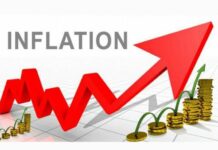
It also indicated that prices are rising much more slowly than before: food prices were climbing at 61.0 percent at their peak in January 2023 and have since calmed down to 4.9 percent by end 2025. Farms keep producing more food, yet the government spent only about 0.2 percent of the economy on agriculture in 2024, less than one cedi in every hundred it spent.
Ghana in Numbers is the Ghana Statistical Service’s national record book. It brings together the country’s official numbers (on people, health and schooling, the economy, government, the environment, and the Sustainable Development Goals) in one plain-language volume.
The Minister of Finance, Dr Cassiel Ato Forson, in his foreword to this report, said that when citizens can see the very same figures their leaders use, trust grows and government can be held to account.
He said openness is the foundation of a confident nation.
Numbers, he said, give that truth.
“When we know the facts, we choose better, for our families, for our businesses, and for the whole nation. That is why, as Minister for Finance, I placed Ghana in Numbers at the heart of Government’s plans,” he said.
In the 2026 Budget, he told Parliament that “in 2026, the GSS will unveil a flagship annual publication, Ghana in Numbers, that tells our national story through data.”
He said this is that publication, and from now on it will be published every year.
“Government stands behind this report for a simple reason. Public money and public power must be matched by public facts. When citizens can see the very same figures their leaders use, trust grows and government can be held to account. Openness is the foundation of a confident nation,” he sdaid.
Dr Forson further explained that Ghana in Numbers is also part of a wider drive to make our statistics stronger and more trustworthy, alongside the rebasing of our national income (GDP) and consumer price figures, and other improvements to the national statistical system.
Together, he said, these reforms give Ghana a firmer base of evidence on which to build. My commitment is plain: the figures in this book will guide the choices we make. Good policy is not built on opinion or guesswork.
” It is built on evidence. Here, year after year, that evidence is gathered in one trusted place. This achievement belongs to the Ghana Statistical Service. I thank the Government Statistician, and the management and staff of the Service for the skill and dedication that turned complex data into a book every Ghanaian can read, and I commend the Board for the leadership and guidance behind this flagship work. Ghana is better for their effort,” he said.
He further invited every Ghanaian, from student and teacher to trader and farmer to public officer and citizen, to open this book, read it, and use it.
“Our national story is written in these numbers. Let us read it honestly and together write its next chapter,” he said.