
More than 1,000 dry-season farmers in the Bolgatanga Municipality and Bongo District have abandoned their farms in the Vea project.
They have no intention of returning this season because water is not reaching their farms through the canals. This is a threat to food security in the Upper East Region.
As the rainy season ends in the Upper East Region and parts of the Northern Region, farmers who farm all year round through irrigation have begun preparing their farmlands for the dry season.
Farmers in the Bolgatanga Municipality and the Bongo District all rely on the Vea Dam for irrigation farming, especially in the dry season.
Most of the vegetables in the two areas come from vegetable farming close to the Vea Dam, through the canals.
But farming in these areas has become difficult for the majority of farmers because water no longer flows freely from the Vea Dam to their farms through the canals.
According to farmers in Zaare, Nyariga, Yikene and Sumbrungu, all in the Bolgatanga Municipality, the situation has created anxiety and demoralised them. Many say they will not farm this year because there is no water to irrigate their farms.
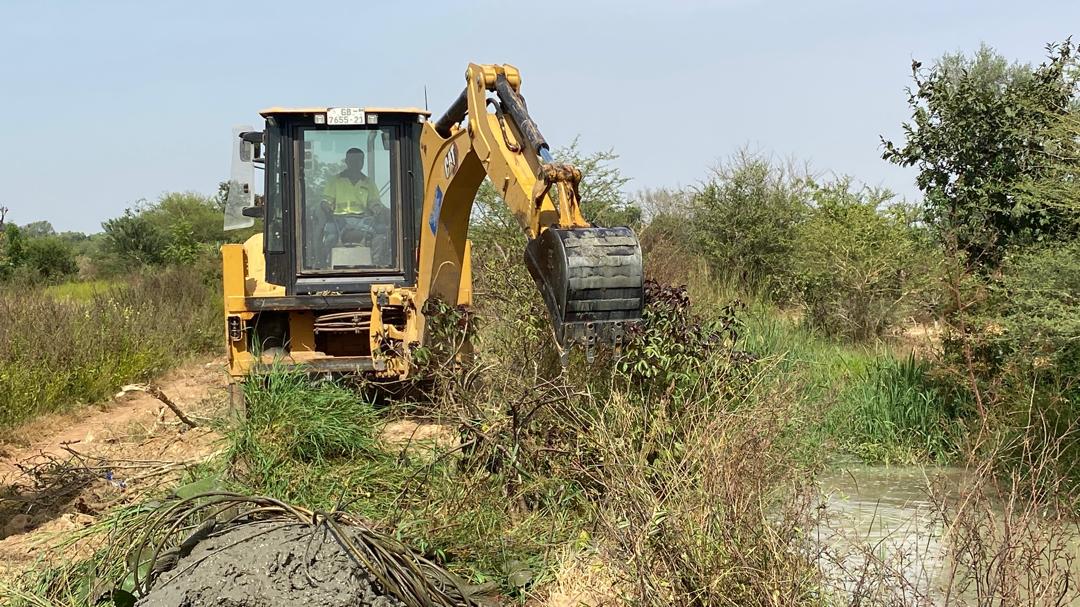
Following media reports on the plight of the irrigation farmers, the Alliance for Change stepped in to rescue them by dredging the left bank of the Vea canals to allow water to flow freely to the farms.
The farmers’ representative for the Vea Irrigation Project, Francis Ayine Atomisgo, expressed appreciation to the Alliance for Change for coming to their aid. He urged farmers who had abandoned their farms to return.
“We have been farming here for a long time. Where we are now is the left bank. We have the right bank and the left bank. The left bank comprises nine communities. When they [Alliance for Change] came, today is their second day. Looking at the work they are doing, the canals will be desilted for us to return to our farms,” Mr Ayine Atomisgo said.
“Due to this situation, a lot of the farmers have travelled to the South for greener pastures. As I speak, most of them have resolved to return and farm,” he added.
The Chairman of Alliance for Change, Roger Apos Ayine, said farmers play a major role in our daily lives. He said helping them to dredge the canals is the group’s contribution to food security.
“We saw the plight of these farmers in the media, and then we decided to find out what happened. We have now gotten the information. It is an opportunity for us to find out what we can do to help these farmers. The information we got is that empty promises were given to farmers about working on the canals, but for some time now, the situation has remained the same. We don’t know whether it is coming again or coming at another time,” Mr Ayine said.
“But now that the dredging is taking place, I am sure the farmers will come back and continue their activities. I think the farmers should consider the Alliance for Change as their own, because many people have come and made promises, and the promises have not been fulfilled. But as Alliance for Change, we saw the plight and decided to take up the project. So we want the farmers to have confidence in us.”
A member of Alliance for Change, Isaac Atindana Ayariga, reiterated the importance of desilting the canals to the economy. He pledged the group’s unflinching support to the farmers whenever they called on them.
Most of the farmlands are very far from the dam. Some are as far as 15 to 20 kilometres away, making it difficult for the average farmer to access water without the canals.
Although some farmers use water hoses to pump water from the dam to their farmlands, others whose farms are very far cannot afford to buy long coiled hoses and pumping machines to irrigate their farms.
By Tanko Mohammed Rabiu