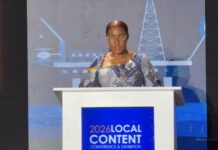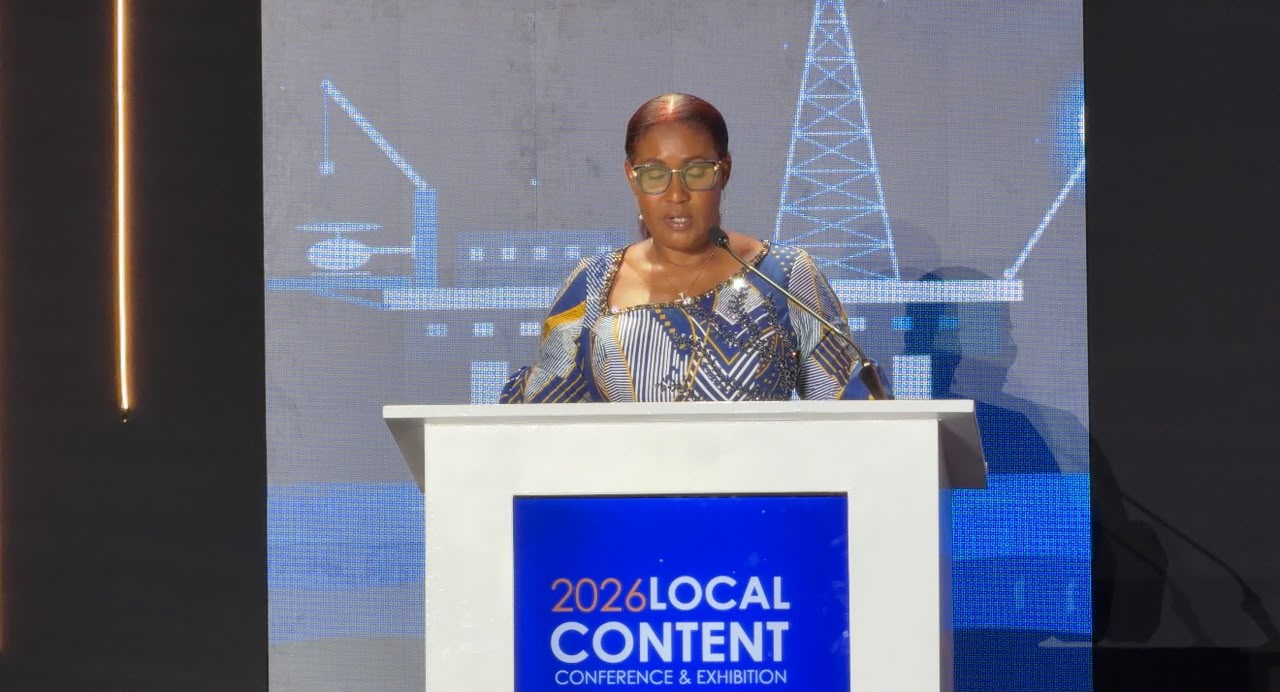

The Chief Executive Officer of the Petroleum Commission, Emefa Hardcastle, has reaffirmed the Commission’s commitment to transforming Ghana’s petroleum industry from a focus on mere compliance to a driver of global competitiveness.
Speaking at the opening of the 2026 Local Content Conference and Exhibition in Takoradi on November 10, Madam Hardcastle emphasized that the sector’s future lies in strategic reforms and robust partnerships.
Held under the theme, “Enriching local content for sustainable growth: Building a resilient upstream sector through reform and partnership to spur competitiveness and investment,” the event attracted a packed hall of industry stakeholders, government officials, and international partners.
Reflecting on the Commission’s 15-year journey, Madam Hardcastle noted the significant milestones achieved since the enactment of the Petroleum Commission Act.
In a personal anecdote that resonated with the audience, she revealed that the Act was signed into law on her birthday by then-President John Evans Atta Mills, who also appointed her to the Commission’s board. She also acknowledged the current President, John Dramani Mahama, for reappointing her to the board and subsequently appointing her as CEO.
“Since its establishment, the Commission has worked diligently to regulate and manage petroleum activities, build national capacity, and create an environment that supports resource development,” she stated.
Dissecting the theme, Madam Hardcastle highlighted “reform” and “partnership” (R&P) as the twin pillars necessary to spark investment. She described local content not merely as a regulatory obligation, but as a comprehensive development strategy.
“R&P activities create local content opportunities, while effective local content policies strengthen the long-term sustainability and competitiveness of R&P operations,” she explained. “We must move beyond participation and towards competitiveness. To sustain investment, we must continue to strengthen indigenous capacity and deepen collaboration between industry and academia.”
The CEO touted the strides made by Ghanaian companies over the last 13 years, noting that local firms are now exporting their expertise to neighboring countries such as Côte d’Ivoire, São Tomé, Angola, and Namibia. She highlighted the establishment of facilities for specialized chemicals, drilling fluids, cementing plants, and pipe threading and coating, demonstrating the depth of in-country capability.
To further showcase these capabilities, she announced the release of a catalogue of in-country capabilities and capacities, available at the registration desk, and noted a localization ratio of approximately 90% for rotational workers.
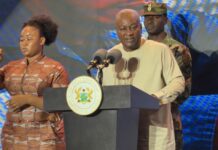
Two major milestones are set to define the conference. Madam Hardcastle announced that later in the day, the President and the Minister of Energy and Green Transition would officially launch the Local Content Fund.
“This fund is a financial springboard to indigenous Ghanaian SMEs engaged in the sector. This milestone has been achieved through years of hard work and partnership with you, our contractors and subcontractors,” she said.
Additionally, she unveiled the Commission’s new Digital Permits Application and Management System. Acknowledging the frustrations associated with manual applications, she stated that the platform is designed to reduce administrative bottlenecks, enhance regulatory efficiency, and improve the ease of doing business.
“This initiative is not merely about technology; it’s about improving the investor experience and creating a more predictable business environment,” she added, while commending the Commission’s IT team for making the dream a reality.
In a passionate appeal, Madam Hardcastle urged the government to allocate funding from the Petroleum Funds to the Commission. She argued that a well-resourced regulator is indispensable for navigating the complexities of the global energy landscape.
“Sustainable funding allocation… will support our strategic initiatives aimed at enhancing regulatory effectiveness, accelerating digital transformation, and improving petroleum data management,” she stated, framing the investment as crucial for the resilience and sustainability of the industry.
As the conference progresses, the CEO charged participants to deliberate on how to transform local content into a catalyst for industrial growth and sustainable economic transformation.
“Your presence here is a testament to the growing importance of this conference and the shared belief that local content remains a critical pillar for sustainable growth and competitiveness,” she concluded.
By Ebenezer Atiemo