
The Chief Executive Officer of the Minerals Commission, Isaac Tandoh, has called on the Government of China to treat illegal mining by its nationals in Ghana as a bilateral enforcement priority, warning that the conduct of a “lawless minority” is undermining a friendship built over six decades.
Speaking at the China-Ghana Mining Cooperation Conference at the Kempinski Hotel in Accra on Tuesday, November 10, 2026, Mr Tandoh said the integrity of the partnership between the two countries is being tested not in boardrooms, but in Ghana’s rivers, forest reserves and farmlands.
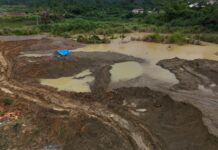
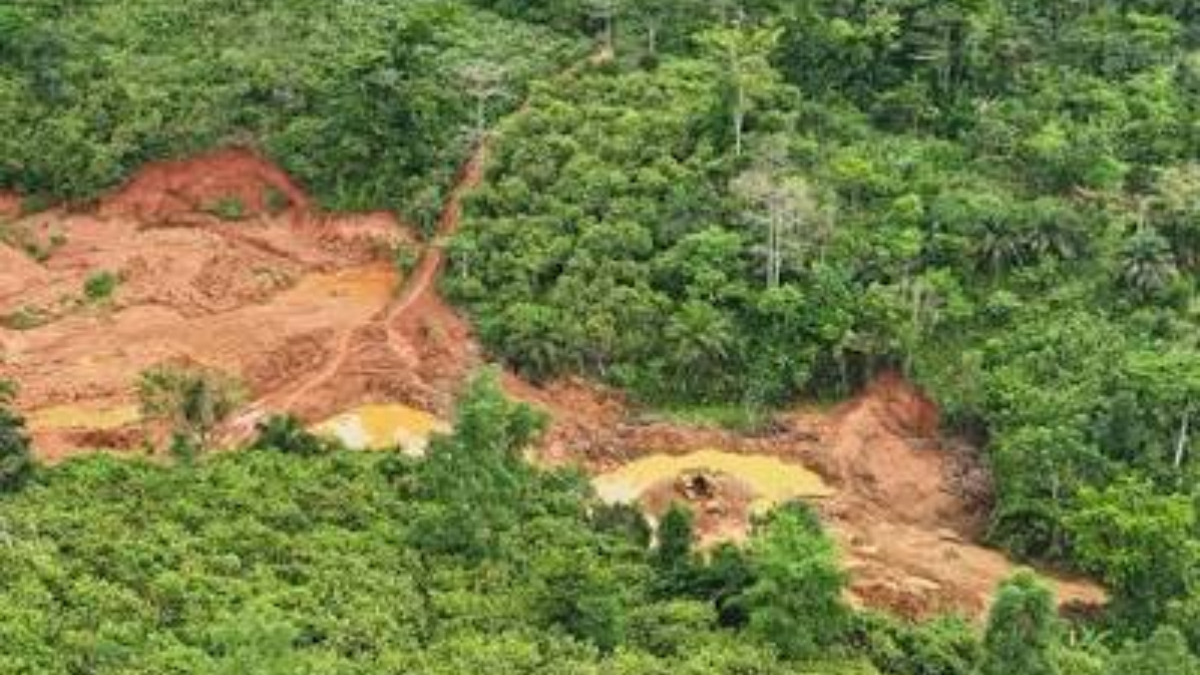
“Illegal small-scale mining has become an existential threat to our environment, our water bodies, and our national security. And in too many instances, Chinese nationals have been found at the centre of these illegal operations,” he said.
The conference was attended by the Chief of Staff, Dr Julius Debrah, the Chinese Ambassador to Ghana, H.E. Cong Song, Ministers of State, President of the Ghana Chamber of Mines Fred Attakuma, CEO Dr Ken Ashigbey, industry captains, traditional leaders and members of the media.
Mr Tandoh was unequivocal about the law. Under the Minerals and Mining Act, 2006 (Act 703), as amended, small-scale mining licences are reserved exclusively for Ghanaian citizens.
“That means any foreigner who undertakes small-scale mining commits an offence. The penalties include a prison term of twenty to twenty-five years, with deportation to follow the sentence,” he said.
He said the law also targets “fronting,” where foreign entities use Ghanaians to acquire mineral rights, and disclosed that several Chinese nationals have been arrested during swoops on major rivers, including the Birim and the Tano.
Despite the warning, Mr Tandoh praised Chinese investment in Ghana’s large-scale mining sector, which he said had contributed to Ghana’s position as Africa’s largest gold producer and the world’s sixth-largest.
He cited major Chinese mining giants such as Zijin, Chifeng and Shandong, noting that Zijin, which assumed ownership of the Akyem mine a year ago, had increased production by 20% without expanding its workforce or upgrading infrastructure. He also said Shandong Gold’s Ghanaian operation is the best-performing mine in the Shandong group globally.
He said the Association of China-Ghana Mining has given the cooperation an institutional home for dialogue on responsible investment, regulatory compliance and sustainable development.
To provide a legal alternative, Mr Tandoh announced that government has designated blocked-out areas for law-abiding Ghanaian small-scale miners, and is making provision in law for a medium-scale tier that will allow Chinese and other foreign nationals who lack the capacity for large-scale operations to co-own up to a 40% stake in mining companies in partnership with their Ghanaian counterparts.
“This is to ensure that while we protect the integrity of our bilateral relations, we also protect the credibility of our regulatory system for the future of our mining communities,” he said.
Mr Tandoh made three specific requests to Beijing:
First, that illegal mining by Chinese nationals be treated as a bilateral enforcement priority, and that the framework agreed at the 2026 China Mining Conference — under which offenders will face sanctions not only in Ghana but also through Chinese authorities’ own mechanisms for policing their citizens abroad — be operationalised without delay.
“This dual-enforcement pathway must be operationalised without delay, so that deportation is not a soft landing but a prelude to accountability,” he said.
Second, that China work with Ghana to dismantle the financing and logistics networks that enable illegal mining, noting that galamsey is organised, financed and equipped, with equipment, capital and supply chains sometimes originating outside Ghana.
Third, that the Association of China-Ghana Mining be used as a vehicle for compliance, not just commerce, by actively discouraging and reporting illegal conduct by its members and by Chinese nationals operating in Ghana.
“A responsible association does not protect the lawlessness, it exposes them,” he said.
Mr Tandoh said the Minerals Commission will continue to enforce the law without fear or favour, while working with investors who share its vision of a transparent and sustainable mining industry.
“Ghana values China’s friendship too deeply to allow it to be undermined by the conduct of a lawless minority. And China’s own reputation as a responsible global investor is too valuable to be tarnished by the actions of those who operate outside the law,” he said.
He concluded: “Illegal mining has no place in this partnership, and those who engage in it — whatever their nationality — must face the full weight of the law.”
“Today, our communities want to see a China-Ghana partnership that brings prosperity, not pollution; that builds legal livelihoods, not criminal networks.”