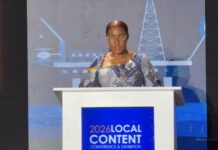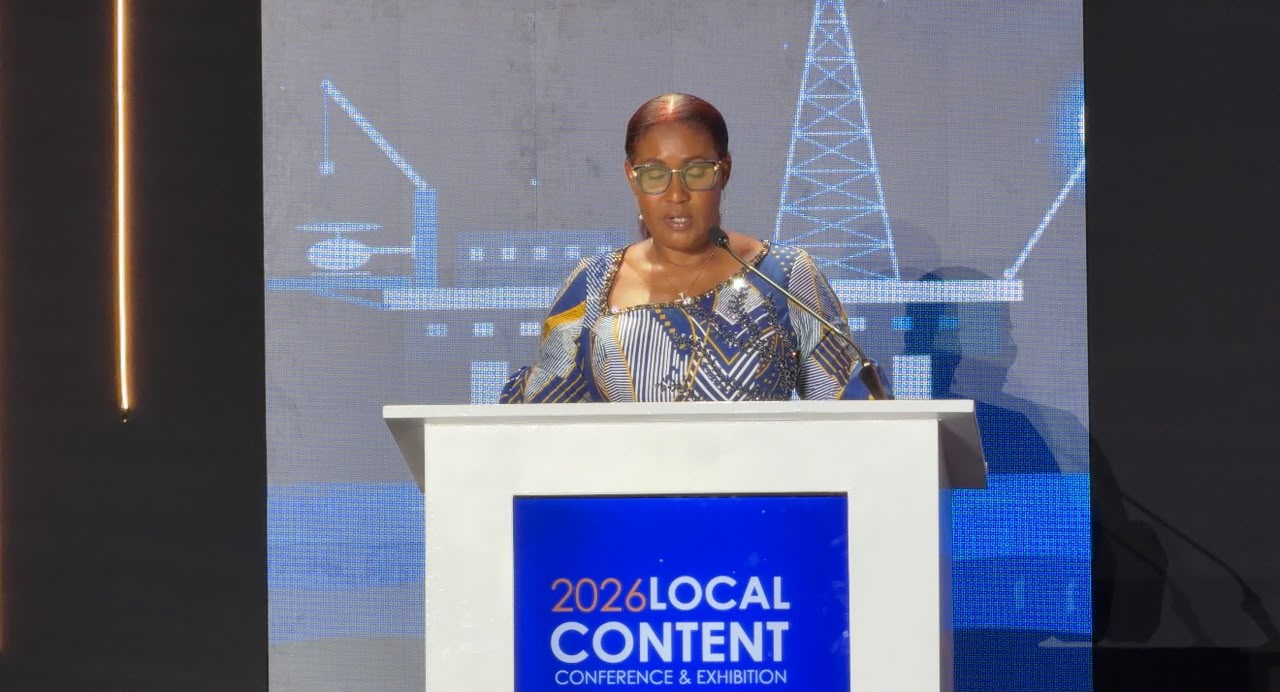

The Chief Executive Officer of the Petroleum Commission, Ms Emeafa Hardcastle, says the Local Content Conference and Exhibition (LCCE) has grown into Ghana’s flagship conference for the upstream petroleum industry.
She described it as one of the most influential platforms for petroleum sector dialogue in the West African region.
Speaking at the opening ceremony of the 2026 edition in Takoradi, Ms Hardcastle welcomed delegates from across the petroleum value chain. They included sister regulators from Africa, the Caribbean, the Americas, Asia and Europe, as well as representatives from academia and the financial sector.
She noted that this year’s conference coincides with a major milestone: 15 years since the establishment of the Petroleum Commission.
“We reaffirm our commitment to excellence, innovation, transparency and stakeholder collaboration to ensure Ghana’s petroleum resources continue to create lasting value for current and future generations,” she said.
The theme for this year’s conference is: “Enriching Local Content for Sustainable Growth: Building a Resilient Upstream Sector through Reforms and Partnerships to Spur Competitiveness and Investment.”
Ms Hardcastle said the theme speaks directly to priorities at a critical moment of industry evolution. It reminds stakeholders that exploration and production (E&P) and local content are inextricably linked.
“The theme challenges us to move beyond participation and towards competitiveness. How do we transform local content from a compliance obligation into a catalyst for investment, innovation, industrial growth and sustainable economic transformation?” she asked.
Providing an update on local content in the last 12 months, Ms Hardcastle said when Ghana enacted its framework over 13 years ago, the ambition was to increase indigenous participation and build globally competitive companies.
That ambition, she said, is being realised. Ghanaian companies now provide services once dominated by foreign firms, including:
– Supply of specialty chemicals, drilling fluids, cementing and mud plants
– Thermal desorption plants, assembly of Steel Flying Leads, and threading and coating of pipes
– Fabrication yards capable of fabricating various modules of FPSO topsides and subsea equipment, such as module stools, jumpers, suction piles, riser bases, manifolds, mud mats and riser protection
– Establishment of training centres providing state-of-the-art oil and gas training that attracts clients from Ghana and across Africa.
She disclosed that the Commission has produced a Catalogue of In-Country Capabilities and Capacities to showcase available capacity. The catalogue is available at the registration desk.
On employment, she said the reduction in onshore rotational workers, robust monitoring of succession planning and a database on domestic expertise have reduced expatriates and increased the localisation ratio to well over 90%.
“The Commission has remained steadfast in driving local content from compliance to competitiveness and from participation to value creation,” she added.
Ms Hardcastle announced two key initiatives:
1. *The Local Content Fund* — to provide a financial springboard to indigenous Ghanaian SMEs engaged in the upstream petroleum sector.
2. *The Digital Permit Application and Management System* — which allows companies to submit permit applications, track approvals, receive notifications, upload compliance documentation and engage with the Commission through a streamlined online process.
In a passionate appeal to President Mahama and the Minister for Finance, Ms Hardcastle asked that the Petroleum Commission be considered for funding allocation from the Petroleum Funds.
“Sustainable funding allocation will support strategic initiatives aimed at enhancing regulatory effectiveness, strengthening technical and institutional capacity, accelerating digital transformation and improving petroleum data and resource management,” she said. “Given the increasing complexity of the global energy landscape, a well-resourced regulator is essential.”
By Ewurama Smith