
Education Minister, Haruna Iddrisu says the Mahama administration is realigning its investments in education to prioritise foundational learning and ensure every Ghanaian child acquires essential literacy and numeracy skills, regardless of their background.
He said the government was committed to addressing inequalities in access to quality basic education, particularly disparities between rural and urban communities and between public and private schools.
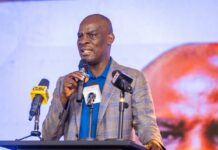
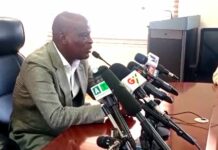
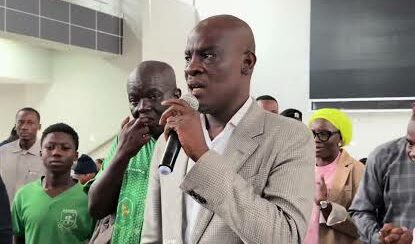
Speaking at the launch of Ghana’s 2026–2040 Foundational Learning Agenda in Accra on Wednesday, November 11, 2026, Mr Iddrisu said President John Dramani Mahama was determined to ensure that every child received a strong educational foundation.
He said the initiative, which is being championed by Vice President Professor Naana Jane Opoku-Agyemang, reflected the government’s belief that every Ghanaian child deserved the opportunity to succeed through quality foundational education.
“President Mahama is resetting and resetting with faith and belief that every child deserves to get it right and start with foundational learning,” he said.
Mr Iddrisu assured development partners, including the British government and UNICEF, of Ghana’s commitment to working with them to implement the agenda.
He acknowledged that although Ghana had made progress in education, significant inequalities remained in the delivery of quality basic education.
The minister cited Ghana’s literacy rate, which he put at approximately 78 per cent, compared with a global figure of about 98 per cent. He added that the country’s literacy performance among people aged up to 15 years stood at approximately 91 per cent.
He said the figures demonstrated some progress but stressed the need to address existing gaps to ensure that all children benefited from quality education.
Mr Iddrisu noted that disparities in educational opportunities between rural and urban communities, as well as between public and private schools, would be among the issues the new strategy sought to address.
He also questioned Ghana’s progress towards fulfilling the constitutional commitment to free compulsory universal basic education.
He recalled that the 1992 Constitution guaranteed every Ghanaian child the right to free, compulsory and universal basic education, noting that the country’s 34-year journey made it appropriate to assess how far it had come in achieving that objective.
“Thirty-four years old is legitimate to raise questions and to ask questions. How far have we come as a country in our journey towards the attainment of free compulsory universal basic education?” he asked.
According to him, the new foundational learning strategy would help provide answers to some of these questions and guide interventions to improve access and learning outcomes.
He gave an assurance that the Mahama administration would work to ensure that no Ghanaian child was denied access to foundational education because of gender, geographical location or financial circumstances.
Mr Iddrisu further underscored the importance of early childhood education, citing evidence that children who receive quality early childhood education before the age of five tend to perform better throughout their schooling.
Such children, he said, were more likely to enrol in school on time, less likely to repeat grades or drop out, and more likely to complete both primary and secondary education.
He therefore described investment in early childhood and foundational learning as essential to improving educational outcomes and expanding opportunities for Ghanaian children.
The launch of the 2026–2040 Foundational Learning Agenda was held under the theme, “Foundational Learning: The Bedrock of Ghana’s Sustainable Future.”
The event also featured the unveiling of the Foundational Learning Ecosystem Framework and strategic documents, the handover of learning materials, the inauguration of the National Foundational Learning Working Group and the signing of a National Foundational Learning Compact.
The long-term agenda is intended to strengthen literacy and numeracy among children and provide a coordinated framework for improving the quality of basic education across the country.
By Evelyn Tengmaa