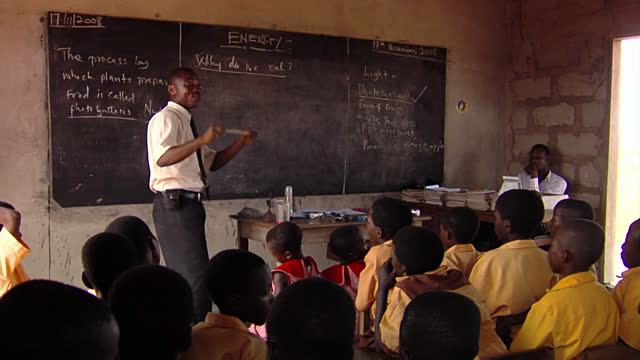

The government has launched the 2026–2040 Foundational Learning Agenda to improve literacy and numeracy among Ghanaian children, following national assessment results which show that a significant proportion of pupils are struggling to attain basic proficiency in English and mathematics.
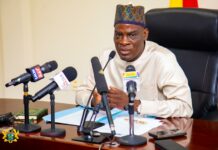
The Chief Director of the Ministry of Education, Lydia Essuah, said strengthening foundational learning was critical to preparing young people for further education, employment and entrepreneurship.
Speaking at the launch of the government’s flagship initiative in Accra on Wednesday, November 11, 2026, under the theme “Foundational Learning: The Bedrock of Ghana’s Sustainable Future,” Ms Essuah called for concerted efforts to improve learning outcomes, particularly in schools requiring the most support.
She cited findings from Ghana’s 2024 National Standardised Test, which assessed nearly 473,000 Primary Four pupils.
According to her, about 35 per cent of the pupils scored below basic proficiency in English Language, while 38 per cent recorded similar results in mathematics.
She further disclosed that the assessment covered nearly 315,000 Primary Six pupils in mathematics, with approximately 38 per cent performing below proficiency.
“These results tell us that many pupils need support at both stages. We must act early and decisively to ensure that our children acquire the foundational proficiency in English and mathematics to remain competitive on the global stage,” she said.
Ms Essuah stressed that the ability to read with understanding and apply mathematical concepts went beyond academic achievement, describing the skills as essential tools for navigating everyday life and the world of work.
She illustrated this with the example of a child who could read a story and explain it in their own words, as well as calculate whether they had enough money to purchase items at the market.
According to her, children who develop strong reading skills are better equipped to understand science texts, follow technical instructions and pursue further learning, while those with sound numeracy skills can measure accurately, compare costs and solve workplace problems.
She said the Ministry of Education would continue collaborating with the Ghana Education Service and development partners to strengthen teaching and learning from kindergarten through the early primary grades.
The interventions, she explained, would include coaching teachers in effective approaches to teaching reading and mathematics, as well as providing appropriate learning materials to support classroom instruction.
Ms Essuah noted that acquiring these competencies early would expand opportunities for young people to pursue further education, learn trades and establish businesses.
The launch also featured the unveiling of the Foundational Learning Ecosystem Framework and strategic documents, the handover of learning materials, and the inauguration of the National Foundational Learning Working Group.
A National Foundational Learning Compact was also scheduled to be signed as part of efforts to establish a common framework for implementing the agenda.
Ms Essuah urged stakeholders to remain focused on measurable improvements in learning outcomes, particularly among children in underserved schools.
“As we carry out these commitments, I ask each of us to keep one question in mind: Are more children learning to read with understanding and use mathematics with confidence, especially in the schools that need the most support?” she asked.
The 2026–2040 agenda is expected to provide a long-term framework for strengthening foundational literacy and numeracy as Ghana seeks to improve the quality of basic education and equip children with essential skills for the future.
By Evelyn Tengmaa