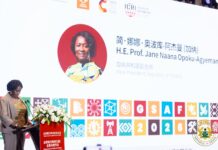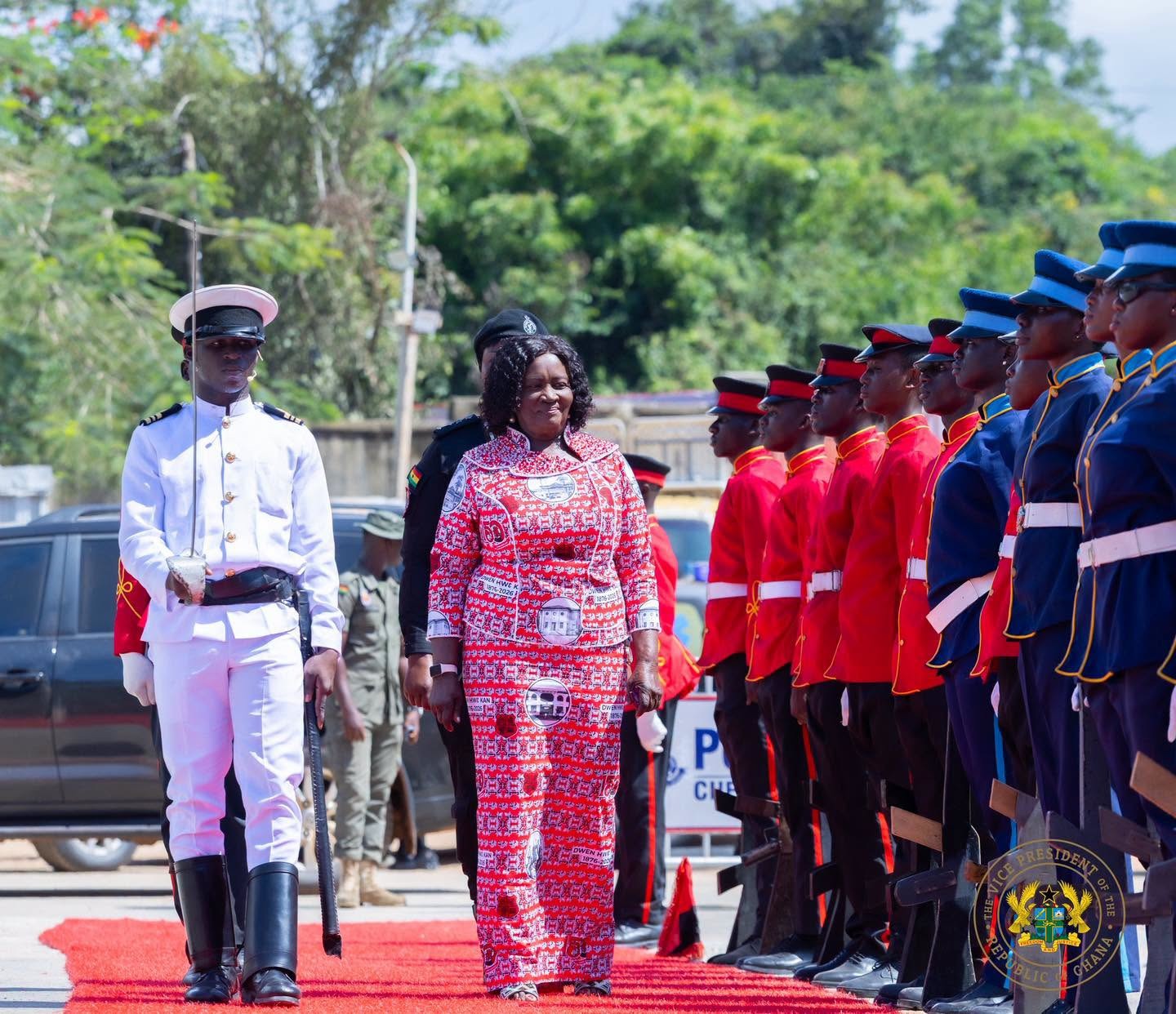

Vice-President Professor Naana Jane Opoku-Agyemang has called for renewed national commitment to quality secondary education, urging stakeholders to focus not only on expanding access but also on improving learning outcomes, strengthening character and preparing students for the changing demands of the global economy.
She made the call on Saturday, November 14, 2026, when she addressed the grand durbar marking the 150th anniversary of Mfantsipim School in Cape Coast.
Speaking on behalf of President John Dramani Mahama, the Vice-President congratulated the school, its alumni, management, staff, students and the wider community for sustaining its legacy over the past century and a half.
She described Mfantsipim as an integral part of Ghana’s educational history, having nurtured generations of young men who have contributed to national development.
Prof. Opoku-Agyemang also acknowledged the Methodist Church Ghana for its enduring contribution to education and commended the Oguaa Traditional Council and the people of Cape Coast for providing a home for the institution.
The Vice-President said the 150th anniversary should serve as an opportunity for the country to reflect on the future of secondary education and the reforms required to prepare young people for emerging opportunities.
She outlined government’s commitment to expanding access, improving infrastructure, ensuring the availability of trained teachers and maintaining educational standards.
According to her, a $300 million financing agreement signed in 2026 is expected to support secondary education, with emphasis on access, relevance and improved learning outcomes.
She further disclosed that the 2027 national budget had allocated GH¢1.3 billion to improve secondary education and support efforts to eliminate the double-track system.
Prof. Opoku-Agyemang said several senior high schools had returned to single-track operation, while work was ongoing to complete previously stalled infrastructure projects.
She cited the commissioning of the A-Block at Paga Senior High School by President Mahama as one of the recent developments in the government’s efforts to improve school infrastructure.
She stressed that the investments were intended not merely to expand enrolment but also to provide adequate facilities, restore instructional time and improve the overall quality of education.
The Vice-President observed that technological advancement, scientific innovation, climate change and changing employment patterns were transforming the skills and knowledge required of young people.
She urged educational institutions to adapt to these developments while preserving the fundamental values that had shaped generations of students.
According to her, Ghana must strengthen the relationship between education, research, industry and national development to ensure that the country’s educational system produces graduates capable of contributing meaningfully to economic transformation.
She linked this vision to the government’s broader ambition of building an economy that produces more of what it consumes, processes more agricultural produce, develops industries, creates meaningful employment and uses national resources for the benefit of all.
Prof. Opoku-Agyemang also reflected on Mfantsipim’s motto, Dwen Hwe Kan, explaining its historical and cultural significance.
She recalled that the motto was given to the school by John Mensah-Sarbah, one of its earliest students, who chose to express the principle in Fante rather than Latin or English.
She said the decision was significant at a time when the Gold Coast was under colonial rule, describing it as a statement that encouraged independence, self-actualisation and confidence in African achievement.
A century and a half later, she said, the motto remained relevant and should continue to inspire students to embrace education as a tool for personal advancement and national transformation.
The Vice-President commended the Mfantsipim Old Boys Association for its contribution to the school’s development, particularly through legacy projects and initiatives undertaken as part of the anniversary celebrations.
She also praised the anniversary planning committee, Board of Governors, school management, parents, partners and supporters for their respective contributions.
However, she reminded current students that the responsibility of preserving the school’s reputation rested with them.
She urged them to uphold the standards and values that had earned Mfantsipim its distinguished place in Ghana’s educational history.
Prof. Opoku-Agyemang called for an understanding of educational excellence that goes beyond academic performance to include strength of character, consistently high standards and service to humanity.
She congratulated the school community on reaching the historic milestone and expressed hope that the next chapter of secondary education in Ghana would be defined by genuine excellence.
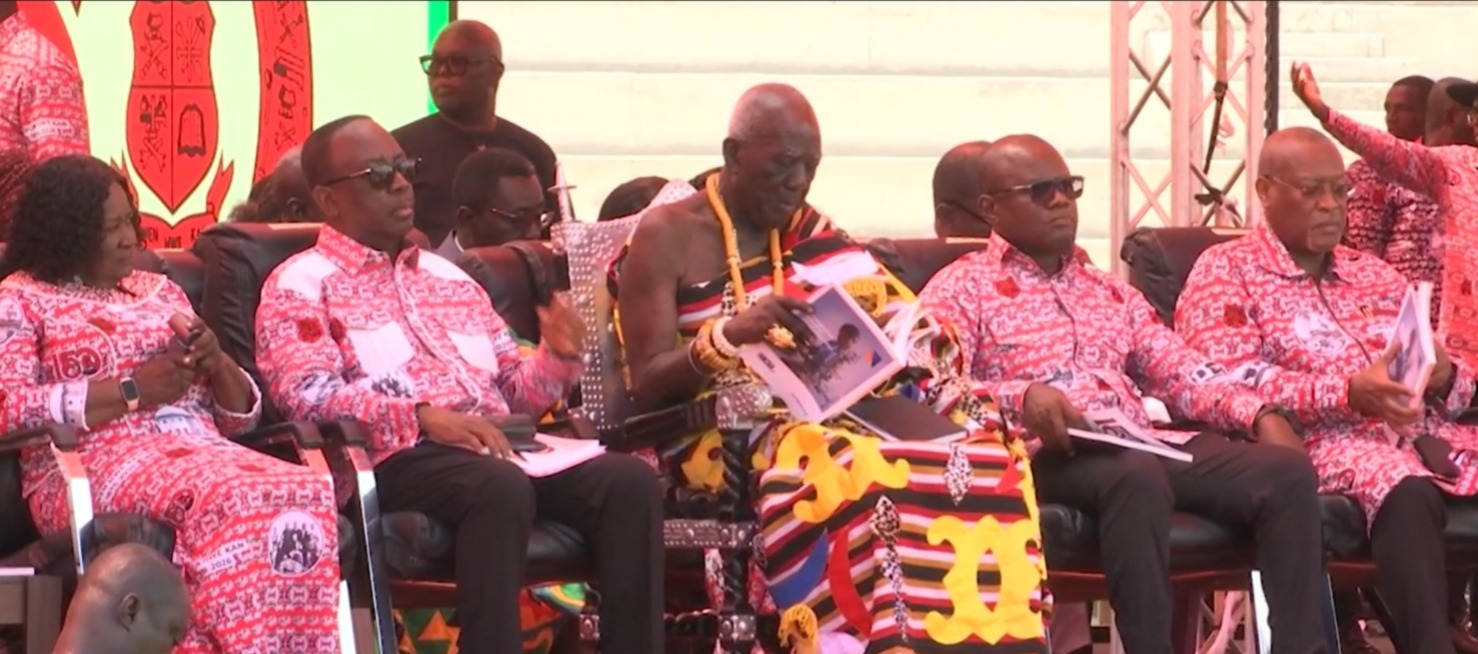
Mfantsipim School, is Ghana’s oldest secondary school. Its 150th anniversary celebration brought together prominent national figures, including Asantehene Otumfuo Osei Tutu II, Education Minister Haruna Iddrisu, traditional leaders, alumni and other distinguished guests.