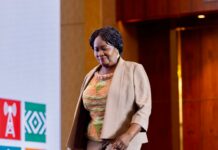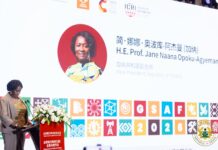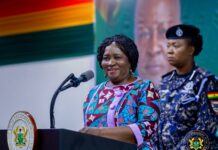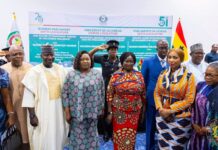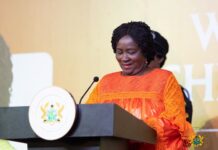

Vice President Professor Naana Jane Opoku-Agyemang has reaffirmed government’s commitment to disability inclusion, announcing key interventions in education, employment and economic empowerment aimed at improving the lives of persons with disabilities in Ghana.
In a speech read on her behalf by Senior Political Advisor Dr Samuel Ofosu Ampofo at the Day of Help for Persons with Disabilities in Koforidua, in the Eastern Region, the Vice President said disability inclusion must be treated as a matter of justice, equality and human rights, rather than charity.
She said government is committed to removing barriers that prevent persons with disabilities from accessing education, employment, public infrastructure and other opportunities necessary for their full participation in national development.
According to Professor Opoku-Agyemang, Ghana’s 2021 Population and Housing Census recorded more than two million people living with varying degrees of disability, making it imperative for the country to strengthen policies and interventions that promote their welfare and dignity.
She stressed that persons with disabilities are important contributors to national development and should be recognised as professionals, entrepreneurs, parents, students, innovators and citizens with aspirations and capabilities.
“The inclusion of persons with disability is fundamentally a matter of justice, equality and human rights. It must never be reduced to an act of charity or occasional generosity,” she stated.
The Vice President disclosed that the allocation of the District Assemblies Common Fund to persons with disabilities has increased from three per cent to five per cent this year.
She said the increased allocation must translate into meaningful improvements in beneficiaries’ lives through support for economic activities, assistive devices, skills development and other interventions that promote independence and self-reliance.
She also announced that disability desks would be established at every Metropolitan, Municipal and District Assembly to provide an institutional platform for engaging disability organisations and ensuring that resources address their actual needs.
She urged local authorities to ensure that the desks become effective instruments for accountability, inclusion and empowerment rather than merely administrative structures.
On employment, Professor Opoku-Agyemang said President John Dramani Mahama has announced a minimum five per cent employment quota for persons with disabilities in public and private institutions.
The policy is expected to be complemented by tax incentives for private sector employers who meet the required quota.
She further disclosed that the Ministry of Gender, Children and Social Protection is working with the Ghana Education Service to facilitate employment opportunities for 272 graduates with disabilities.
She, however, emphasised that the effectiveness of these interventions would depend on their implementation, insisting that policies must translate into actual jobs, meaningful careers and sustainable livelihoods.
The Vice President highlighted government’s commitment to expanding educational opportunities for persons with disabilities through free tertiary education, including tuition and residential support.
She also referenced amendments to the Ghana Education Trust Fund (GETFund) legislation to provide a statutory basis for financing tertiary education for persons with disabilities.
She recalled that the Inclusive Education Policy introduced in 2015, during her tenure as Minister for Education, reflected the country’s commitment to ensuring that every child, irrespective of disability, has access to quality education.
On the legal framework, she said Cabinet has approved amendments to the Persons with Disabilities Act, 2006 (Act 715), to bring Ghana’s legislation closer to the United Nations Convention on the Rights of Persons with Disabilities.
She described the various interventions as investments in human potential, national productivity and the future leadership of Ghana.
Professor Opoku-Agyemang also called on government, the private sector, religious organisations, development partners and well-meaning Ghanaians to support the proposed Ability Village initiative.
She described the project as a forward-looking initiative that seeks to create a sustainable environment where persons with disabilities can acquire skills, access specialised healthcare and rehabilitation, develop their talents and participate meaningfully in economic and social activities.
The proposed facilities and programmes include technical and vocational training, specialised healthcare, rehabilitation, software development, hardware repair, counselling, advocacy, assisted living and affordable housing.
The initiative will also provide opportunities for persons with disabilities interested in agriculture and business development to become economically independent, generate income and contribute to national development.
The Vice President said the Ability Village should be regarded not simply as a charitable project but as an investment in human capacity, innovation and inclusive economic growth.
She encouraged stakeholders to combine their resources, expertise and networks to help turn the vision into reality.
Beyond policy interventions, the Vice President identified negative societal attitudes as one of the major challenges confronting persons with disabilities.
She called for an end to discrimination, harmful stereotypes and practices that undermine the abilities and contributions of persons with disabilities.
She urged parents to nurture the ambitions of children with disabilities, teachers to support inclusive learning and employers to recognise talent beyond physical limitations.
Religious institutions, she said, also have an important responsibility to promote acceptance, compassion and practical support.
She further emphasised the need to involve persons with disabilities in decisions affecting their lives.
“Nothing about persons with disabilities should be decided without their meaningful participation,” she stressed.
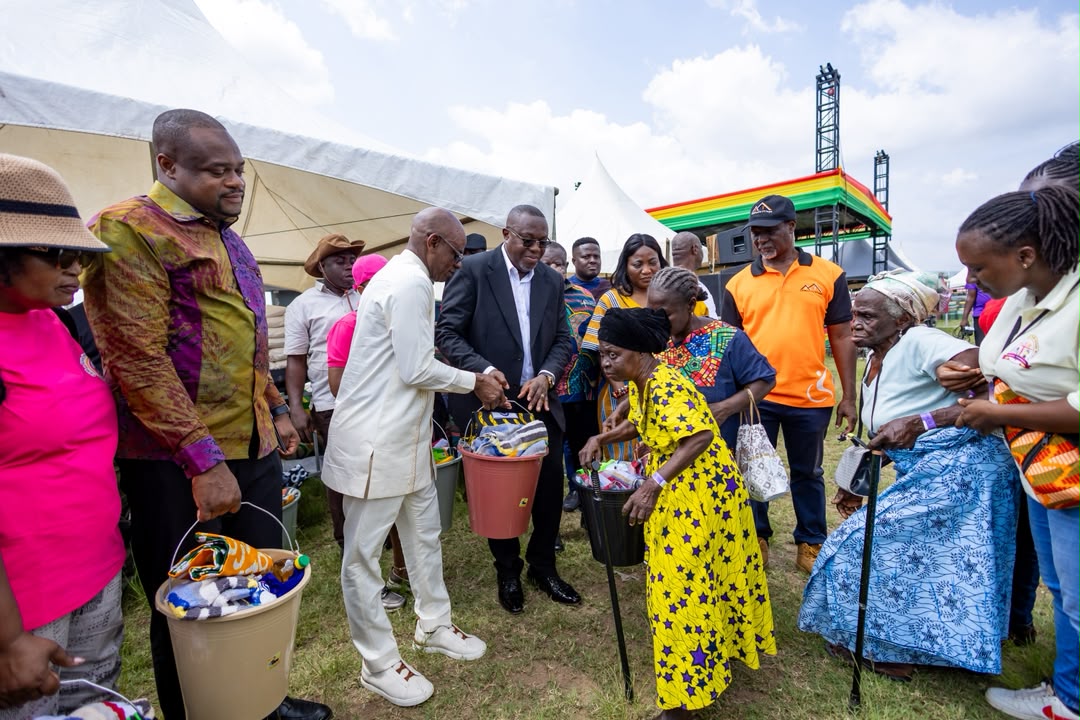
The Vice President commended Reverend Dr Steve Mensah, the leadership of the Charismatic Evangelistic Ministry, volunteers and partner organisations for sustaining the Day of Help initiative over the years.
She noted that the programme, which began at Independence Square in Accra, has expanded to Tamale, Takoradi and Koforidua.
Through the initiative, thousands of persons with disabilities have benefited from free medical care, assistive devices, surgeries, food assistance and vocational training.
She urged Corporate Ghana to support disability inclusion through long-term partnerships rather than limiting its contributions to occasional donations.
Professor Opoku-Agyemang said Ghana’s national development agenda cannot be achieved if millions of citizens continue to face barriers that prevent them from realising their full potential.
She called for a society where wheelchair users can access public facilities, children with visual or hearing impairments can receive quality education, and qualified persons with disabilities can secure employment without discrimination.
Addressing persons with disabilities, she assured them that their dreams, contributions and dignity matter and that their future is an important part of Ghana’s future.
She called on all stakeholders to move beyond good intentions to practical action by ensuring that policies are implemented, institutions are accessible, communities are inclusive and opportunities are available to everyone.
By Evelyn Tengmaa