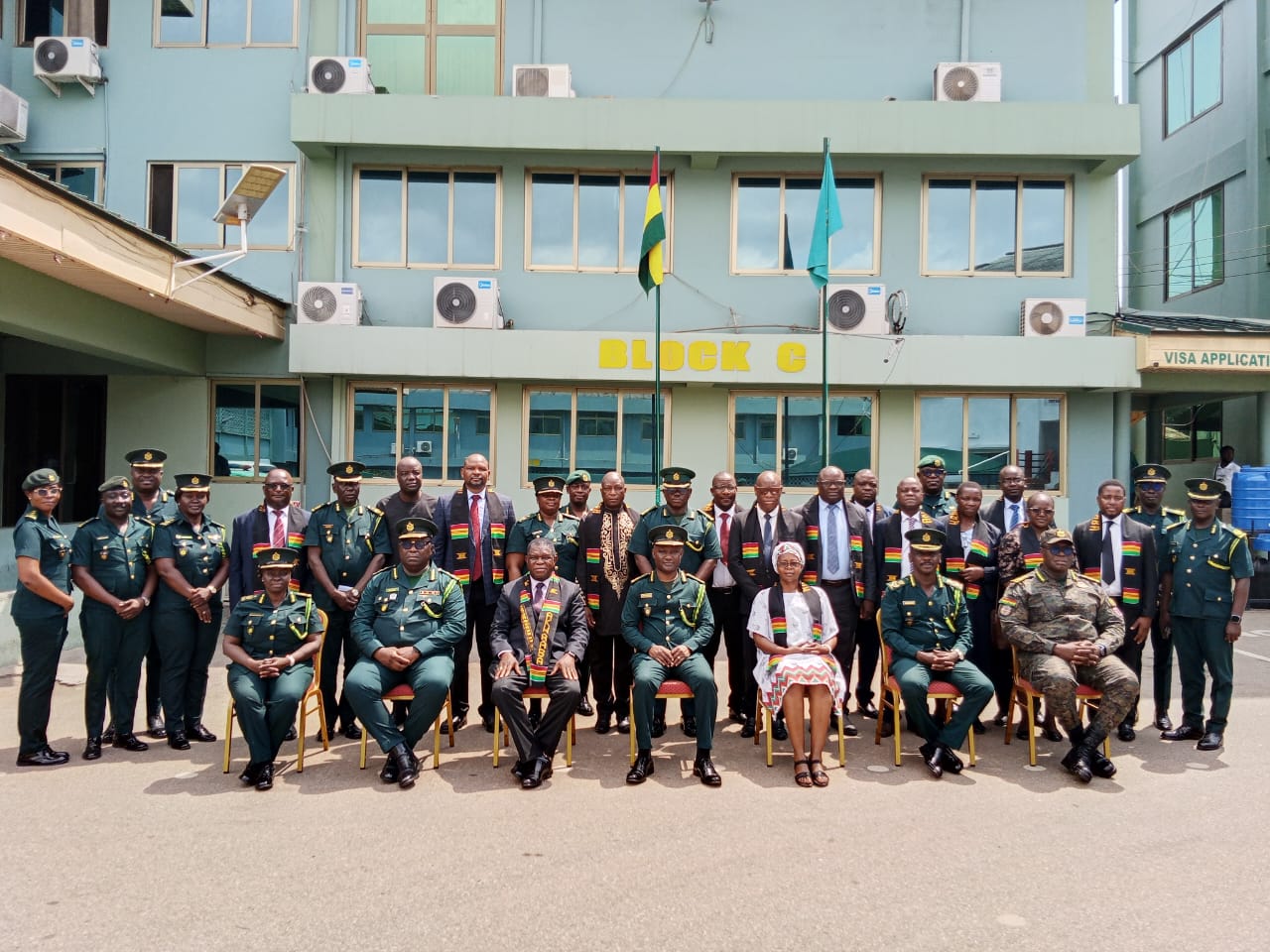

The Zimbabwean Border Management Authority Project Team has paid a benchmarking visit to the Ghana Immigration Service (GIS) to understudy its operational systems, institutional structure and border management strategies as the country prepares to establish its own Border Management Authority.
The visit forms part of Zimbabwe’s efforts to gather practical experiences from countries with established border management systems to guide the development of an effective, efficient and modern authority.
Welcoming the delegation in Accra, Comptroller-General of the Ghana Immigration Service, Mr Samuel Basintale Amadu, highlighted the longstanding historical relations between Ghana and Zimbabwe, noting that both countries share a common colonial heritage and have maintained strong ties over the years.
He said the Ghana Immigration Service had evolved significantly since its transformation from a department into a security service in 1989, growing from an initial workforce of about 400 officers to a standing force of more than 20,000.
Mr Amadu explained that the Service’s mandate had expanded beyond border management to include border patrol operations, aimed at addressing illegal entry routes and strengthening the country’s border security.
He noted that Ghana has 48 officially gazetted entry points along its land borders, in addition to more than 300 unapproved routes that require effective monitoring and patrols.
The Comptroller-General said the Service would expose the visiting delegation to its institutional structure, operational mandate and various departments, as well as arrange visits to selected operational facilities, including Kotoka International Airport, major land borders and the Tema Port.
Speaking on behalf of the Director-General of the Zimbabwe Border Management Authority, Mr Kudakwashe W. Mumhure said the visit marked an important milestone in Zimbabwe’s efforts to establish a modern and efficient border management system.
He explained that Zimbabwe was currently operating with a project team tasked with gathering information and experiences from established institutions to inform the design and structure of its proposed authority.
According to him, the establishment of the Zimbabwe Border Management Authority had received Cabinet approval, making the remaining task one of determining when and how the authority would be operationalised.
Mr Mumhure disclosed that the delegation had previously undertaken similar benchmarking visits to China, South Africa, Singapore, Tanzania and India, where it gathered lessons on technology, integrated border controls, regional coordination, infrastructure and operational procedures.
He said Ghana was particularly important to the exercise because of its experience within the African context and its role in regional integration through the Economic Community of West African States (ECOWAS).
The delegation is expected to study Ghana’s organisational structure, operational protocols, staff training programmes, biometric identification systems and electronic travel documentation.
Mr Mumhure added that Zimbabwe was also interested in Ghana’s strategies for combating irregular migration, human trafficking and transnational organised crime, while maintaining a balance between national security and trade facilitation.
He expressed confidence that the experiences and lessons from Ghana would contribute significantly to shaping Zimbabwe’s proposed border management framework.
The benchmarking visit is expected to include engagements with various departments of the Ghana Immigration Service and visits to selected border management facilities to observe the Service’s operations and institutional practices.