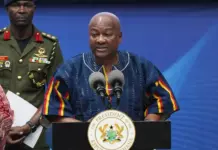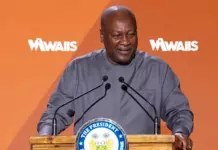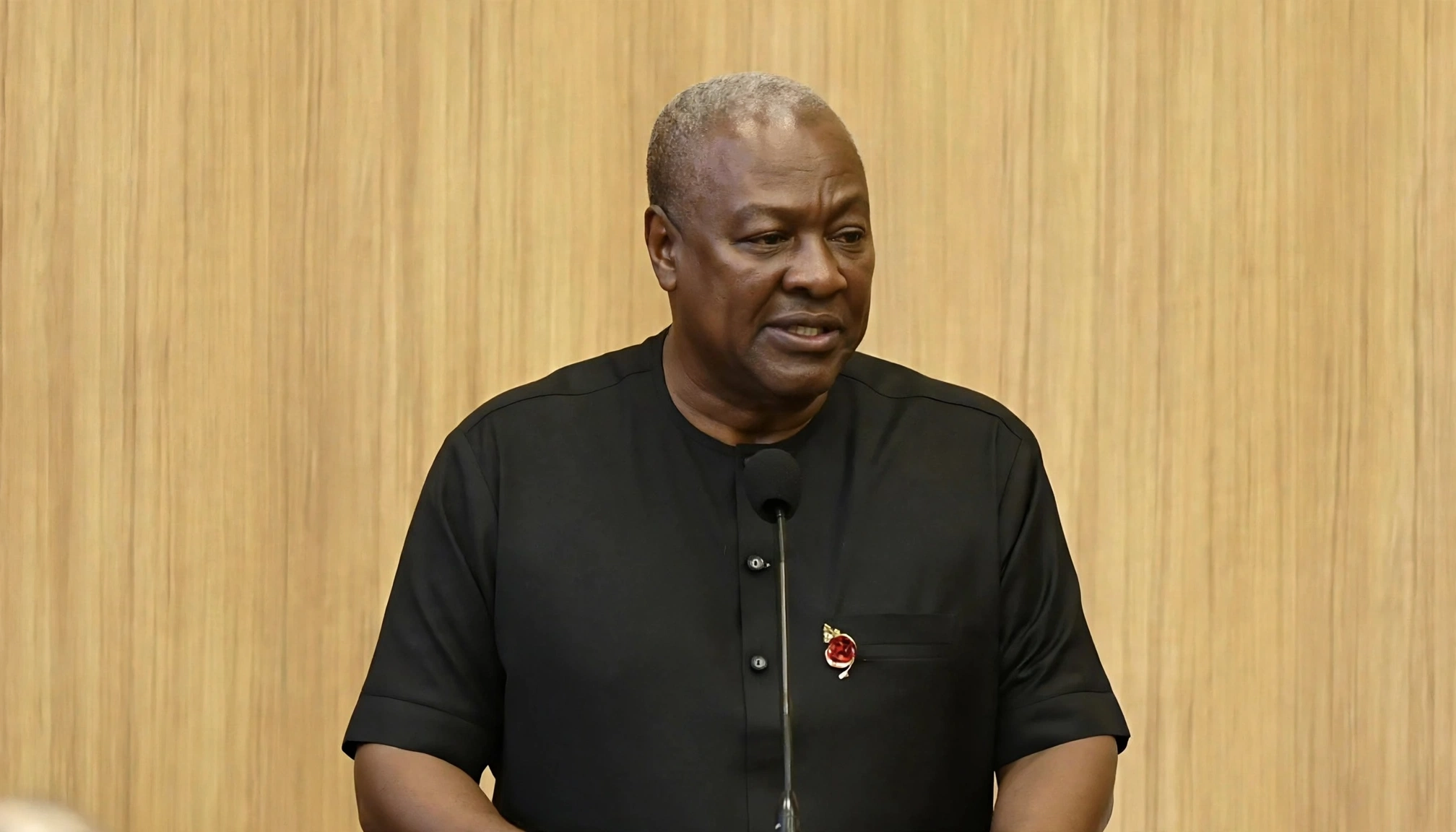

President John Dramani Mahama has told investors that Ghana’s currency, the cedi, has shown greater stability, supported by stronger foreign exchange reserves and improved external balances.
He made the point that the currency appreciated by 40.7 per cent against the US dollar in 2025 and remained about 7 per cent stronger in September 2026 than in September 2025.
President Mahama said this when he welcomed participants to the first Invest Ghana Summit.
He told them that their investments in cement, fertiliser and petroleum refining show what African entrepreneurs can build when they commit capital long term and adopt an integrated view of the African market.
The theme, “Investing in Gh ana’s New Economy: Building a Productive Economy that Creates Value and Competes Globally”, poses a practical question. What can we produce competitively in Ghana and sell to Africa and the world? he said.
“That question matters to investors seeking their next opportunity. It matters equally to the Ghanaian entrepreneur expanding a factory, the farmer seeking a reliable buyer, and the young person seeking a first job. The investment we seek must connect the ambitions of all these people.
“Africa has a young, enterprising population, growing cities and rising demand for goods and services. Our producers have an opportunity to meet more of that demand. Processing more of what we grow and extract creates jobs in factories and opens markets for farmers, transporters and suppliers. We also retain more of the value generated by our resources,” President Mahama said.
He added “The African Continental Free Trade Area gives us a way to do this at scale. A manufacturer considering a new plant needs to know if it can serve customers across several countries from a single production base.
That decision depends on how goods move across borders, whether standards are recognised, and how quickly businesses can clear customs and receive payment. As governments, we must make it easier to trade in practice. We must also address the costs businesses face at home. Unreliable and expensive power makes production uncompetitive. Short-term, high-interest credit makes projects unfeasible. Weak transport links increase the cost of moving raw materials and finished goods along the value chain.
These constraints hit smaller firms hardest because they have the least room to absorb them. As is often said, Government is the enabler, not the operator. Government will enable and the private sector will deliver. The private sector will build much of Africa’s productive capacity. Governments can provide reliable infrastructure and predictable rules. Businesses must turn those conditions into factories, better products, jobs and exports. Financial institutions have a role in providing the patient capital that enables a promising business to become competitive.
“The Dangote Group’s investments in Ghana demonstrate how an African business can expand across borders. Its proposed sugar project in the Bono East Region also illustrates the impact of an industrial investment on agriculture.”
He stressed that “Our currency, the cedi, has shown greater stability, supported by stronger foreign exchange reserves and improved external balances. The currency appreciated by 40.7 per cent against the US dollar in 2025 and remained about 7 per cent stronger in September 2026 than in September 2025.”