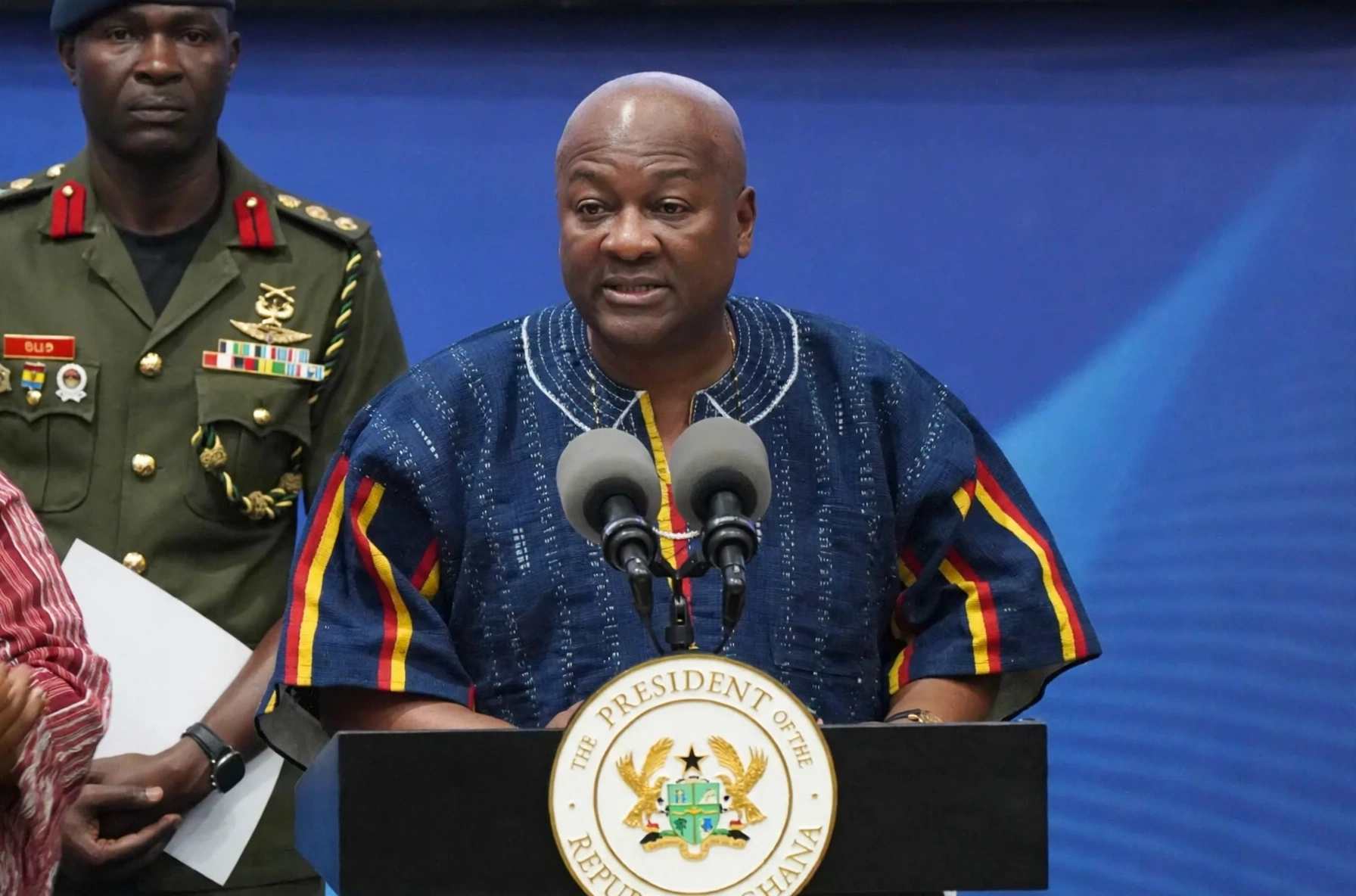

President John Mahama has outlined five strategies to address dangerous migration on the African continent that exposes its citizens to risk.
Speaking at the 20th anniversary celebration of the Centre for Migration Studies at the University of Ghana on November 18, the President said while African countries work towards dealing with the problem, it cannot be dealt with through vigilantism and mob attacks.
He made reference to the recent attacks on foreigners in South Africa, noting that although South Africa has a legitimate right to address its migration crisis, mob justice is not the solution.
“South Africa has a legitimate right to address its migration crisis. But the challenges of migration will not be solved by vigilantism. They will not be resolved by marauding crowds searching for and brutalising people believed to be illegal immigrants,” President Mahama said.
1. Govern migration as Africans actually move
President Mahama said Africa must govern migration in a way that reflects how Africans actually move, citing the AU Free Movement Protocol, Regional Economic Communities and Agenda 2063 as providing clear direction.
“The AU Free Movement Protocol, our Regional Economic Communities and Agenda 2063 provide clear direction in this regard, and yet the gap between the commitments we make in conference rooms and what an African citizen experiences at our border posts remains very wide,” he said.
2. Strengthen security while easing legal travel
He said declarations on integration must make a difference in people’s daily lives at borders, by strengthening security while making it easier for people to travel legally.
“Our declarations on integration should make a difference to our people’s daily lives at our borders. That means strengthening security while making it easier for people to travel legally. These two objectives can be pursued together,” he noted.
“Good border governance must deliver on both: keep a nation secure, but at the same time facilitate easy travel of citizens,” he added.
3. Build partnerships grounded in dignity and shared responsibility
The President said Africa’s international migration partnerships must be grounded in dignity, reciprocity and shared responsibility.
“Our international migration partnerships must be grounded in dignity, reciprocity and shared responsibility,” he said.
He said Africa will continue to cooperate on border management, combating trafficking and smuggling, and on return and reintegration, but that cooperation must go beyond merely preventing Africans from moving.
“That cooperation must serve a wider purpose than merely preventing Africans from moving. And so a credible partnership must expand regular migration pathways and create more opportunities for people to work and study. It must also support skills partnerships, investments and development,” he stated.
4. Engage international partners as equals
President Mahama stressed that Africans and their international partners must engage as equals, each with legitimate interests and shared responsibilities.
“Africans and their international partners must engage as equals, each with legitimate interests and shared responsibilities,” he said.
5. Link free movement to trade, jobs and integration
He said free movement must be linked to African trade, jobs and integration, pointing to Ghana’s role as host of the Secretariat of the African Continental Free Trade Area (AfCFTA).
“Ghana is proud to be the host of the Secretariat of the African Continental Free Trade Area. The promise of the African Continental Free Trade Area is enormous. If fully implemented, it has the potential to lift millions of Africans out of extreme poverty,” he said.
“But the market cannot fulfil its promise if goods are able to move more easily than the people who produce them,” he added.
President Mahama said Ghana intends to lead by putting its commitments into practice.
“Ghana intends to lead by putting its commitments into practice. Our leadership will be judged by how we fulfil the commitments we make,” he said.