
More than 200 training opportunities have been earmarked for women in Ghana under a new initiative aimed at helping them become professional truck drivers and secure jobs in the mining and heavy transport industries.
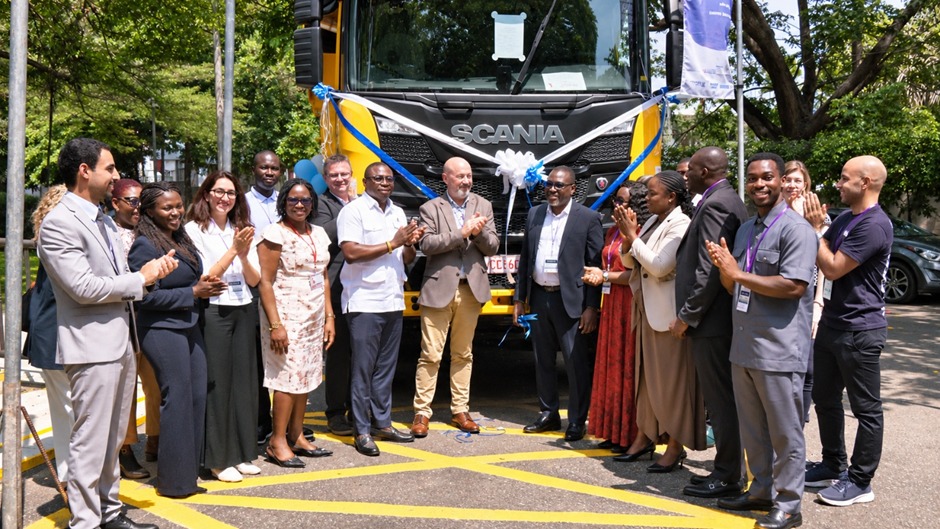
The project, dubbed Empowering Women in Mining Transport, was officially launched on Wednesday, November 18, 2026, through a partnership involving the German development agency GIZ, Scania West Africa, Reach for Change and Women in Mining.
The initiative seeks to open up job opportunities in an industry traditionally dominated by men. It targets 80 people for professional truck-driving training and another 200 training places in business development and mining-related skills, with women expected to account for 80 per cent of participants.
The programme comes at a time when women remain underrepresented in Ghana’s mining industry. According to figures from a 2023 Ghana Chamber of Mines study cited at the launch, women made up only about 10 per cent of the large-scale mining workforce, held 14 per cent of senior positions and occupied 21 per cent of professional roles.
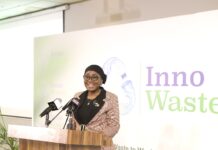
Speaking at the event, Sandra Retzer, Country Director of Deutsche Gesellschaft für Internationale Zusammenarbeit (GIZ) in Ghana, said many women were capable of working in mining and heavy transport but lacked access to training and employment opportunities.
“Too often the barriers are not only simply a lack of ability, they can include limited access to specialized training, stereotypes about traditionally male occupations, inadequate professional networks, concerns about workplace conditions and a lack of clear pathways from training into employment,” she said.
She explained that the project, supported by Germany’s Federal Ministry for Economic Cooperation and Development through the develoPPP programme, was designed to help women acquire the skills and confidence to compete for jobs in the industry.
Retzer stressed that the ultimate objective was not simply to train women but to help them secure decent jobs when they complete the programme.
“Most importantly the project aims for the trained women to secure decent jobs as truck drivers by the end of the project. That employment target is central to our approach,” she stated.
She also disclosed that since 2019, GIZ’s develoPPP programme in Ghana had concluded 22 projects, creating more than 3,000 jobs, training over 24,000 people and helping improve the incomes of more than 17,000 people.
Retzer urged mining companies and transport operators to give qualified women a chance to demonstrate their abilities, saying female heavy-duty truck drivers should be recognised as skilled professionals rather than exceptions in the industry.
François Lecha, Managing Director of Scania West Africa, said the initiative was an investment in people and the future of the transport and mining sectors.
“At Scania West Africa, we strongly believe that talent is not defined by gender. We believe that when opportunities are made accessible, women can excel in every aspect of our business, from vehicle operation and transport management to technical and leadership roles,” he said.
According to him, Scania has previously organised driver development programmes in Ghana, Côte d’Ivoire and Burkina Faso, where women demonstrated strong commitment and performance, with some participants later applying their skills in Europe and North America.
He explained that participants would be trained in professional driving, road safety, defensive driving, vehicle operations and workplace readiness to prepare them for employment in mining transport.
“As we move forward, our ambition is not only to train women, but to help create long-term career opportunities and demonstrate that excellence in transport and mining knows no gender,” Lecha added.
The Ghana Chamber of Mines also called on mining companies and contractors to provide employment opportunities for women who complete the training.
Christopher Opoku Nyarko, Director of Analysis, Research and Finance at the Ghana Chamber of Mines, speaking on behalf of its Chief Executive Officer, Ing. Dr. Kenneth Ashigbey, said skills development must lead to actual jobs if the programme is to make a lasting difference.
“First, skills development must lead to employment,” he stated, urging mining companies and transport operators to provide internships, apprenticeships and recruitment opportunities for qualified women.
He disclosed that women currently account for an average of more than 10 per cent of the workforce across Chamber member companies, with some firms recording female participation above 20 per cent.
Nyarko also called for safer workplaces, fair recruitment and opportunities for women to progress into leadership positions.
The Minister for Gender, Children and Social Protection, Dr. Agnes Naa Momo Lartey, in a statement delivered on her behalf by Vera Karikari Bediako, Head of the Gender Equity Committee Secretariat, said removing barriers to women’s participation required deliberate action from employers.
“We all agree that the existence of policies and laws alone will not deliver the change we seek. We must translate these commitments into practical opportunities, supportive workplaces and clear pathways for women to enter, remain and advance in the mining and transport sectors,” she stated.
The Minister referenced Ghana’s Affirmative Action (Gender Equity) Act, 2024, and urged companies to promote fair recruitment, training and career advancement for women.
She emphasised that the success of the project should be measured by the opportunities created and the number of women who are able to build sustainable careers.
For many women, the initiative could mean more than learning to drive a heavy-duty truck. It could provide a chance to earn a stable income, support their families and enter a profession they may previously have considered beyond their reach.
But beyond the launch and training targets, the bigger question remains whether mining and transport companies will provide the jobs needed to turn those opportunities into lasting careers.
By Wisdom Sarfo