


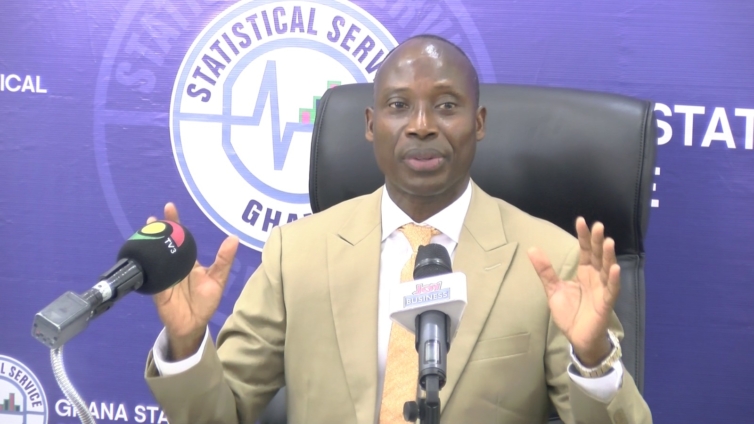

The Government Statistician, Dr Alhassan Iddrisu, has said that about one in three young people aged 15 to 24 had no job in the first three quarters of 2025.
Dr Iddrisu made the point that unemployment is highest among secondary school leavers, at 36.2 per cent in the third quarter of 2025.
“Matching skills to jobs is where Ghana’s future productivity begins,” he said.
He further indicated that each worker in Ghana now has almost four times as much equipment and infrastructure as in 1991.
Since 2020, he said, capital per worker has grown by only about 1 per cent a year, and productivity growth has slowed with it.
“Between 2013 and 2019, average earnings in Ghana almost doubled, from about GH¢6,200 to GH¢11,700, and grew faster than productivity. Since 2021, earnings have not kept pace with output per worker. Productivity improves living standards when its gains reach households,” he said when he released the new Productivity, Employment and Growth Report.
He added that raising productivity is a shared task.
“Government can set targets. Businesses can invest in skills and technology. Employers and workers can use the evidence in social dialogue. Partners, researchers, and the media can help track progress. Together, we can make every gain count for every Ghanaian,” he said.
Today, he further indicated that the average worker in Ghana produces nearly three times as much as in 1991, an increase of 178 per cent.
“Over the same period, comparable African economies gained about one third. Ghana has built a strong foundation to grow on,” he said.