


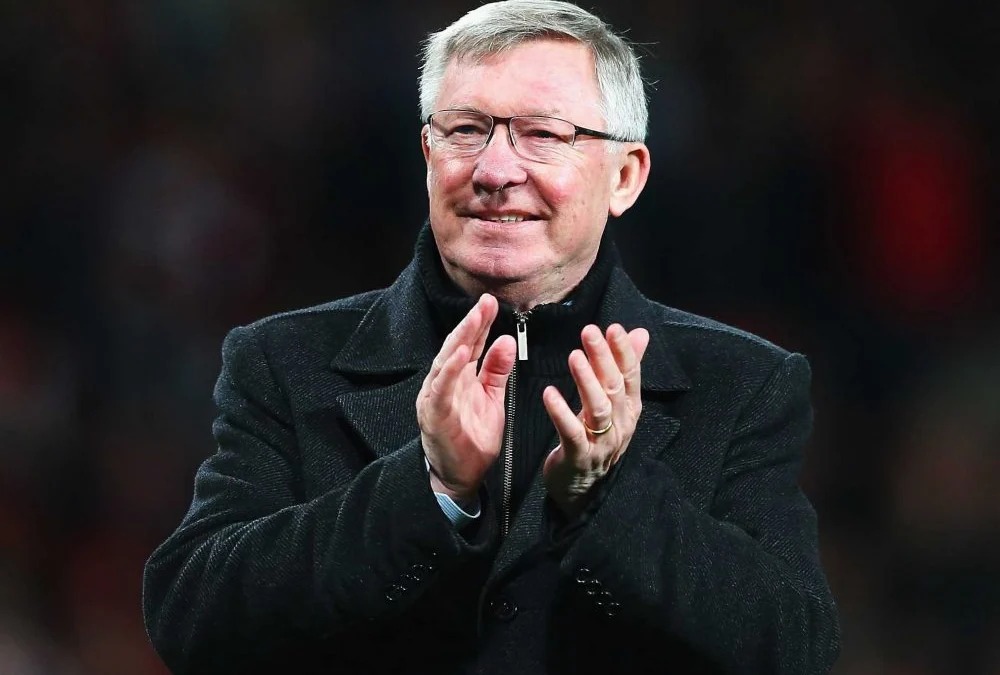

There is an uncomfortable truth Manchester United supporters must confront: while Sir Alex Ferguson remains the most successful manager in the club’s history, his contribution to the club’s present predicament cannot be completely divorced from the decisions he made in the twilight of his managerial career.
Ferguson built an empire at Old Trafford. He transformed Manchester United into a formidable football institution, established a culture of relentless winning and presided over an era in which the club commanded respect, fear and admiration across Europe. His achievements are monumental, and nobody can reasonably dispute his place among the greatest managers football has ever produced.
But greatness should not confer immunity from scrutiny. And when the history of Manchester United’s decline is eventually written, Ferguson’s decision to recommend David Moyes as his successor must occupy a prominent chapter.
The question is not whether Ferguson was a great manager. He undoubtedly was. The question is whether the man who spent more than two decades building a football dynasty made the right decision when it was time to hand over the reins.
In my view, he did not.
Indeed, there is a compelling argument that Ferguson’s choice of Moyes was influenced more by his desire to preserve the institutional culture and perhaps the memory of his own reign than by an ambitious assessment of what Manchester United needed to remain competitive at the highest level.
The Succession Gamble That Changed Everything
When Ferguson announced his retirement in 2013, Manchester United were still at the summit of English football. They had just won the Premier League title, their 20th league championship, and possessed a squad that, despite some ageing players, remained capable of competing for major honours.
This was not a club desperately searching for an identity. It was a club that had just demonstrated its capacity to dominate English football.
The challenge, therefore, was not merely to find someone to occupy Ferguson’s seat. It was to identify a manager with the tactical sophistication, personality, authority and managerial pedigree to sustain the club’s dominance and navigate the inevitable transition.
Instead, Ferguson settled on David Moyes.
To be fair, Moyes had done commendable work at Everton. He had built a competitive side without the financial resources enjoyed by some of his Premier League rivals. He was disciplined, hardworking and had earned a reputation as a manager capable of extracting the best from limited resources.
But managing Everton and managing Manchester United are two entirely different propositions.
At Everton, expectations were considerably different. At Manchester United, winning was not simply an ambition; it was an institutional expectation. The club was expected to compete for the Premier League, challenge for the Champions League and attract some of the finest footballers in the world.
Moyes had never managed a club of that magnitude. He had never operated under the relentless scrutiny that comes with managing one of the world’s biggest football institutions. Nor had he demonstrated the experience of managing a team expected to dominate both domestically and in Europe.
Yet Ferguson considered him the right man for the job.
More extraordinarily, Moyes was handed a six-year contract, an indication of the enormous confidence placed in him. It was a gamble of extraordinary proportions, particularly for a club whose immediate future required stability, not experimentation.
Was Ferguson Looking For A Successor Or A Reflection Of Himself?
This is where the conversation becomes particularly interesting.
Ferguson had spent years establishing an unmistakable managerial culture at Manchester United. Discipline, loyalty, hard work, authority and an uncompromising approach to player management were central to his philosophy.
Perhaps he wanted someone who understood and appreciated that culture. Perhaps he believed Moyes, another Scottish manager with a reputation for discipline and hard work, would be the ideal person to maintain the traditions he had established.
But football was changing.
The modern game was becoming increasingly sophisticated, with tactical innovation, advanced recruitment structures, sports science and a more complex approach to player development becoming essential ingredients for sustained success.
Manchester United needed someone who could preserve the club’s winning mentality while simultaneously challenging its existing methods.
It needed evolution, not simply continuity.
And this is where the possibility of Pep Guardiola becomes relevant.
Guardiola represented a different managerial generation. His achievements at Barcelona had demonstrated an extraordinary understanding of tactical football, player development and the construction of a modern footballing philosophy. He subsequently took Bayern Munich to another level.
Ferguson had met Guardiola in New York in 2012, when the Spaniard was taking a sabbatical after leaving Barcelona. The possibility of Guardiola succeeding Ferguson has consequently remained an important part of the debate surrounding United’s succession.
If Guardiola was among the managerial possibilities being explored, why did Manchester United ultimately move in a different direction?
It is a legitimate question, although the precise extent of Guardiola’s availability and interest in the United job deserves to be established rather than assumed.
The larger issue, however, remains: did Ferguson genuinely seek the most qualified person to take Manchester United forward, or did he favour someone whose managerial personality and philosophy appeared more compatible with his own?
There is a distinction between appointing someone who respects your legacy and appointing someone capable of building a legacy of his own.
The Consequences Of A Failed Succession Plan
Moyes’ reign lasted only ten months.
Manchester United finished seventh in the 2013/14 Premier League season, failed to qualify for the Champions League and endured a campaign that exposed the enormous gulf between Ferguson’s managerial achievement and Moyes’ capacity to operate at that level.
The club subsequently appointed Louis van Gaal and later Jose Mourinho. Both managers arrived with impressive resumes and reputations as serial winners. Yet neither succeeded in restoring Manchester United to the sustained dominance Ferguson had established.
There were moments of encouragement. Mourinho won the Europa League, the League Cup and the Community Shield. Van Gaal delivered an FA Cup triumph. But trophies alone could not conceal the deeper structural problems confronting the club.
The post-Ferguson era became a revolving door of managerial appointments, changing philosophies, expensive recruitment exercises and repeated attempts to rediscover an identity.
Manchester United, once the benchmark against which other English clubs measured themselves, increasingly became an institution struggling to reconcile its glorious past with its uncertain present.
It would be simplistic to suggest that Moyes alone caused everything that followed. The club’s ownership, executive leadership, recruitment strategy, football administration and subsequent managerial appointments all contributed to its difficulties.
However, the initial succession decision was significant because it set the tone for everything that followed.
A poorly executed transition at an institution of Manchester United’s stature can have consequences extending far beyond one managerial appointment.
Ferguson’s Responsibility Does Not End With His Retirement
One of the most frustrating aspects of the Manchester United debate is the tendency to treat Ferguson’s contribution to the club’s present difficulties as an uncomfortable subject that should be avoided out of respect for his achievements.
That is misplaced reverence.
Ferguson was not simply an employee who happened to manage Manchester United for 26 years. He was an enormously influential figure whose opinion carried considerable weight within the institution. His recommendation of Moyes was not an ordinary managerial endorsement. It was a decision that helped shape the direction of the club after his departure.
He cannot reasonably be celebrated as the architect of Manchester United’s extraordinary success while every decision associated with his departure is placed beyond examination.
There is a difference between respecting an individual’s achievements and refusing to interrogate their decisions.
Ferguson’s legacy is enormous, but legacies are not supposed to be immune from historical examination.
If he believed Moyes was the right person to inherit the most demanding managerial job in English football, he should be able to explain the reasoning behind that decision.
Why Moyes? What qualities did Ferguson see in him that made him a better candidate than other elite managers? What succession planning had been undertaken? And why was the club prepared to commit itself to a six-year managerial contract when the appointee had never managed at that level?
These are not disrespectful questions. They are questions about institutional accountability.
Did Ferguson Fear Being Overshadowed By His Successor?
Perhaps the most provocative dimension of this debate concerns Ferguson’s own legacy.
For decades, he was Manchester United. His personality, authority and managerial philosophy became inseparable from the club’s identity. His achievements were so extraordinary that replacing him was always going to be an enormous challenge.
But was there an unconscious desire to appoint someone who would preserve the memory of his reign rather than someone who could potentially redefine the club and surpass his achievements?
It is a difficult proposition, and there is no established evidence that Ferguson deliberately sought to undermine a successor or protect his personal records.
Nevertheless, it raises an important question about the psychology of succession.
Great leaders must sometimes accept that the people who follow them may do things differently, challenge established traditions and even achieve greater success.
A genuinely successful succession is not one in which the successor spends his time trying to replicate the predecessor. It is one in which the institution is equipped to thrive long after the predecessor has departed.
If Guardiola had taken over Manchester United and transformed the club into an even more formidable European force, would Ferguson have been comfortable watching another manager redefine the institution he had spent decades building?
That question may be uncomfortable, but Manchester United supporters are entitled to debate it.
Manchester United Needed A Successor, Not A Caretaker Of Ferguson’s Legacy
Ultimately, the tragedy of Manchester United’s post-Ferguson era is that the club appeared inadequately prepared for life after its greatest manager.
Ferguson had an opportunity to influence a succession process that could have secured the club’s competitive future for another decade or more.
Instead, the appointment of Moyes exposed the dangers of confusing loyalty, familiarity and managerial compatibility with the qualities required to lead an institution of global importance.
Manchester United needed a manager with the capacity to challenge the established order, attract elite players, introduce modern tactical ideas and build a new generation of winners.
It needed a visionary, not merely someone who could be trusted to maintain the old traditions.
Ferguson deserves his place in football history. His contribution to Manchester United will remain immeasurable. But his achievements should not become a convenient shield against legitimate criticism.
The club’s decline has several authors, and subsequent managers and executives must answer for their respective failures. Yet Ferguson’s role in the original succession decision cannot be written out of the story.
The man who built the dynasty must also answer questions about how he handed it over.
And perhaps that is the most important lesson from Manchester United’s post-Ferguson experience: building a great institution is one thing; ensuring that it survives and flourishes after your departure is another.
Sir Alex Ferguson built the empire. But did he make the right choice when it was time to hand over the crown?
Manchester United supporters deserve an honest answer.
By John Ashong-Mettle