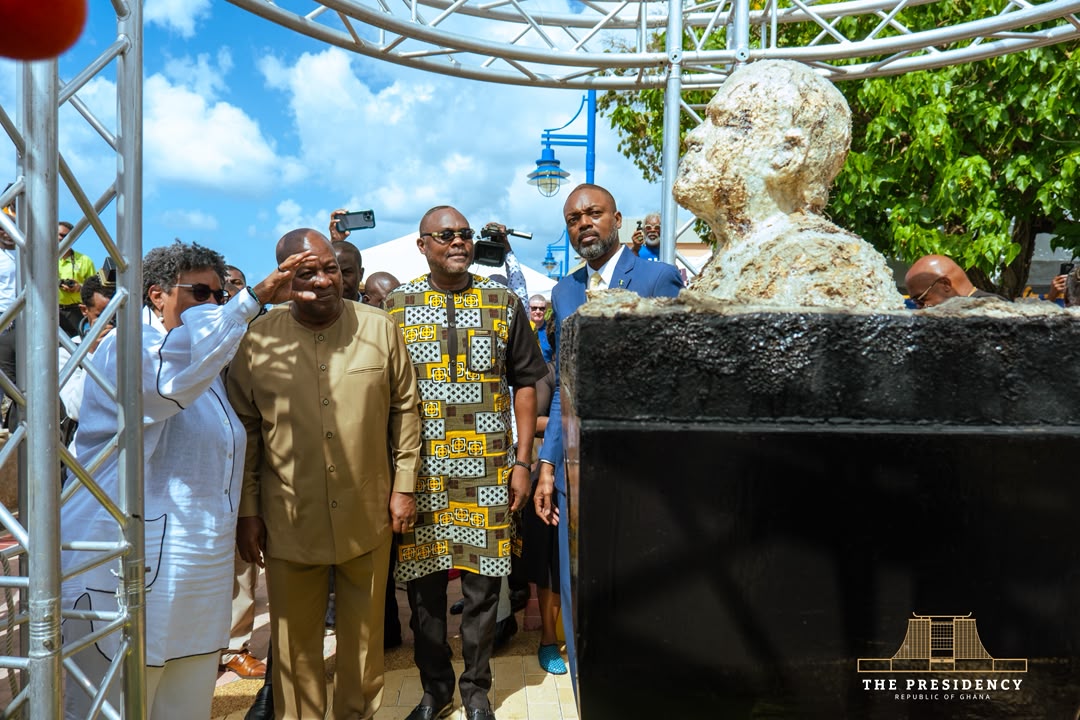

Barbados Prime Minister Mia Mottley has unveiled a statue of King Cuffie in Speightstown, describing the 1675 rebellion leader as a patriot and freedom fighter rather than a conspirator, as colonial records had labelled him.
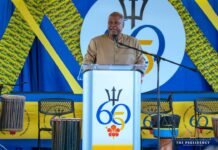
Speaking at the ceremony on Friday, November 27, 2026, to unveil the statue and twin the cities of Cape Coast in Ghana and Speightstown in Barbados, Mottley said Cuffie dared to imagine a Barbados governed by its own people, 351 years ago.
“Three hundred and fifty-one years ago, on this very coast, a man stolen from the Gold Coast dared to imagine what every law on this island told him was impossible: a Barbados governed by its own people,” she said.
“He did not live to see it, but thankfully, we are living it.”
Mottley said Cuffie, who was of Akan descent and described in colonial records as an “ancient Gold Coast Negro,” was a strategist, leader and statesman who refused to accept being regarded as property.
“In 1675, he stood at the centre of a plan to overthrow the Plantocracy. He went where no other man had gone before in the history of mankind: to dream and to challenge a system that legislated that someone with blood flowing through their veins… could be considered property, chattel or an inanimate object,” she said.
She said Cuffie did not stand alone, and those who joined him paid the ultimate price for their defiance.
“Today, we correct another record. King Cuffie and his compatriots were not conspirators. We see them as freedom fighters,” Mottley said.
“They were patriots before there was a patriot. They stood up for this country before the country was ready for them.”
Mottley traced a line of resistance from Cuffie through Bussa in 1816, and through 1876, 1937 and 1961, to universal adult suffrage in 1951, independence in 1966 and Barbados becoming a republic in 2021.
“None of the children sitting to my left should be denied the possibility of dreaming that they could rise to the highest office in this land, as Head of State, rather than having someone with whom we have no real connection claim that title, as they did for over three centuries. My friends, we are a proud republic today,” she said.
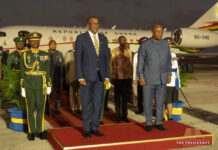
She welcomed Ghana’s President John Dramani Mahama, who was visiting Barbados for its 60th anniversary of independence and fifth anniversary as a republic, and thanked him for helping Barbados reclaim its Atlantic destiny.
She said the Cuffie project, led by the Division of Culture in her office in collaboration with Duke University, was placed literally in the hands of Barbadian children.
“Their hands, along with the sculpture of King Cuffie, will stand forever as a recognition of the moment when an independent republic reached across the ocean to say: we want to reconnect and celebrate our history,” she said.
“Those hands on the statue were placed in the Atlantic Ocean, in the Caribbean Sea, because it is the sea, more than anything else, that defines the journey of the people who arrived and, regrettably, those who never came because they lost their lives along the way.”
Mottley said the ceremony should not end with celebration alone, but should challenge present generations to build together as free people.
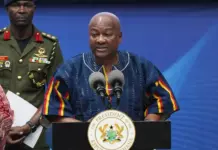
She endorsed President Mahama’s call for exchanges between schoolchildren in Barbados and Ghana, invoking the Akan concept of Sankofa.
“It is called Sankofa: go back and fetch it. We do not choose to dwell in pain, but we do not forget the pain that was inflicted upon us,” she said.
On reparatory justice, Mottley saluted Ghana for its moral courage in acknowledging the transatlantic slave trade as a grave sin, and pointed to the Global Africa Commission on Reparatory Justice created by President Mahama, on which Barbados serves.
She said discussions on reparatory justice must take place in a structured and dignified manner, and noted that while the United Kingdom had reached a settlement at the last Commonwealth Heads of Government Meeting, healing had not yet taken place.
“We hope this process will allow us not only to heal but also to bring justice to our people and enable Barbadians, Africans and British people to find common purpose in a world that is waiting for us to act with singular purpose,” she said.
“If we can settle these issues and bring about the healing necessary after centuries of injustice, I believe we will be the people who help give the world its best possible chance of survival at this difficult moment in global history.”
Mottley closed by linking the twinning of Cape Coast and Speightstown to Cuffie’s deferred dream.
“There are two words that should forever embrace our journey: solidarity and Cuffie. Cuffie was promised a crown here in Spain, but regrettably, he was denied it,” she said.
“We cannot give him that crown today, but we can give him something greater: a free people standing on this same ground, with his own people who have come across the waters from Cape Coast.”
“Through this twinning agreement, we assure him that his dream may have been deferred, but it is now forever our destiny.”