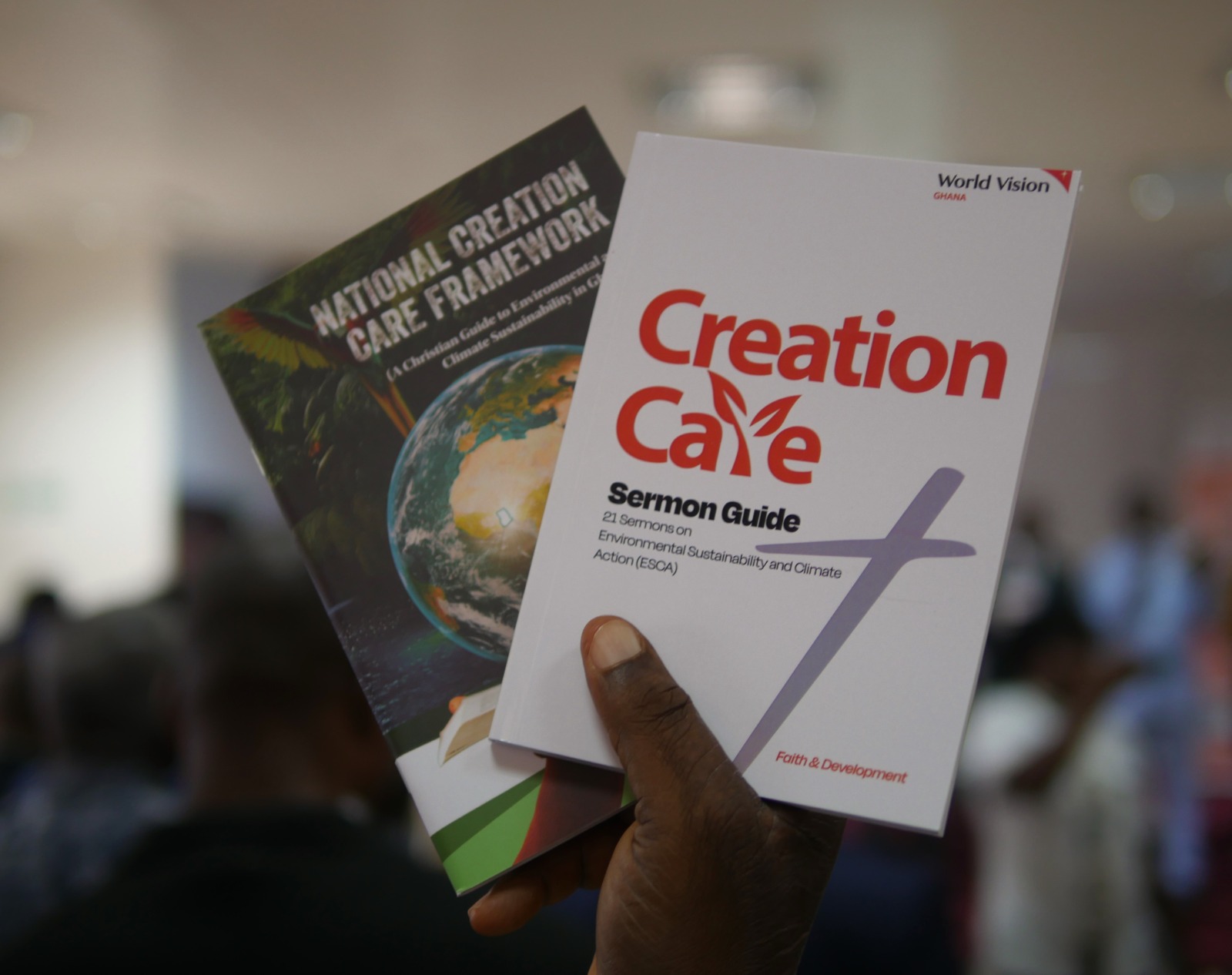

A national framework for ‘creation care’ has been developed to empower religious leaders in Ghana to promote environmental sustainability and climate action among Christians.
This initiative serves as a roadmap for integrating environmental stewardship into ministry practices and enhancing knowledge of best environmental practices.
Ghana is facing severe environmental challenges, including deforestation, unpredictable rainfall, droughts, and frequent flooding, all linked to climate change.
These issues are impacting agriculture, water availability, and public health, with rural and poor communities suffering the most.
Children in these areas are especially vulnerable, facing increased food insecurity, limited access to clean water, and a higher risk of diseases like malaria and diarrhea.
Climate-related disasters also damage infrastructure, destabilize economies, and disrupt education, forcing children into harmful situations like child labour and early marriage.
To address these issues, World Vision Ghana launched a collaborative effort to empower the Church to promote sustainable environmental practices, grounded in biblical principles.
Building on the Empowered World View model, they organized the First National Creation Care Conference with key partners on July 9.
This initiative led to a national action plan and the development of a Creation Care Framework to guide churches in environmental stewardship.
After two years of consultations, technical input, and funding support led by World Vision Ghana, the National Creation Care Framework has been developed.
This aims to equip the Church in Ghana to respond biblically and practically to environmental stewardship.
A three-day Creation Care Conference to officially launch the framework and train church and faith-based leaders in its application, has been held.
The conference aims to enhance the Church’s response to environmental degradation and climate change, focusing on both theological foundations and practical actions, with a special emphasis on the impact of these issues on vulnerable children and communities.
The conference, held in partnership with key organizations, with funding by world vision A Rocha Ghana, Akrofi-Christaller Institute, the church of Pentecost led to the creation of a national action plan and a vision for a Creation Care Framework for churches.
Speaking at the conference, Faith and Development Manager for World Vision Ghana Benjamin Sarbah explained the biblical foundation behind creation care.

He said the framework will be a crucial document to build capacity of religious leaders in their training in climate sustainability.
Deputy Director of a Rocha Ghana, Daryl Bosu highlighted the importance of involving Christians in environmental sustainability.

“We want to see the church having a louder voice speaking to government on issues regarding to the environment, that is why leaders need to understand sustainable climate challenges,” he said.
He cited that the Christians are a larger community that needs to be included to champion climate advocacy.
The Director of Akrofi-Christaller Institute, Ebenezer Blasu spoke on their role in advocating and educating faith-led environmental action.
He said protecting the environment is a spiritual responsibility.