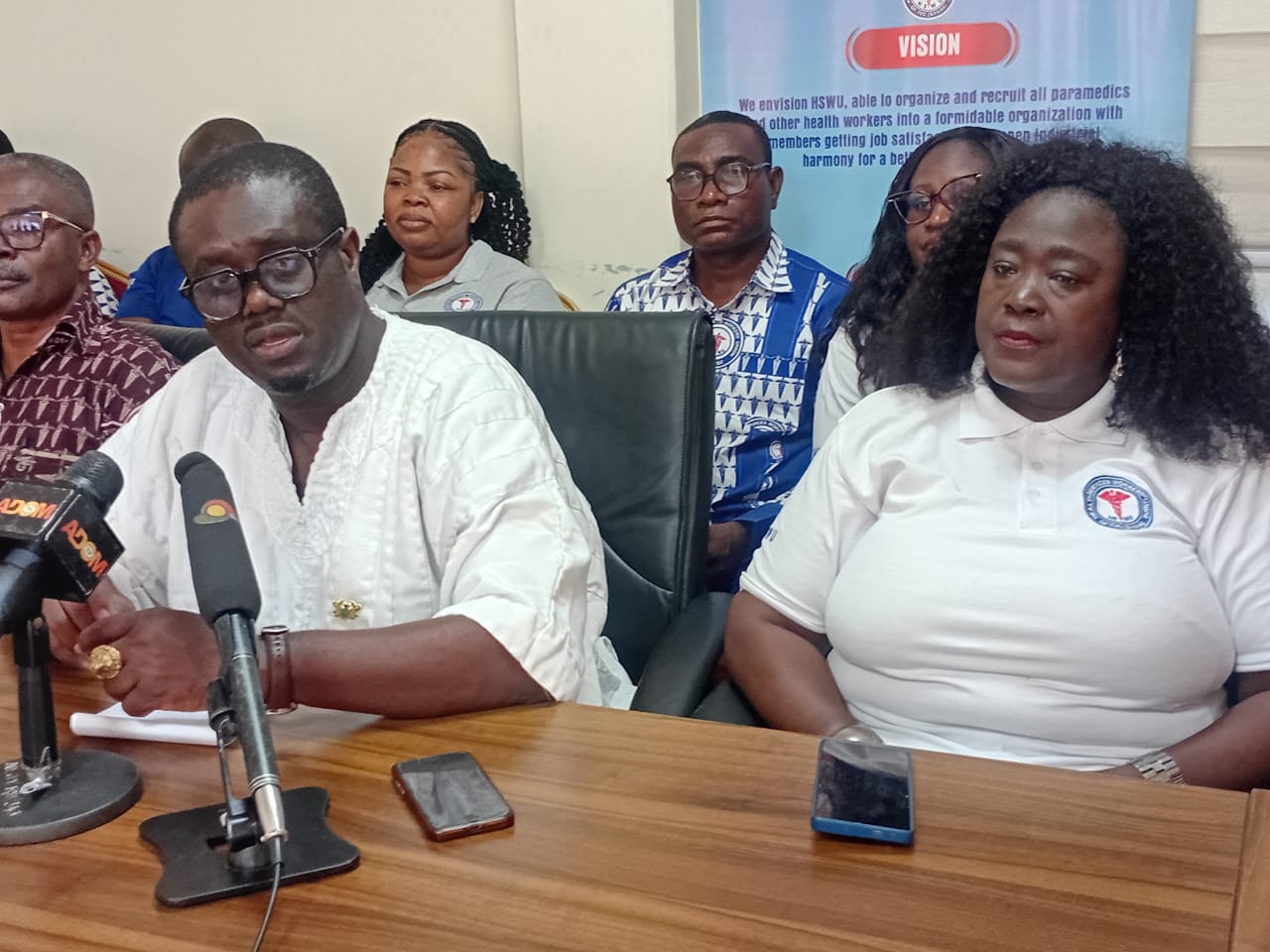

The Health Services Workers’ Union (HSWU) says about 15,000 workers in Ghana’s health sector are receiving extremely low wages, with some earning as little as GH¢600 a month.
According to the Union, the situation is not only placing a financial burden on the affected workers but is also threatening their long-term pension benefits.
The General Secretary of the HSWU, Franklin Owusu Ansah, is calling on the government to urgently intervene and improve the salaries and conditions of service of the affected workers.
Mr. Owusu Ansah explained that while the workers are all employed within the public health sector, there are significant disparities in their remuneration depending on the source of funding for their salaries.
“In the public sector, we have two sets of workers. Though they all work for the Government of Ghana, some are paid by government, while others are paid from internally generated funds. This is the area where wages are very low. Some people are asked to work for long hours and are paid as low as GH¢500. This is a serious situation, and we have engaged government to make sure that all these casual workers are mechanised so they can receive improved salaries.”
The Union says some of the affected workers are employed by health institutions and paid from internally generated funds (IGF), resulting in substantial differences in their earnings compared with colleagues on government payroll.
Despite the government’s recent announcement of a 9 to 10 percent salary increment for unlicensed workers in the health sector, the HSWU says the approximately 15,000 affected workers did not benefit from the adjustment.
Mr. Owusu Ansah is therefore urging government to take immediate steps to regularise the employment status of the affected workers and ensure that they receive improved remuneration.
Low wages affecting pensions
The Union is also raising concerns about the long-term impact of the low salaries on the retirement prospects of the affected workers.
It says because pension contributions, including those to the Social Security and National Insurance Trust (SSNIT) and the second-tier pension scheme, are linked to workers’ salaries, the low wages could translate into inadequate pension benefits upon retirement.
Mr. Owusu Ansah warned that workers who spend years earning low salaries could face serious financial difficulties after leaving active service.
“If you have a low salary, your pension will be low, and this is what is accounting for the low pensions in Ghana. It is our hope that we will get improved wages that we can say are adequate for workers, and therefore, it will help with improved pensions.”
The Health Services Workers’ Union is calling on the government to urgently review the wages and conditions of service of the affected workers.
The Union warns that failure to address the concerns could worsen frustration among workers and deepen tensions within Ghana’s health sector.
By Daniel Opoku