
Reconstruction and expansion works on the Accra–Tema Motorway have reached 30 percent completion, according to engineers of the construction firm handling the project.
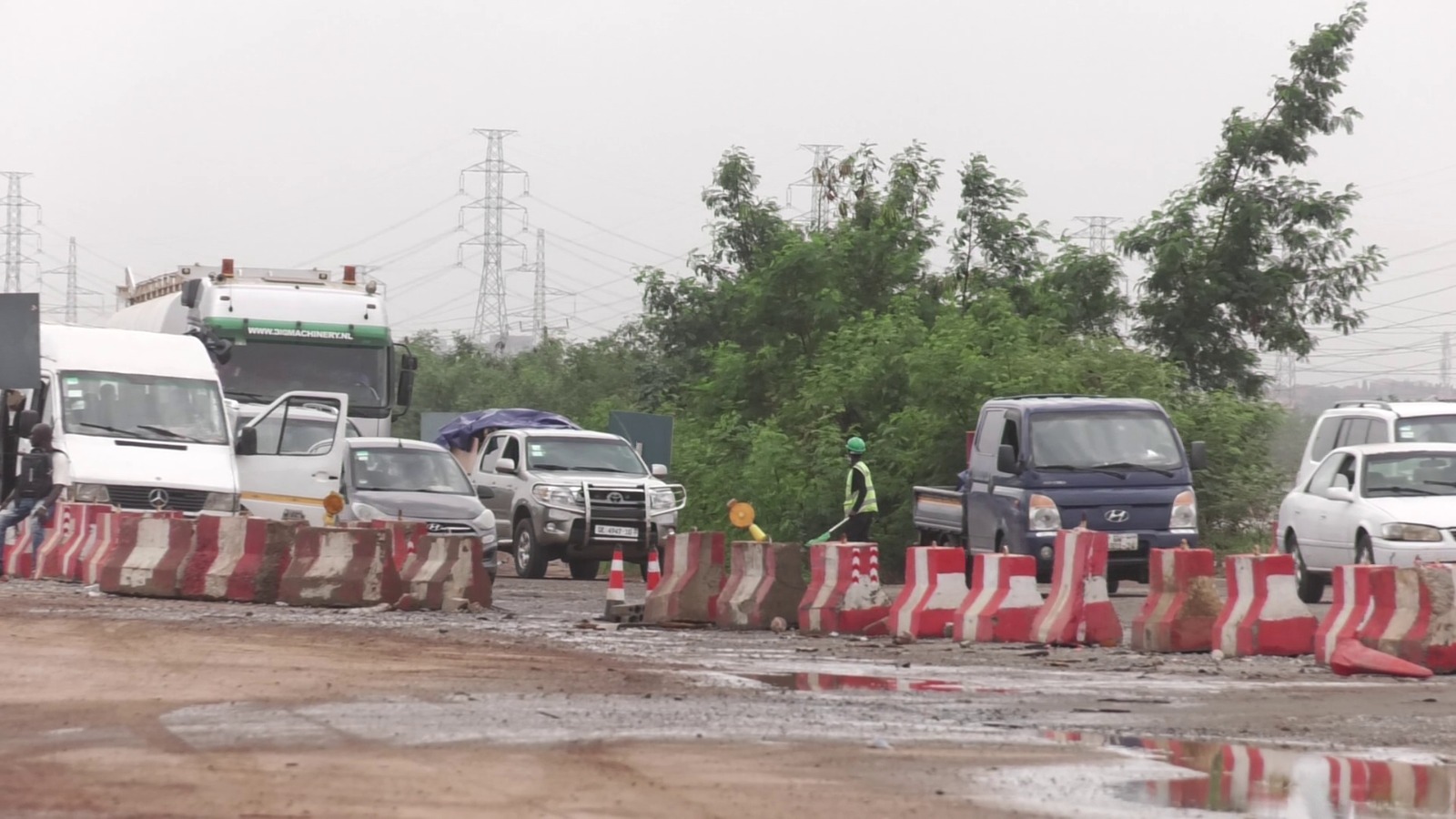
A visit to the project site on Friday afternoon revealed ongoing major excavation and earthworks, with heavy-duty equipment operating along multiple sections of the 19.5-kilometre stretch.
However, for many commuters and residents living around the MANET-Adjiringanor enclave, safety and accessibility have become growing concerns.
The MANET section of the motorway, which connects several adjoining communities including Adjiringanor, East Legon, and Trasacco, has become increasingly hazardous for pedestrians attempting to cross.
With limited demarcation, signage, and crossing assistance, residents say they risk their lives daily to get across the busy stretch where speeding vehicles pose constant danger.

“Almost every week, we hear of an accident a pedestrian being knocked down,” one resident lamented. “It’s become so risky that people must run across instead of walking.”
At the site, commuters could be seen dashing across open sections of the motorway, often timing their movements between moving vehicles. Some described the situation as “a death trap” and called on authorities and the contractors to urgently install pedestrian bridges or provide temporary crossing points with personnel to guide movement.
Drivers using the motorway also expressed frustration over long hours in traffic, especially during peak hours, as a result of ongoing diversions and uneven surfaces on parts of the road.
“We spend close to two hours just to move from Tetteh Quarshie to Tema,” a commercial driver told the news team. “The diversions are rough and dusty. We want the contractor to at least level and tar the temporary routes to make driving smoother.”

When contacted, the Resident Engineer of the construction company, speaking off-camera, confirmed that work was progressing steadily and that efforts were underway to treat and level all diverted roads to ease vehicular movement.
He disclosed that the project had reached 30 percent completion, with major earthworks, drainage systems, and interchange foundations ongoing.
“We understand the inconvenience being caused to the public,” he said. “We are taking steps to make the diversions more motorable while ensuring safety for pedestrians and motorists.”
The Accra–Tema Motorway, constructed in 1965 under the leadership of Ghana’s first President, Dr. Kwame Nkrumah, was the country’s first major dual carriageway and remains one of its most important transport corridors.
The ongoing expansion and reconstruction works will transform the highway from its current four-lane configuration into a ten-lane modern expressway, complete with service roads, pedestrian bridges, and improved drainage systems.
Remodelling of the Tetteh Quarshie, Apenkwa, and Achimota interchanges; Construction of five new interchanges, including one at the MANET section; Development of pedestrian footbridges and improved lighting systems.
The upgrade is expected to significantly reduce travel time between Accra and Tema, enhance trade and logistics efficiency, and improve road safety once completed.
While many commuters have welcomed the government’s investment in modernising the motorway, they are urging the Ministry of Roads and Highways and contractors to implement immediate safety interventions during the construction phase.
Residents in communities along the corridor want temporary pedestrian crossings, warning signs, and reflective barriers installed to prevent further accidents.
“We are happy about the expansion, but people’s lives matter too,” a commuter said. “We shouldn’t wait until more lives are lost before something is done.”
When completed, the Accra–Tema Motorway expansion will stand as one of Ghana’s most ambitious road infrastructure projects in recent decades a modern expressway befitting its status as the country’s busiest transport corridor.