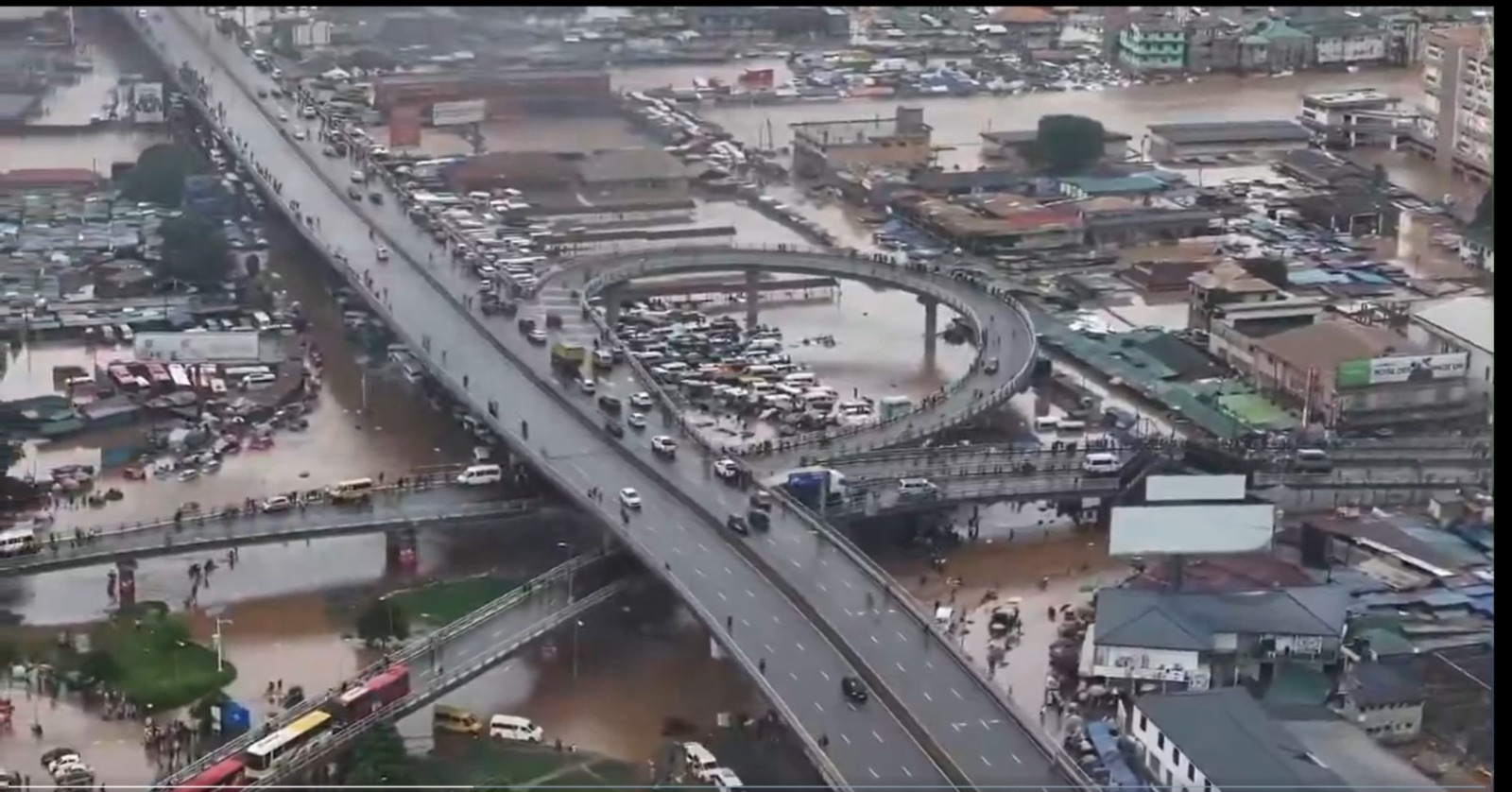

What started as Accra’s major flood protection plan has now become a story of stalled money, delayed works and uncomfortable questions.
The Greater Accra Resilient and Integrated Development Project, GARID, was designed to strengthen flood risk management, improve solid waste management and build urban resilience in selected assemblies within the Greater Accra Metropolitan Area, especially communities in the Odaw River Basin.
In simple terms, GARID was supposed to help Accra fight the flooding problem that returns almost every rainy season.
That’s according to a “RESTRUCTURING PAPER ON A PROPOSED PROJECT RESTRUCTURING OF Greater Accra Resilient and Integrated Development Project APPROVED ON 29-May-2019.”
The project had serious money behind it. The original financing was a US$200 million World Bank credit approved in 2019.
In 2020, US$65 million was activated under the emergency response component for Ghana’s COVID 19 responses.
To fill that gap and scale up priority works, the World Bank later approved US$150 million in additional financing.
Parliament approved that extra US$150 million in May 2024 for drainage improvements, solid waste management and other flood mitigation measures under GARID.
But the project’s biggest problem may not have been lack of funding on paper. It was the movement of the money.
World Bank documents say GARID was significantly constrained by fiscal measures introduced by the Ministry of Finance in 2025.
These included a funding ceiling on project disbursements and the temporary sweeping of GH¢13.8 million from the project’s designated account.
The Bank says the cash flow constraints led to unpaid Interim Payment Certificates, delayed contractor payments and a slowdown in civil works.
The same World Bank paper says that although the additional financing had become effective, GARID did not receive the necessary Ministry of Finance authorization to disburse against it.
As a result, the project team had to continue financing eligible works from the original financing until the works category was depleted.
By April 14, 2026, cumulative disbursement stood at US$137.66 million, about 40 percent of the total US$350 million project financing.
The World Bank further states that GARID experienced no disbursements for approximately 16 months, from November 2023 to March 2026, because government fiscal controls affected access to project funds.
That is the uncomfortable part.
Accra was flooding. Residents were counting losses. Businesses were being disrupted. Drains were still struggling. Yet the very project meant to reduce the city’s flood risk was battling delayed authorization, cash flow pressure and unpaid contractors.
On the ground, the delays are visible in parts of the flood control chain. GARID announced in March 2024 that dredging had begun on unencumbered sites of the Odaw River Basin to clear silt and solid waste and improve water flow.
The project was described as a four-year arrangement, with the first year focused on major dredging and later years tied to performance and maintenance.
But concerns over unfinished drainage works have continued. In Parliament, Works and Housing Minister Kenneth Gilbert Adjei said the Nima Paloma to Odawna drainage project had stalled after the contractor’s contract was terminated over poor performance.
The project involved a 1.5-kilometre box culvert along the Odawna river drainage channel and was originally expected to be completed by December 2025. The minister also said retendering and repackaging could not proceed without commitment authorization from the Ministry of Finance.
This is why GARID has now become more than a flood story. It is a governance story, a fiscal discipline story and public safety story.
Fiscal discipline may be necessary in a country managing debt, deficits and macroeconomic pressure. But the GARID case raises a sharper question: when spending controls slow down flood protection, who bears the real cost?
The cost is not only in dollars. It is in flooded homes, delayed compensation, unfinished drains, disrupted businesses and communities that remain exposed every time the clouds gather.
GARID did not begin as a scandal. It began as a promise to protect Accra. But years later, the question is unavoidable: did Accra’s flood protection project get flooded by the very bureaucracy meant to manage public money?
Read full report HERE:
By Wisdom Sarfo