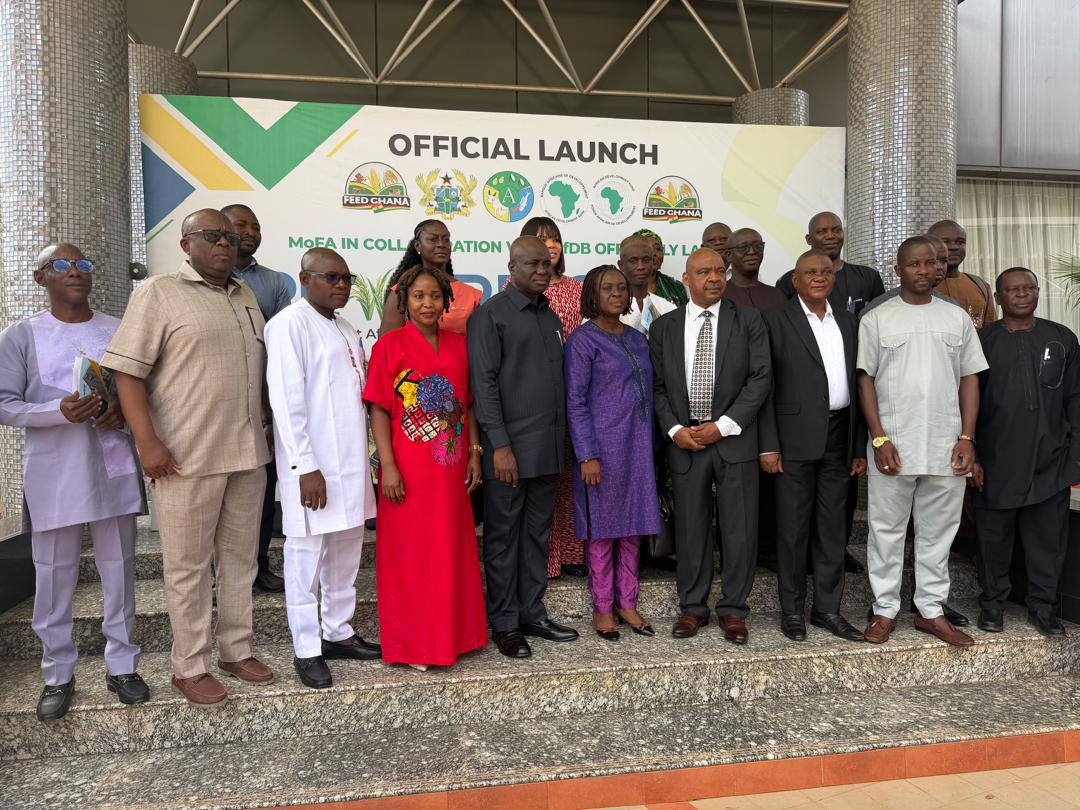

The African Development Bank (AfDB) has provided Ghana with a US$18.8 million grant to accelerate domestic rice production, strengthen processing capacity and reduce the country’s estimated US$500 million annual rice import bill, as the government intensifies efforts to achieve rice self-sufficiency by 2028.
The grant was announced by the Minister for Food and Agriculture, Eric Opoku, at the launch of the Regional West Africa Resilient Rice Value Chains Development Project (REWARD-Ghana) in Tamale on November 10.
It comes at a time when Ghana’s milled rice production has increased from approximately 685,000 metric tonnes in 2022 to 960,000 metric tonnes in 2025.
Despite the progress, local production currently meets only 56 per cent of national rice consumption, leaving a 44 per cent supply gap that is largely filled through imports.
BACKGROUND
Rice has become Ghana’s second most important cereal after maize, with rising population, urbanisation and changing consumer preferences pushing demand ahead of domestic production.
Consumption is projected at about 1.8 million metric tonnes for the 2025/26 season, driven largely by population growth and urbanisation. Imports, mainly from Vietnam, India and Thailand, have historically filled the gap.
A long-running import burden
Ghana spends between US$320 million and US$500 million annually on rice imports, a drain on foreign exchange that exposes consumers to international price fluctuations and supply disruptions.
Successive governments have tried to close the gap through programmes such as Planting for Food and Jobs and the National Rice Development Strategy II (NRDS II), focusing on improved seeds, irrigation expansion, modern farming technologies and local processing.
By Timothy Antwi-Otoo