
The Minister for Roads and Highways, Kwame Governs Agbodza has said Ghana cannot rely solely on traditional public financing to meet its growing transport infrastructure needs.
He said the government must mobilise new sources of funding, improve expenditure efficiency and strengthen partnerships with the private sector to finance and maintain the country’s road network.
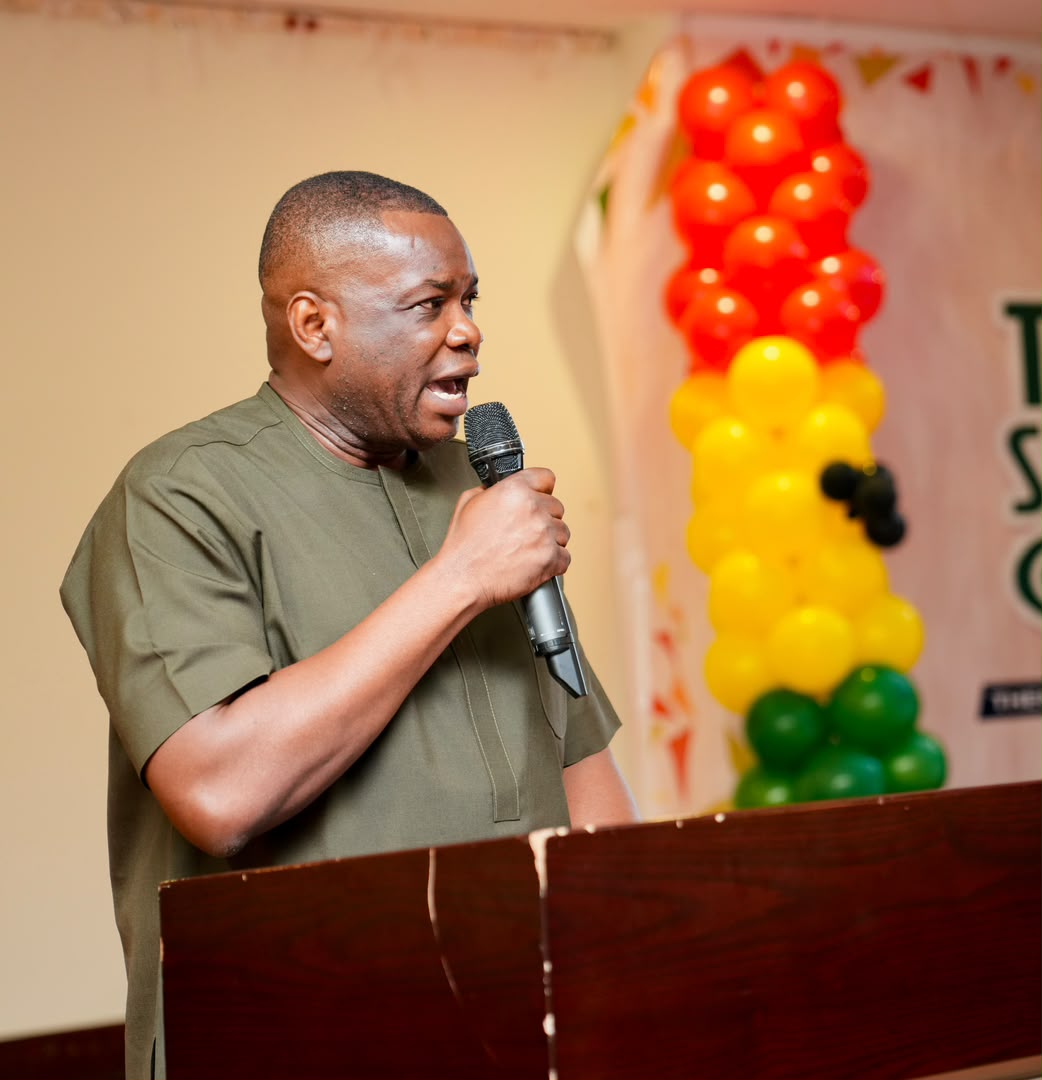
Mr Agbodza made the remarks at the opening of the 2026 Transport Sector Review Conference in Ho.
The conference is being held under the theme, “Financing and Delivery of Resilient Transport Infrastructure and Services for Sustainable Economic Transformation.”
“The scale of the challenge in our sector is enormous, and it cannot be addressed through traditional approaches to public financing alone.”
According to the Minister, Ghana must improve domestic resource mobilisation, attract private capital, strengthen asset management and develop innovative financing mechanisms that can provide predictable funding for transport infrastructure.
He said the government’s US$10 billion Big Push Infrastructure Programme was central to its development agenda.
The five-year programme, launched in September 2025 by President John Dramani Mahama, is aimed at accelerating infrastructure delivery, improving connectivity and supporting economic transformation.
Mr Agbodza said the government was pursuing major infrastructure investments at a time when Ghana was rebuilding fiscal credibility and restoring debt sustainability.
He said the country was seeking to undertake major projects without relying predominantly on new external borrowing.
“Through stronger domestic resource mobilisation and the strategic use of our natural resource revenues, government is directing resources towards infrastructure that will generate long-term economic value.”
The Minister explained that the transport component of the Big Push would focus on rehabilitating critical corridors, opening up agricultural production areas, creating jobs, improving regional connectivity and reducing the cost of doing business.
Among the projects he listed were the Suame Interchange Phase Two, the Kumasi and Sunyani Outer Ring Roads, and dualisation and interchange works along the Kasoa-Winneba and Takoradi-Agona Junction corridors.
He also said feasibility and detailed engineering studies for the Accra-Kumasi Expressway were nearing completion, with preparatory clearing already undertaken under a memorandum of understanding between the Ghana Armed Forces and the Ministry of Roads and Highways.
Mr Agbodza said the government’s transport programme extended beyond road construction.
“Transport infrastructure is no longer simply about constructing roads, bridges, ports, airports or transit systems. It is about creating physical and economic connections that allow people, businesses, farmers and communities to participate fully in the national economy.”
He also highlighted the Ghana Market Access and Connectivity Project, which is expected to improve selected roads and transport services linking productive communities to markets.news
The Minister said poor roads increase vehicle operating costs, reduce transport reliability and contribute to post-harvest losses, particularly in rural communities.
The project will involve the Ministry of Roads and Highways, the Department of Feeder Roads, the Ministry of Finance, the Ministry of Food and Agriculture, the Lands Commission, the Environmental Protection Agency and other stakeholders.
Mr Agbodza also stressed the need to protect existing infrastructure through predictable maintenance financing.
He said the government had enacted the Road Maintenance Trust Fund Act, 2025, Act 1147, to establish a more sustainable and equitable system for financing road maintenance.
The law comes as the sector faces significant funding pressures. Parliament recently approved GH¢3.6 billion for the Road Maintenance Trust Fund, while a parliamentary report put outstanding contractor liabilities at GH¢10.5 billion as of June 2026.
The Minister further announced plans to modernise revenue collection through a Multi-Lane Free Flow electronic tolling system.
The system follows Parliament’s approval of a 20-year public-private partnership concession and is expected to replace manual toll collection with a barrier-free electronic system. It is intended to reduce congestion, limit revenue leakages and generate more predictable funding for road maintenance.
“The future of transport financing must therefore be characterised by innovation, accountability, private-sector participation and efficient use of public resources.”
He urged participants to assess the performance of the transport sector between 2022 and 2026, identify bottlenecks and agree on practical measures to improve project delivery.
The Minister said the success of the Big Push should not be measured only by the number of kilometres of roads constructed.
He said the programme must also be judged by the economic opportunities created, travel times reduced, communities connected, businesses enabled and livelihoods improved.
By Komla Klutse