


The National Chairman of the National Democratic Congress (NDC), Johnson Asiedu-Nketiah, has warned against what he termed “electoral neocolonialism” — the use of money, information systems, diplomatic influence and selective election assessments by outside interests to influence another country’s political choices.
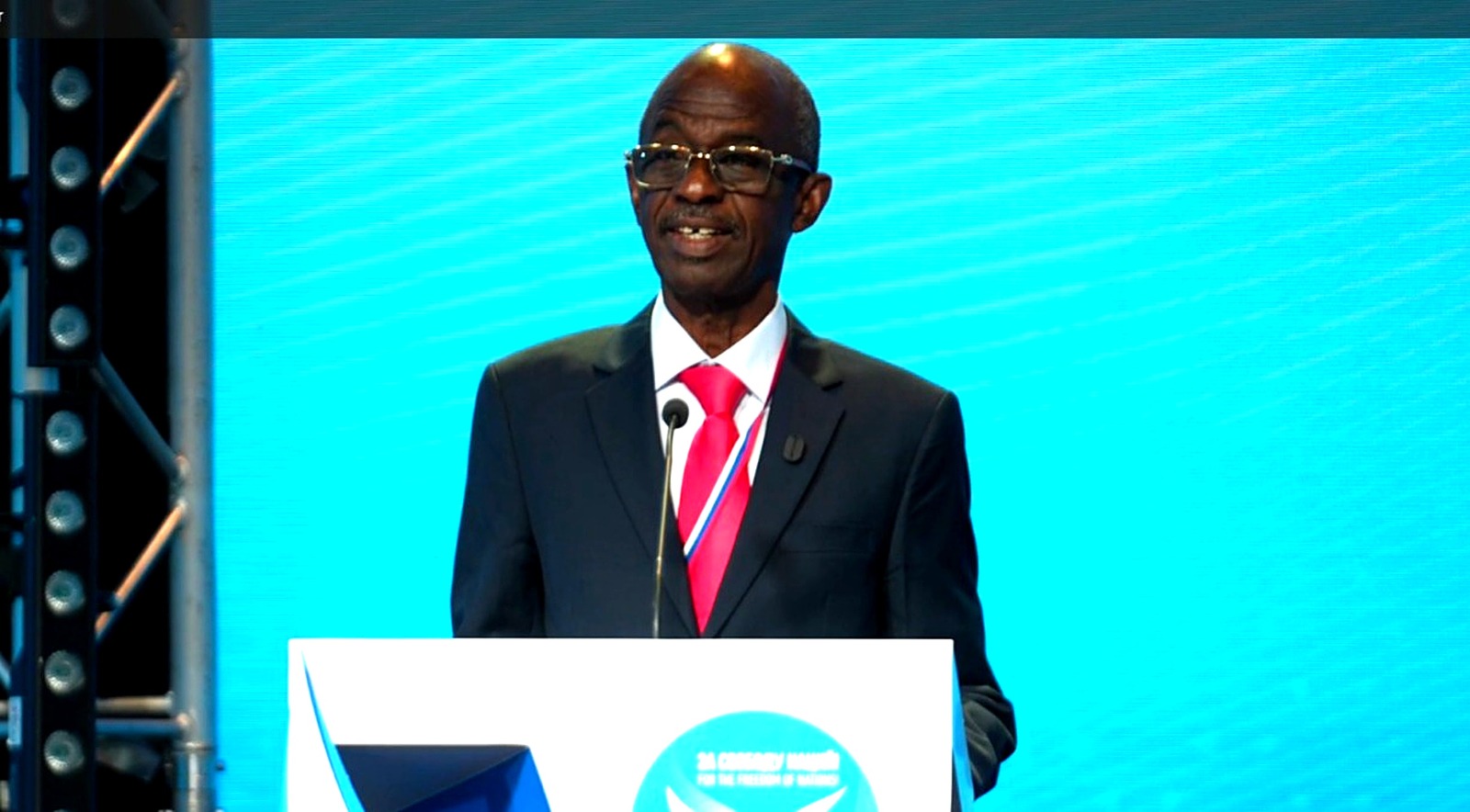
Delivering an address in Moscow on the theme “Electoral Neocolonialism: Political Sovereignty and Impartial Assessment of Elections”, Mr Asiedu Nketiah said while the risks of foreign interference deserve serious attention, not every unfavourable observation should be mistaken for interference.
He spoke in his capacity as Chairman of the Bureau Leadership of the African Political Parties Initiative (APPI) and Member of the Standing Committee of the Movement for Freedom of Nations.
The Pink Sheet Test
Mr Asiedu Nketiah anchored his address on Ghana’s famous pink sheet — the polling station results document signed by party agents after voting.
“There is a piece of paper familiar to every serious political party organiser in Ghana. We call it the pink sheet. After voting, the figures from the polling station are recorded, checked and signed. Party agents keep their copies,” he said.
“Long after the speeches, advertisements and rallies are forgotten, that document is supposed to tell us what the people decided.”
Drawing on his experience as a witness in Ghana’s 2020 presidential election petition before the Supreme Court, he said political grievances must be distinguished from allegations that must be proved.
“Our courts require evidence. Voters are entitled to the same discipline from all of us who claim to speak for them,” he said.
Sovereignty Belongs To The Voter
The NDC Chairman argued that electoral sovereignty belongs first to the voter, not to the government of the day or the party with the largest crowd.
“If a farmer leaves the field to vote, or a trader closes her stall to queue at the polling station, that sacrifice must be honoured with a count that can be verified,” he said.
“From registration to the final declaration, the process must allow the citizen’s choice to survive every administrative stage.”
He cited Ghana’s 2012 and 2020 election petitions and the December 2024 change of government through the ballot as evidence that political competition, electoral administration and judicial remedies must be strong enough to withstand fiercely contested elections.
“A credible result is not one that nobody questions. It is one that can withstand questions asked through lawful procedures,” he added.
Danger Between Polling Station And Declaration
Mr Asiedu-Nketiah said much of the danger lies between the polling station and the national declaration, where a signed result held by a party agent may differ from a figure that appears during collation.
“The discrepancy may be clerical, may arise from poor procedure or may indicate something more serious. The responsible response is to preserve the original document, reconcile the arithmetic openly, record any correction and provide an effective route to challenge it,” he said.
“The refusal to explain a discrepancy can damage confidence more quickly than the original mistake.”
Observers Must Be Judged By Method, Not Prestige
On election observation, he said independent observers have a valuable role, but their authority must come from method, not nationality or prestige.
He questioned whether observers studied the legal framework before election day, observed the campaign and use of public resources, followed collation, and made clear which stages remained incomplete when publishing preliminary statements.
He pointed to the African Union mission to Ghana in December 2024, which praised features of the voting and counting process while also identifying weaknesses in campaign finance regulation and possible misuse of state resources.
“That is what useful observation can do: recognise what works and name what needs to change. The same standard should be applied whether the government is friendly to the observer’s home country or not,” he said.
New Forms Of Influence
Mr Asiedu Nketiah also warned about anonymous digital advertising, disguised political financing and fabricated recordings that can be moved across borders in minutes.
He said parties and electoral commissions need the means to trace who paid for political messages, preserve reliable records and correct false information quickly.
But he cautioned against using the fight against interference as an excuse for censorship.
“A government that shuts down legitimate criticism in the name of fighting interference has already injured the sovereignty it claims to protect,” he said.
Call For Common Standards
He called for practical work by the Movement and regional bodies such as the African Union, including common standards for disclosing political finance, trained domestic observers, transparent collation procedures, prompt publication of polling-station results, and election-dispute systems that deliver decisions while a remedy still matters.
“What we do not need is an international arrangement in which friendly governments certify one another’s elections as fair before the evidence is examined,” he said.