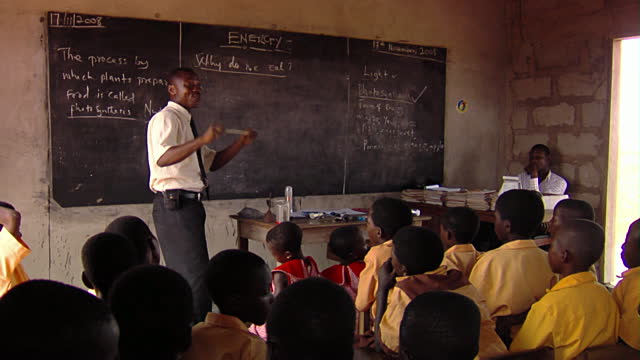

In February 2026, the of West Africa Senior High School (WASS) in Adenta became the new addition to perpetrators of violent attacks on teachers.
This time, students from Frafraha Community SHS, joined by outside individuals, stormed the campus to assault teachers. This was not a first time happening, it is part of a “new normal” where the classroom has become a frontline of violence on teachers.
From the tragic permanent blinding of Ishmael Famous at Asuoso SHS to the organized mob attacks at Kade Senior High Technical School, the Ghanaian teacher is no longer a revered mentor, but a target.
Now The Question of Timing
There is a pattern to the timing of these attacks. They rarely occur at the start of the academic journey. Instead, violence peaks during WASSCE examinations and the final months of the senior high cycle.
Teacher refusal to let students cheat: At Kade SHS (Oct 2025) and Wesley Senior High (Sept 2025), violence was triggered specifically by strict supervision. When teachers enforce exam integrity, students driven by a desperation to pass their exams at all costs mindset’’ view the teacher as an obstacle to be removed rather than an authority to be obeyed.
As students approach the completion of their Senior high school cycle, the traditional deterrents of the school system (suspension or internal punishment) lose their bite. For a final-year student, the fear of “getting in trouble” is outweighed by the immediate desire for revenge or a high grade.
Now begs the question, “what is the root cause of student violent behavior in high schools?
To blame these incidents solely on “improper upbringing” is to ignore a complex systemic failure. This crisis is fueled by three main factors:
i. The weak disciplinary state
Since the 2017 ban on corporal punishment, many educators argue that the replacement “Positive Discipline” toolkit has not been adequately supported. Teachers feel disempowered, and as noted in the research on the “Post-Corporal Punishment Era,” students have developed a sense of untouchability, knowing that their actions rarely lead to immediate, meaningful consequences.
ii. The infiltration of “Gangs” and outsiders
The Nungua Kroma Two JHS incident, where a student brought 15 men to assault a teacher over a homework dispute, highlights a terrifying trend: the “gangsterization” of school conflict. Students are no longer acting alone; they are leveraging communal or local gangs to settle scores, turning schoolyard discipline into street-level warfare.
iii. Societal and digital influence
The glorification of violence on social media and a general decline in societal respect for the teaching profession have trickled down to the youth. When the home and the community no longer reinforce the teacher’s authority, the student feels emboldened to challenge it with a blade or a stone.
The high cost of silence
The human cost is staggering. We are not just talking about bruises; we are talking about permanent disability (as seen in Asuoso) and psychological trauma. When teachers are forced to work in fear, the quality of education collapses.
Experienced educators are fleeing the profession, and those who stay are often too intimidated to enforce the very rules that ensure academic excellence.
Ghana cannot afford to treat these incidents as mere “youthful exuberance.” The court rulings in the Kade SHS case where students faced fines and prison set a necessary precedent.
To save the Ghanaian education system, we must move beyond “counseling” for violent offenders and towards a framework of strict legal accountability, enhanced campus security, and a national restoration of the teacher’s mandate.
If the classroom is no longer safe for the teacher, it can never be a place of learning for the student.