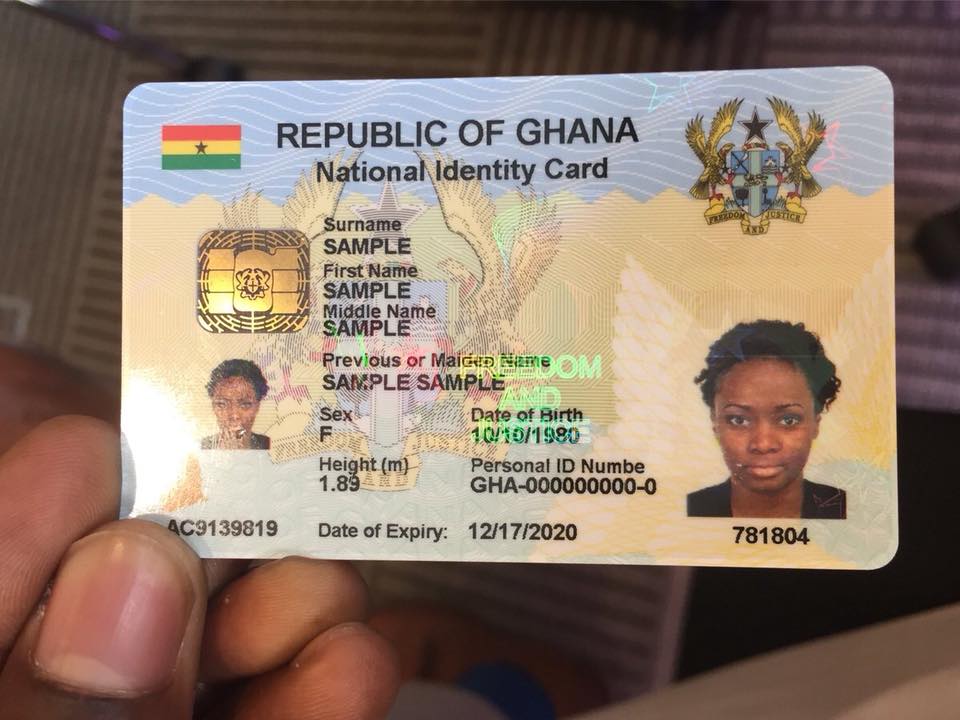

The Minister for the Interior, Muntaka Mohammed-Mubarak, has announced that biometric verification will now be the mandatory standard for confirming identities using the Ghana Card, following the coming into force of the National Identification Register (Amendment) Regulations, 2026 (LI 2523).
Addressing the media in Accra on Wednesday, July 22, the Minister said the new regulation is designed to strengthen the integrity of Ghana’s national identification system while enhancing the protection of citizens’ personal data.
According to him, LI 2523, which was signed on March 2, 2026, gazetted on March 27, and came into force on June 9 after parliamentary approval, amends the National Identity Register Regulations, 2012 (LI 2111).
“The regulation makes biometric verification of the Ghana Card the mandated standard for confirming a person’s identity and retires the practice of merely inspecting, photocopying or scanning the card as an acceptable method of verification,” he said.
The Minister explained that for years, many institutions had relied on visual inspection or photocopies of the Ghana Card to verify identities, a practice he described as vulnerable to fraud and misuse.
“A photocopy can be altered, a scanned image can be misused without the owner’s knowledge, and a visual inspection alone cannot confirm that the person presenting the card is its rightful owner,” he noted.
Under the new regulations, organisations conducting transactions covered under Regulation 7 of LI 2111 must verify identities through biometric authentication against the National Identity Register or by using approved match-on-card biometric devices authorised by the National Identification Authority (NIA).
The regulations also prohibit organisations from requesting, retaining, reproducing or relying on photocopies, scanned copies or images of Ghana Cards for verification purposes. They are equally barred from using biometric methods that have not been approved by the NIA.
The Minister added that individuals verifying another person’s identity in private or informal transactions should also use biometric verification where practicable and should not retain or share copies of Ghana Cards except where permitted by law or with the cardholder’s consent.
He further warned that persons who, without reasonable excuse, refuse to submit to lawful biometric verification by authorised officers, including fingerprint scanning or live facial capture, commit an offence and may face sanctions.
Organisations that fail to comply with the regulations risk substantial financial penalties, suspension or termination of access to the NIA’s identity verification platform, while individuals found misusing Ghana Cards or obstructing lawful verification could face fines, imprisonment, or both.
To ensure effective enforcement, the Minister said the NIA will establish dedicated compliance teams to monitor adherence, investigate reported breaches and collaborate with law enforcement agencies.
He stressed that the penalties are intended not to punish ordinary Ghanaians but to hold accountable organisations and individuals that continue to expose citizens’ personal information to unnecessary risks.
Recognising that institutions require time to upgrade their systems, the government has granted a three-month transition period from July 27 to November 2, 2026, for organisations to acquire the necessary biometric devices, train staff and integrate with the NIA’s identity verification platform.
However, he emphasised that the transition period does not suspend the legal obligations under the regulations and urged all affected institutions including banks, telecommunications companies, insurance firms, hospitals, schools and government agencies to begin compliance measures immediately.
The Minister also reminded the public that they have the right to refuse requests for photocopies or scans of their Ghana Cards where biometric verification is required.
“This law exists to protect you, not to inconvenience you,” he said, adding that LI 2523 represents a significant step toward safeguarding personal data and strengthening confidence in Ghana’s national identity system.
By Evelyn Tengmaa