
There is a pattern in Ghanaian football so consistent, so stubbornly recurring, that it can no longer be dismissed as coincidence.
Every time the Black Stars have gone to a FIFA World Cup and done something meaningful, something that made a nation stand up and exhale, the man in the dugout has been a foreigner.
Every time a Ghanaian has held that technical responsibility on the grandest stage, the group stage has been a ceiling rather than a doorway. Now, with Ghana in the knockout stage for the third time under a foreign coach, that pattern demands a verdict.
But there is a second storm gathering, and it has nothing to do with tactics or talent. As Ghana prepares to face Colombia in what is arguably the most important football match this country will play in a generation, the Black Stars camp appears to be turning into a social destination.
Celebrities are flying in, state officials are gracing the corridors, prominent faces are seeking proximity to glory they had no hand in creating. It has to stop, now!!!
The Numbers Don’t Lie
Let us state the facts plainly. Ghana has qualified for four FIFA World Cups: 2006, 2010, 2014, and 2022.
To that record, we now add 2026. Of those five appearances, three have ended with knockout football and in each of those three instances, a foreign coach was at the helm.
The meaningful foreign appointments began with Ratomir Dujković, the Serbian who guided Ghana to their debut World Cup in 2006.
His successor, Milovan Rajevac, took Ghana within a penalty kick of a World Cup semi-final in 2010, the greatest achievement in the nation’s football history. Now, in 2026, it is a foreign hand once again steering the Stars into the knockout stage.
Contrast that with the Ghana coaches who have answered the call on the world stage. In 2014, James Kwesi Appiah led the Black Stars to Brazil and oversaw a campaign undone not just by poor results, but by the infamous player revolt and cash crisis that embarrassed a nation.
The group stage ended without progression. When Ghana returned in 2022, Otto Addo was in charge, but the structural failure of the campaign, the disastrous group exit following losses to Portugal and Uruguay pointed to a technical setup that was unprepared for the demands of a tournament of that magnitude.
The Question That Cannot Be Avoided
Is the Ghanaian coach bereft of ideas on the world stage? The question is uncomfortable, but it deserves a direct answer rather than diplomatic evasion.
The honest response is; not necessarily bereft of ideas, but chronically disadvantaged by context, and sometimes outpaced by the occasion.
The problem is structural as much as it is individual. Ghanaian football has never invested the kind of political capital or institutional infrastructure in its coaches that would prepare them for the unique pressures of a World Cup.
Our local coaches are brilliant survivors in a domestic ecosystem riddled with interference, poor facilities, administrative chaos, and chronic underfunding.
What they are rarely given is the scaffolding, the scouting networks, the data analytics teams, the undisturbed preparation windows that foreign coaches often arrive with as baseline expectations.
But we must also be honest about something more uncomfortable, the foreign coach carries a different kind of authority in the Ghanaian football environment.
The foreign coach, precisely because he stands outside the web of Ghanaian football’s internal politics, can enforce the standards that local coaches know they cannot always enforce without cost to themselves.
That is not a damning indictment of Ghanaian coaches as a class. It is a damning indictment of the environment they are asked to operate in.
Until Ghana builds a football culture that respects the technical authority of the coach, Ghanaian or otherwise and insulates that coach from the kind of interference that corrodes campaigns from within, the problem will not be solved simply by appointing the right local name.
Queiroz and the Round of 32
Carlos Queiroz was an appointment met with scepticism and, in some quarters, derision. A veteran coach whose career had grown complicated, his arrival in Accra was accompanied by the usual Ghanaian noise, questions about his commitment, his age, his fee, his actual presence at training sessions.
But results have a way of shutting down noise. The Black Stars are in the Round of 32. The group stage is behind us. For the third time in our World Cup history, a foreign coach has delivered knockout stage football.
Queiroz deserves enormous credit for what he has done, but so does this generation of players. Benjamin Asare has been exceptional, the midfield has shown discipline and there has been a collective hunger that, frankly, was absent in 2022.
Whatever tactical plan Queiroz has built, it is working. The Stars believe in it, and that is precisely why what happens in the coming days, off the pitch, matters just as much as what happens on it.
Shut the Camp Down to Outsiders Now
Let us be direct; the stream of celebrity visits, state delegations, and prominent Ghanaians descending on the Black Stars camp before a Round of 32 clash against Colombia is a serious and tangible threat to Ghana’s prospects.
This is not hyperbole; this is recent history. Anyone who has followed Ghanaian football closely knows the pattern. A high-stakes match approaches, suddenly, the camp becomes a pilgrimage site.
Musicians arrive for photographs. Politicians want to deliver motivational speeches, business figures want to shake hands with the players, content creators film everything.
The players, raised in a culture that makes it genuinely difficult to turn away elders and prominent figures, are pulled in a dozen directions when they should be sleeping, recovering, reviewing footage, and sharpening their mental focus for ninety minutes that could define their careers.
The Colombian national football team is not a soft opponent. They have pace on the flanks, technical quality in midfield, and the kind of tournament experience that demands Ghana be at absolute peak concentration.
James Rodríguez, if he features, is the sort of player who punishes opponents the moment their defensive shape loses its collective alertness by even a margin. There is no room for distraction, there is no room for a player thinking about the speech delivered by a minister yesterday rather than the run made by a Colombian winger tomorrow.
The GFA and the technical team must issue clear, non-negotiable protocols; no external visitors to the camp in the seventy-two hours before the Colombia match, not ministers of State, not celebrities.
Not football legends bearing the national colours. Not well-meaning diaspora figures who have flown in from London or New York, not prominent Ghanaians whose presence, however loving, belongs after the match rather than before it.
The players need stillness, they need routine. They need the controlled, predictable environment that allows elite athletes to build the mental readiness that separates teams that win tight knockout games from teams that lose them.
A Nation’s Responsibility
There is something almost paradoxical about the way Ghana loves its Black Stars. The love is overwhelming, genuine, and ferocious. It is also, at times, smothering.
The desire to be near them in their finest moments, to share in the glory, to be part of the story, it is deeply human. But the truest form of support a Ghanaian can offer the Black Stars right now is restraint. Watch from a distance, pray from home and let them work.
Ghana has waited sixteen years to feel this again, the expectation that carries genuine weight, the belief that the Round of 32 could become the Round of 16, that this could be the tournament that finally takes us where Muntari’s goal in 2010 suggested we could always go. We cannot let that moment be sabotaged by our own enthusiasm.
Send the celebrities home, close the camp, let Queiroz and his players breathe, and then, on the day of the match against Colombia, let ninety minutes of focused, disciplined, brilliant Ghanaian football do what no celebrity visit ever could- take us further.
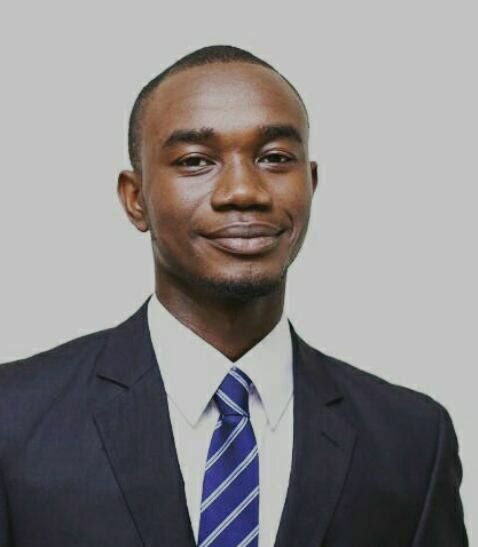
By Joseph Okan-Mensah Khartey