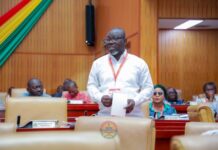

Chairman of Parliament’s Select Committee on Finance, Isaac Adongo, has called for legal reforms to secure sustainable funding for the Public Interest and Accountability Committee (PIAC), warning that the institution’s financial arrangements should not depend on the discretion of individual finance ministers.
Speaking at PIAC’s 15th anniversary event on August 19, 2026, Adongo said placing the committee’s funding on a clear legal footing would protect it from financial constraints and enable it to continue carrying out its statutory oversight responsibilities.
PIAC was established in September 2011 under Section 51 of the Petroleum Revenue Management Act, 2011 (Act 815), to promote transparency and accountability in the management of Ghana’s petroleum revenues.
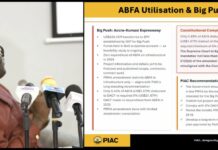
The committee was initially funded through the Annual Budget Funding Amount (ABFA).
However, following amendments to the Petroleum Revenue Management Act that scrapped the ABFA and redirected the funds to a special account for the government’s Big Push programme, PIAC lost its legally backed source of funding.
Chairman of Parliament’s Select Committee on Finance said although the current Finance Minister had demonstrated strong commitment to PIAC, the institution needed a funding mechanism that would remain secure regardless of changes in government or office holders.
“We need to have a mechanism that puts it in law, a funding arrangement for PIAC and not dependent on a good minister who is willing to support PIAC,” he said.
He added that securing the arrangement in law should be the “next stage of the conversation” to ensure the long-term sustainability of PIAC.
PIAC Chairman Richard Ellimah also noted that, the committee had over the past 15 years strengthened public scrutiny of Ghana’s petroleum revenues through statutory reporting, project inspections and engagement with citizens and communities.
He added that, PIAC had also organised public forums and participated in public policy discussions, consistently bringing issues surrounding petroleum revenue management into the public domain.
“These interventions have contributed to strengthening transparency and accountability in the management of Ghana’s petroleum revenues,” Mr Ellimah said.
He acknowledged, however, that the committee had faced challenges and had been required to adapt to changing circumstances while remaining committed to its statutory mandate.
Economist at the University of Ghana, Professor Peter Quartey, meanwhile, called for the oversight model used by PIAC to be extended to the management of other mineral resources.
He said applying similar transparency and accountability mechanisms to other natural resources could help improve the management of Ghana’s mineral wealth.
Prof Quartey praised PIAC for identifying problems in the use of petroleum revenues, including cases involving projects that existed on paper but could not be found on the ground.
He highlighted the committee’s ongoing work to track abandoned oil-funded projects would provide further evidence to support public accountability.
According to him, PIAC’s 15-year record demonstrates the value of independent monitoring in ensuring that revenues from Ghana’s natural resources are used for their intended purposes.
By Coffie Mawuedem Noel