
For many Ghanaians, the word ‘dumsor’ (erratic power supply) is not just a memory, it is still part of daily life. It brings back a time when power cuts disrupted homes, businesses, and the entire economy.
Today, the situation is said to be better. Officials speak of improved capacity and reforms in the energy sector. But across the country, many people still deal with sudden outages, low voltage, and unreliable supply.
This raises a simple but important question: has Ghana truly solved its energy problem, or is ‘dumsor’ quietly returning in a different form?
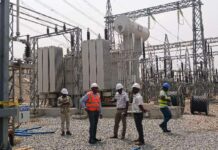
Energy agencies continue to give assurances. The Ghana Grid Company (GRIDCo) says Ghana has enough installed power to meet demand. The Electricity Company of Ghana (ECG) also explains that most outages are due to technical faults or maintenance work, not a national shortage.
These explanations may be true on paper, but they do not always match the daily experience of ordinary citizens.
For small businesses, unreliable power is a serious problem. According to the Ghana Statistical Service, small and medium-sized businesses make up over 90% of all businesses in Ghana and provide about 70% of jobs.
These businesses rely heavily on electricity. When the power goes off, work stops. Cold store operators lose goods, hairdressers lose customers, and artisans lose income.
Many turn to generators, but fuel is expensive, as reported by the National Petroleum Authority. This increases costs and reduces profits, making it harder for businesses to survive.
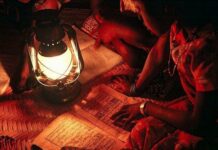
Students also feel the impact. In many homes, the evening is the main time for studying. When the lights go off, learning stops. This is supported by data from the Ghana Statistical Service, which shows that most households depend on electricity for lighting at night.
The UNICEF has also noted that lack of reliable electricity reduces study time and limits access to digital learning tools.
The effect is even worse for poorer and rural households. Many do not have generators, inverters, or solar lamps. A report supported by the World Bank explains that unreliable electricity increases inequality, because wealthier families can afford alternatives while poorer families cannot. This means some students continue learning while others are left behind.
Healthcare faces even greater risks. Hospitals depend on electricity for lighting, equipment, and storing medicines. The Ghana Health Service has warned that unstable power can disrupt healthcare delivery, especially in smaller facilities.
The World Health Organization also stresses that reliable electricity is essential for safe healthcare. In many lower-level facilities, power supply is not always stable.
Smaller clinics often struggle the most. They may not have backup systems, and even when they do, fuel costs are high. The Ministry of Health Ghana has acknowledged in policy discussions that energy costs continue to put pressure on healthcare budgets. This means money that could be used for medicines and services is spent on keeping the lights on.
Beyond these daily struggles, there is a bigger issue at stake- Ghana’s digital and economic future. The government has made strong commitments to digital transformation, backed by real policies. The World Bank approved about $200 million to support Ghana’s digital programme, aimed at expanding internet access, improving digital services, and supporting innovation.
These efforts are meant to create jobs and grow the economy. However, digital systems depend on reliable electricity. Without stable power, these goals are harder to achieve. The World Bank has made it clear that reliable energy is key to economic growth and business productivity.
To be fair, government efforts to improve the energy sector should be recognised. In national speeches, Nana Addo Dankwa Akufo-Addo, former President of Ghana, highlighted investments made to end dumsor. One example is the Karpowership Ghana Power Plant, which was brought in to support electricity supply.
The Ministry of Energy Ghana has also introduced reforms such as the Energy Sector Recovery Programme to deal with financial problems in the sector. The Parliament of Ghana has supported these efforts through approvals and oversight.
Yet challenges remain. Experts, including the Africa Centre for Energy Policy, continue to point to problems such as debt, inefficiencies, and high costs in the energy sector. These issues suggest that while progress has been made, the system is still not fully stable.
Today’s dumsor may not be as severe as before, but it has not disappeared. It now shows up as irregular outages, low voltage, and uncertainty. People cannot plan their work, studies, or businesses with confidence because power supply is not guaranteed.
In the end, the question is simple: if people still worry about electricity every day, can we truly say the problem is solved? For many Ghanaians, the answer is no.
What we may be facing is Dumsor 2.0- less dramatic but still damaging. Until electricity becomes stable and reliable for all, its negative impact on daily life and national development will continue.
By Collins Adjei Kuffuor – Social Commentator, UK