
More than 187 years after Otumfuo Badu Bonso II King of Ahanta was executed by Dutch colonial authorities and 17 years after his severed head was finally returned from the Netherlands, calls are growing for Ghana to accord one of its earliest anti-colonial heroes the national recognition many believe, he deserves.
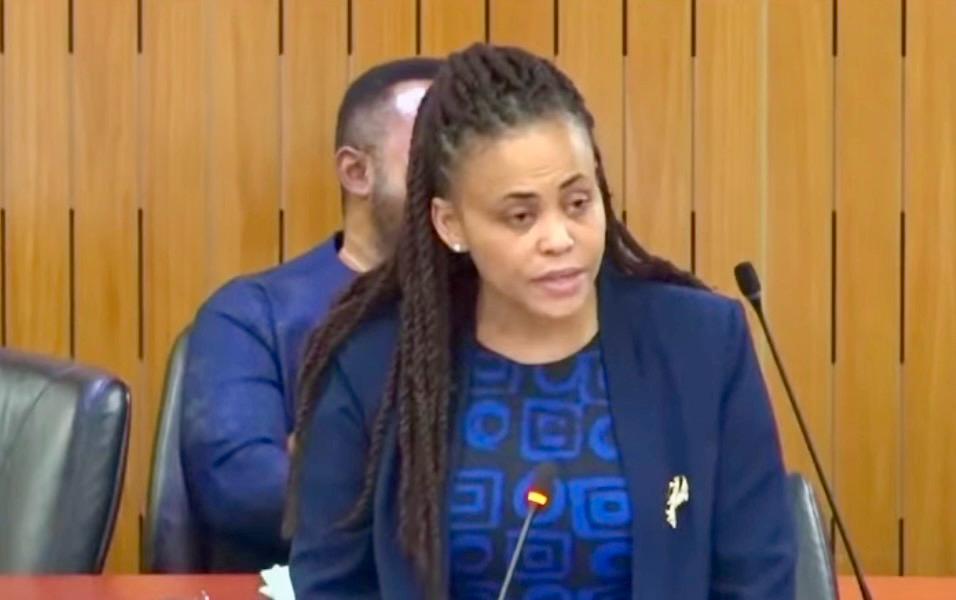
The latest call has come from the Member of Parliament for Ahanta West, Mavis Kuukua Bissue, who is proposing the establishment of a tourist museum in Ahanta to preserve the remains of Otumfuo (King) Badu Bonsu II and immortalise his legacy for future generations.
Her proposal has received support from several Members of Parliament, reigniting conversation about a king whose resistance against European colonial domination predates many of the better-known African struggles against imperial rule.
Delivering a statement on the floor of Parliament, the Ahanta West MP described Badu Bonsu II as a symbol of courage whose sacrifice extends beyond Ahanta history.
“The story of Otumfuo Badu Bonsu II is not only Ahanta history. It is Ghanaian history. It is African history. It reminds us that our ancestors were never passive victims of colonialism.”
Long before the modern state of Ghana emerged, the Ahanta Kingdom stood as one of the organised political entities along the Gold Coast.
Situated along the western coastline, “Ahanta was more than a collection of fishing settlements.” It possessed a functioning political authority, a respected traditional leadership, military capability and thriving trade networks. Like many coastal kingdoms, however, its strategic location brought increasing pressure from European powers seeking commercial and territorial control.
By the early nineteenth century, tensions between the Ahanta Kingdom and the Dutch had escalated over growing colonial interference in local governance and commerce. Those tensions culminated in the Ahanta-Dutch War of 1837–1838, one of the earliest organised armed resistances against European colonial authority on the Gold Coast.
Although Ahanta warriors fought fiercely, Dutch forces—armed with superior weaponry and reinforced troops—eventually subdued the kingdom. Following the conflict, King Badu Bonsu II was captured and publicly executed on 27 July 1838.
Mavis Kuukua Bissue recalled that his death, however, was not the end of his ordeal.
After the execution, Dutch authorities severed his head, preserved it in formaldehyde and transported it to the Netherlands, where it became part of an anatomical collection at what is now the Leiden University Medical Center. “Rather than receiving a royal burial, the remains of an African king were kept for more than 170 years as a so-called scientific specimen and colonial trophy,” she said
For generations, the whereabouts of the head remained unknown until Dutch author Arthur Japin, while researching a historical novel, rediscovered it in the early 2000s. His discovery prompted diplomatic engagement between Ghana and the Netherlands that culminated in the formal return of the king’s head in July 2009 during an emotional ceremony in The Hague.
Traditional leaders from Ahanta performed libation and mourning rites before escorting the remains back to Ghana, where many hoped they would finally be laid to rest with full royal honours.
Despite the historic repatriation, Badu Bonsu II’s returned remains are reportedly still being kept at the 37 Military Hospital in Accra pending a final decision on their permanent resting place.
It is this unresolved chapter that MP Mavis Kuukua Bissue believes Ghana must now address.
Her proposal seeks not merely to house the king’s remains. “It is to establish a heritage museum in Ahanta West that tells the story of the Ahanta Kingdom, the Dutch colonial wars and one of Ghana’s earliest recorded acts of resistance against foreign domination,” she stated
Such a museum, she argues, would preserve an important chapter of Ghana’s history while serving as a centre for education, tourism and historical research.
Eric Yaw Adjei