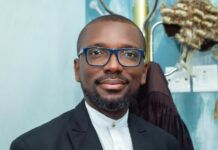
Private legal practitioner Christian Malm-Hesse has cautioned social media influencers to be mindful of their utterances, stressing that freedom of expression has limits under the law.
He was addressing TikTokers, vloggers and bloggers.
His comments follow the arrest and imprisonment of 43-year-old Camilla Alhassan, who was sentenced on July 16, 2026, for offensive conduct and the publication of false information.
Speaking in an interview on Friday, July 17, 2026, Mr Malm-Hesse said individuals who use social media platforms must understand that their rights come with legal responsibilities.
“That is why we have rules. If you describe yourself as a TikToker, a Facebook vlogger, a YouTuber or whatever platform you operate on, you should know that we have laws. Apart from laws against false information, we also have defamation laws and the law of tort, which deals with civil wrongs.
If you damage someone’s reputation in the eyes of right-thinking members of society, that person may not necessarily resort to the criminal justice system but can sue in the civil courts and seek compensation for reputational damage,” he said.
Camilla Alhassan was found to have alleged in social media posts that President John Dramani Mahama buried 32 cows as a ritual sacrifice to win the 2024 general election. She also claimed that sanitary pads distributed to flood victims were linked to ritual activities.
After pleading guilty to the charges against her, an Accra Circuit Court sentenced her to one year in prison.
Malm-Hesse noted that although freedom of expression is guaranteed, those who abuse it to spread falsehoods or settle personal scores must be prepared to face the consequences.
“Freedom of speech is very limited, even at common law. It is regrettable, but we are responsible for the things we put out. If you have power, it comes with responsibility. You cannot have power without responsibility.
“This should serve as a lesson to others. There are many vloggers who make very damaging statements about people in society, and some believe social media is a platform for settling scores. It is important for people who ply their trade on social media and derive economic benefits from it to be circumspect.”
Since the sentencing, several individuals and groups have expressed concern about the severity of the punishment, with some calling for a presidential pardon.
Among them is the Media Research Institute, which described the ruling as harsh and urged President Mahama to grant Camilla Alhassan clemency. The institute cited the case of the “Montie Three,” who were pardoned in 2016 after serving one month of a four-month prison sentence.
In a statement, the institute said: “Social media should not be a platform for reckless political commentary that is inimical to our collective interest. Political parties must advise their followers to be decent and respectful on social media.”
Meanwhile, the Ghana Police Service has announced that steps are being taken to arraign the convict before the High Court on a separate charge of false communication under the Electronic Communications Act, 2008 (Act 775).
By Beatrice Sowah