
The pursuit of basic education in parts of Nkoranza North has become an exercise in endurance, as pupils at two rural schools grapple with severe shortages of furniture, crumbling infrastructure, and inadequate technology.
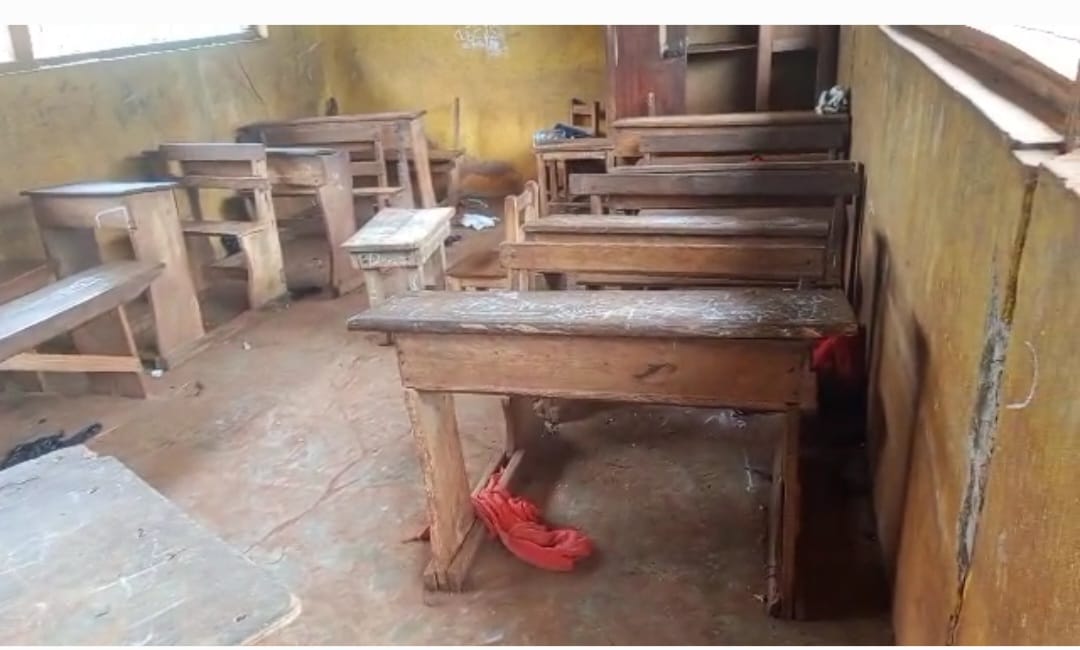
At Odumasi R/C Basic School, built in 1954, conditions are dire. In one classroom of 40 pupils, only two benches and three desk chairs are available.
Headmaster Peter Atingana described the daily struggle: “Five or six ladies will sit on that desk. Is that possible? Is that helpful?” he lamented, adding that the fragile benches now in use make it difficult for children to write.

The school’s infrastructure is also collapsing. With broken doors and windows, classrooms are left exposed to animals. Even more worrying is the lack of technology. “Imagine a school like this, established in 1954, yet I can’t boast of a single computer,” Mr. Peter noted.
Just a few kilometers away, Akonkonti D/A Basic School faces nearly identical challenges. The absence of a kindergarten block has forced the school to turn its staff common room into a classroom for over 40 pupils in KG 1 and KG 2, creating poor ventilation and overcrowding.
Teachers have also been displaced, with many left to take their breaks under trees. Headmaster Amos Safo described the situation as “very, very bad,” stressing the urgent need for a proper staff room.
On the technology front, Akonkonti D/A is slightly better resourced, with 10 computers, eight of which are functional. But the ratio remains worrying. “Three pupils are forced to share one computer during ICT lessons,” Mr. Amos explained. “It would be much better if we are given additional computers.”
The plight of these schools highlights the deep crisis facing rural education in the Bono East Region. Without urgent intervention, the lack of furniture, secure classrooms, and adequate computers threatens to erode the quality of education and jeopardize the future of hundreds of children.
Both headmasters are appealing to government and stakeholders for immediate support to restore dignity to teaching and learning in their communities.