
The Effia–Kwesimintsim Municipal Assembly has unveiled plans to establish a state-of-the-art poultry processing centre in a tailored move to maximise the economic benefits of the government’s ‘Nkoko Nkitinkiti’ initiative and position the municipality as the country’s emerging poultry production hub.
The proposed facility is expected to address one of the most pressing challenges confronting local poultry farmers – processing live birds quickly and efficiently to meet the growing demand for dressed poultry products.
The ‘Nkoko Nkitinkiti’ Initiative, a flagship government programme, seeks to boost domestic poultry production, reduce Ghana’s dependence on imported chicken, improve food security and create sustainable jobs across the poultry value chain.
Under the initiative, thousands of beneficiaries nationwide are receiving live birds and technical support to expand commercial poultry production.
However, an assessment conducted by the Effia–Kwesimintsim Municipal Assembly revealed that while production is expected to increase significantly, inadequate processing infrastructure could undermine the programme’s long-term success.
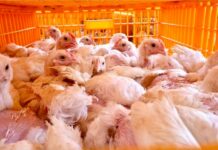
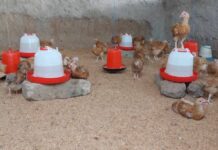
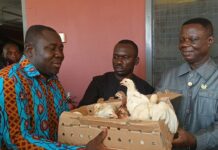
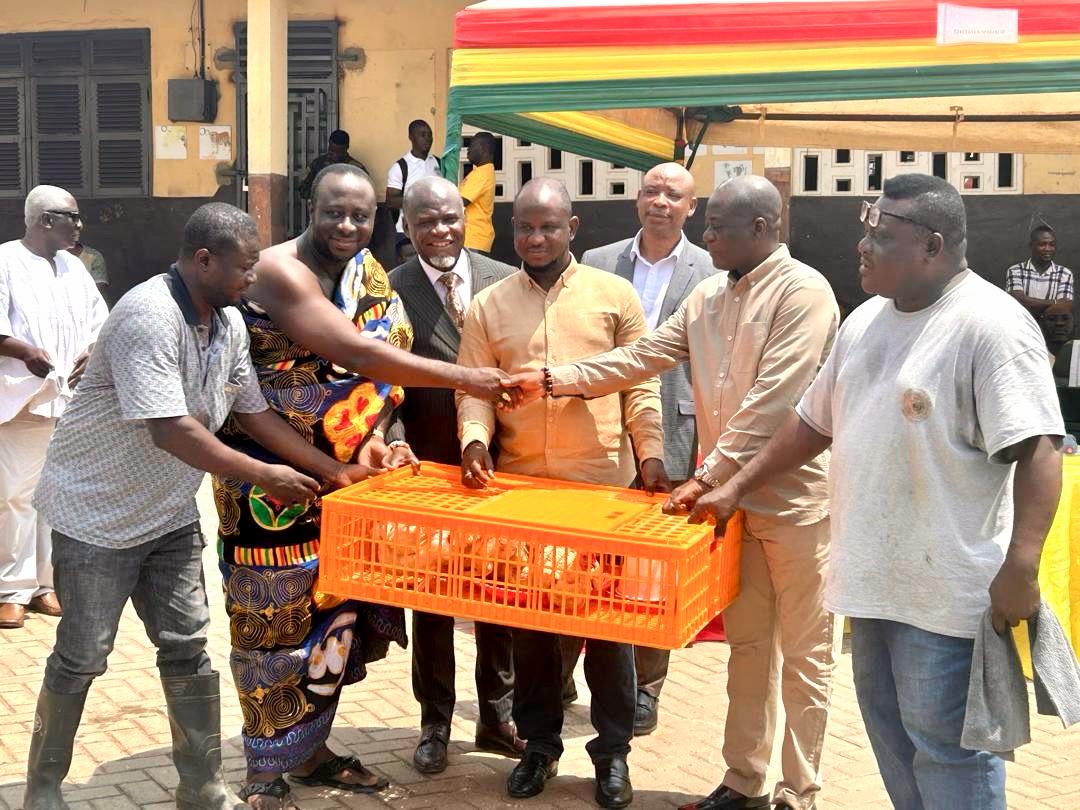
Speaking during the distribution of 20,000 live birds to 400 beneficiaries under the initiative, the Municipal Chief Executive, Abdul Majeed Dokurugu, said consultations with poultry farmers identified processing as a teething obstacle to expanding the local poultry market.
“We spoke with poultry farmers here. Their biggest challenge is the processing of the poultry meat because the Ghanaian doesn’t have the luxury of time to buy the live fowl, take it home and process it before consumption,” he explained.
Unlike imported poultry products, which arrive already processed and packaged, many local farmers struggle to get their birds processed and onto the market quickly enough, limiting their competitiveness.
“For us, the solution is to create the right business operating environment that puts our farmers in a better position not only to compete but to gradually reduce the country’s appetite for imported poultry products.”
To bridge this gap, the Assembly intends to finance the project through its allocation under the District Assemblies Performance Assessment Tool (DAPAT).
According to Mr. Dokurugu, approximately GH¢8 million will be invested in constructing and maintaining the integrated poultry processing centre.
A site has already been identified at Whindo, where the facility will feature a modern poultry processing plant, cold storage facilities, an agricultural demonstration centre and a poultry farm to support production within the municipality and across the Western Region.
“We are investing close to GH¢8 million in that sector. We have a site at Whindo where we intend to establish the processing centre. It will include a cold room, an agricultural demonstration site and a poultry farm to support poultry production in the municipality and the region as a whole.”
Beyond addressing immediate processing challenges, the Assembly sees the project as a catalyst for transforming Effia–Kwesimintsim into a leading poultry production and processing destination.
“By the time this programme matures over the next three to four years, we envisage that Effia–Kwesimintsim will become the hub of poultry products and poultry production.”
The MCE believes that creating a complete poultry value chain – from production to processing and storage – will encourage more entrepreneurs to venture into poultry farming, expand investment opportunities and strengthen the municipality’s local economy.
“What we would have achieved is not only reducing poultry imports but also strengthening the business potential of Effia–Kwesimintsim, creating wealth and generating employment for our people.”
With the Assembly complementing the government’s ‘Nkoko Nkitinkiti’ Initiative through critical infrastructure investment, a beneficiary Freda Quayson is optimistic that poultry farming will evolve from a “livelihood activity into a competitive agribusiness” capable of driving economic growth, improving food security and reducing the country’s heavy reliance on imported poultry products.
By Eric Yaw Adjei