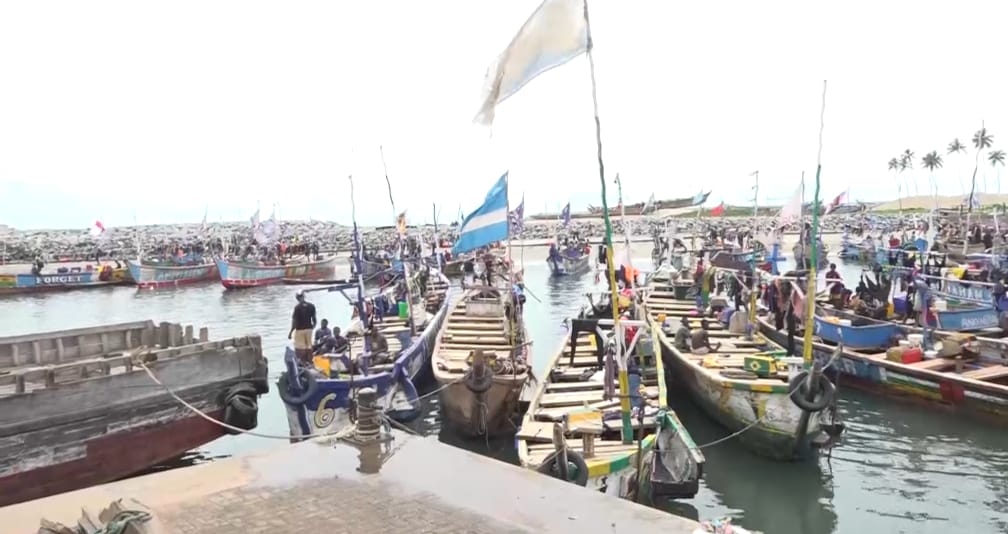

Fisherfolk at Elmina Fishing Harbour are calling on the government to extend the annual fishing closed season to artisanal canoe operators, arguing that a more inclusive conservation measure will help fish stocks recover and improve catches.
The fisherfolk say allowing some categories of fishing vessels to remain on the sea while others observe the closed season could undermine efforts to replenish marine resources.
The appeal was made during a stakeholder engagement at the Elmina Fishing Harbour, organised by the Ghana Association of Rural and Development Journalists (GARDJA) in collaboration with Earth Journalism Network, to gather the concerns of groups within the fishing industry.
Chief Fisherman, Ebusuapanyin Kofi Tawia, said the declining catches and difficult conditions confronting fishermen make it necessary for government to adopt measures that give fish enough time to multiply and grow.
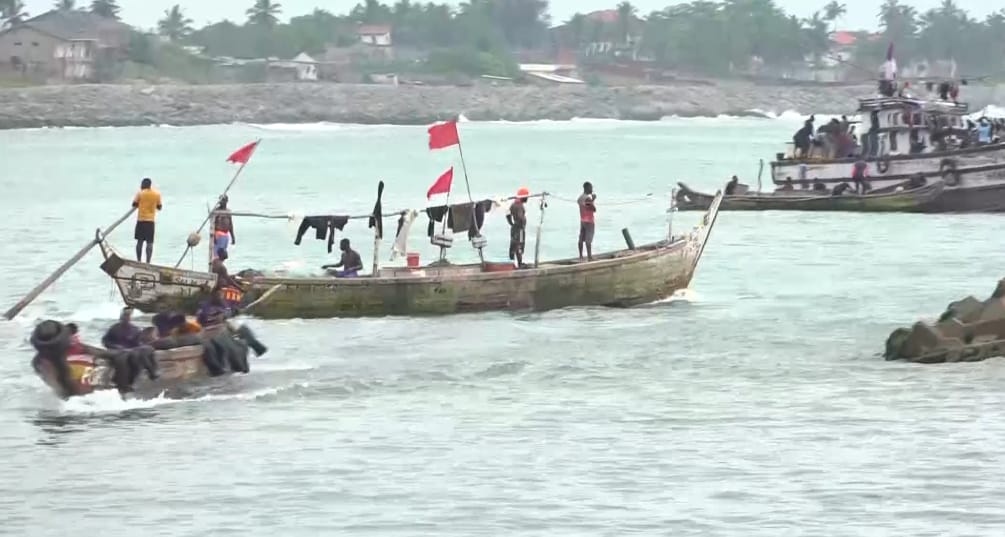
“The closed fishing season is a good initiative, but its implementation is discriminatory, as canoe fishermen are allowed to continue fishing while boat fishermen are barred. The boat fishermen are warning that they will resist the arrangement next year if the government fails to extend the closed season to cover all categories of fishing,” he said.
But conservation concerns go beyond the closed season.
The Fisheries Commission says illegal, unreported and unregulated fishing practices, particularly light fishing, the use of chemicals and unapproved fishing gear, continue to threaten marine resources.
Acting Municipal Head of the Fisheries Commission at Komenda-Edina-Eguafo-Abrem Assembly, Stephen Asempa, says the Commission has intensified landing beach patrols and seized generators suspected to be used for illegal light fishing.
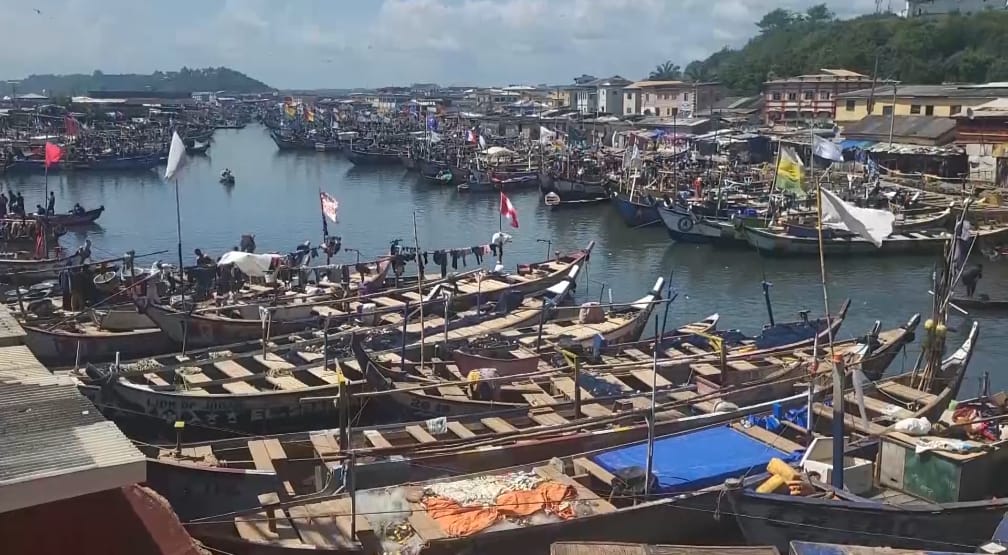
“For some time now, we have been monitoring activities at the landing beaches to ensure that light fishing is completely eradicated, particularly during the closed season when small-scale canoe operators are permitted to fish. We have tried to ensure that fishermen do not go to sea using light fishing methods. We intend to sustain and intensify the efforts to abolish light fishing. This will help protect our marine resources, preserve fish stocks and ensure the sustainability of the fishing industry,” Mr Asempa explained.
The challenges also extend to the women whose livelihoods depend on processing and selling the catch.
For 38 years, fish processor Beauty Deku has made a living smoking and trading fish. But she says poor-quality firewood, fire outbreaks, heavy smoke and the absence of testing equipment expose processors to losses and health risks.
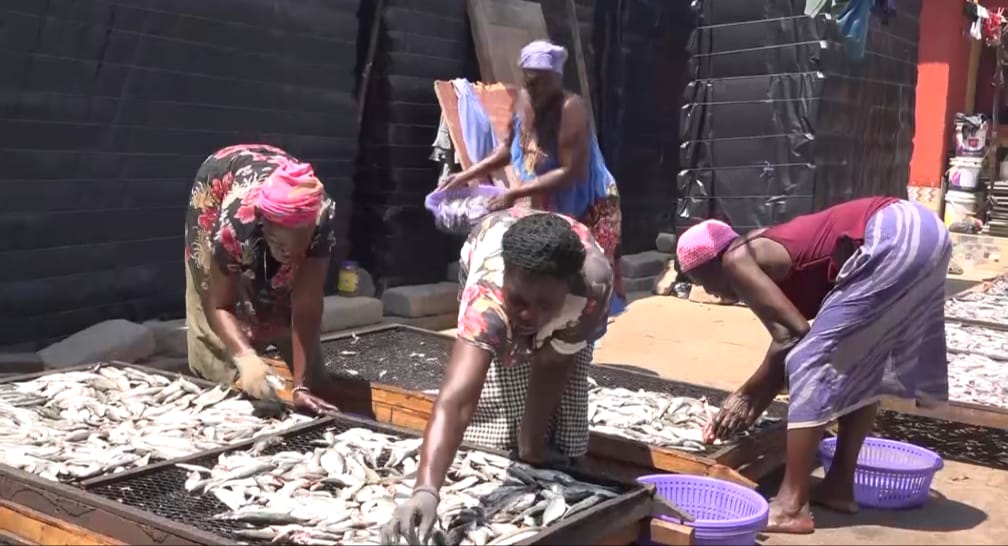
“Government must enforce strict sanctions against fishermen who use chemicals to catch fish. There should also be regular quality testing at landing beaches to detect contaminated fish and ensure perpetrators are held accountable,” she stated.
She is appealing for government support, particularly equipment, improved facilities and affordable financing to strengthen their businesses.
“The fish business requires significant capital investment. Government must therefore expedite the establishment of the Women’s Development Bank to enable fish processors to access affordable credit and expand our businesses,” Madam Beauty indicated.
The Ghana Agricultural and Rural Development Journalists Association (GARDJA), in collaboration with Earth Journalism Network, at an engagement with the stakeholders says it will amplify the concerns of fisherfolk and advocate policies that protect marine resources while safeguarding the livelihoods of fishing communities.
President of GARDJA, Richmond Frimpong, said the engagement had brought to light the concerns of fisherfolk, particularly those whose livelihoods depend on the fishing value chain.

He noted that some fisherfolk had acknowledged improvements in catches following the continuation of the closed season but believed extending the restriction to canoe operators would make the intervention more effective.
“Government must step up its support for fisherfolk by providing the necessary resources and assistance to enable them to venture farther into the sea, where they can access and harvest more fish,” Mr Frimpong stressed.
GARDJA further urged fishermen to abandon the use of dynamite and unregulated chemicals, warning that such practices could affect marine resources and pose risks to consumers.
The fisherfolk say protecting the sea must go hand in hand with protecting the people whose livelihoods depend on it.
For them, a sustainable fishing industry will require responsible fishing practices, effective regulation and practical government support.