

An economist with the International Institute for Sustainable Development (IISD) Fernando Morra has stressed the need for persons with the requisite qualifications to form part of the Fiscal Council to be established by government.
He said this is crucial for the effective performance of the Council.
The former Vice-Minister of Economy of Argentina made the recommendation at an event organised by the IMANI Centre for Public Education (CPE) in Accra on August 27.
The event was dubbed, “Implementing Ghana’s Fiscal Council: Design Choices- Leveraging the Legal Framework to strengthen Fiscal Institutions.”
Mr Morra stated this as part of three—prong recommendation made by the IISD and IMANI Centre for Policy Education (CPE) after a comprehensive analysis.
“Expand the Fiscal Council’s role to include support to Parliament and public communication and strengthen board selection to ensure technical profiles align with is mandate,” he stated.
According to him, “To ensure effective initial operations, the Fiscal Council must build internal technical capacity, improve access to timely and reliable fiscal data and clearly define its role and timing with the budget process.”
The Associate at IISD further recommended the need to “structure and formalise the Council’s analytical outputs and engagement processes to enhance its credibility, transparency and policy relevance.”
It is recalled that In April this year, the Ministry of Finance announced plans to establish a Fiscal Council. Subsequently, the Public Financial Management Act was amended. The Public Financial Management Act, 2025 (Act 1136) establishes an independent Fiscal Council to oversee and advice the government in the design and implementation of fiscal strategy.
It is also mandated to provide evidence-based budget advice while increasing transparency in government spending decisions.
So far, the government has set the fiscal rules, but little work has been done to determine the foundational and operational requirements of the Fiscal Council.
The stakeholders’ forum was therefore held to disseminate the outcome of the comprehensive analysis of Ghana’s legal frameworks, public financial management regime and the experiences of independent fiscal councils worldwide to propose a practical approach to operationalizing the fiscal council in Ghana.
Mr Morra underscored the need to, “Clarify how and when the Council interacts with the budget process, build routines of publication and technical reporting and structure regular public engagement and investor communication” he added.
Mr Morra pledged the support of the IISD to the government of Ghana for successful implementation of the Fiscal Council.
“We are ready to support the initial steps of the Fiscal Council,” the Economist assured.
The Ministry of Finance was represented by its Chief Director, Mr Patrick Nomo, who applauded the work done by IMANI CPE and the IISD.
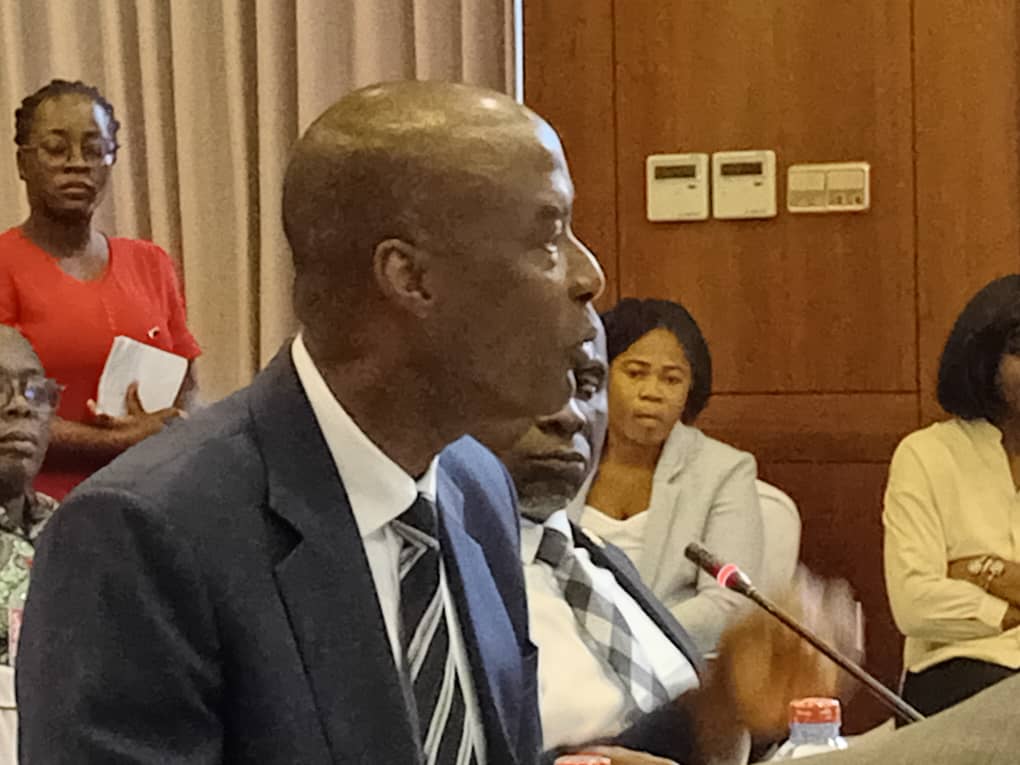
“There is nothing that I disagree with in the presentation,” he noted.
Some of the stakeholders present expressed doubt about the ability of the Fiscal Council to execute its mandate effectively if it remains an advisory body as prescribed by Act 1136.
They noted that the Council’s advice will be ignored by the political leaders. Touching on the independence of the Council, they cited independent bodies such as the Bank of Ghana and alleged that the apex bank experiences political interference. They further referred to possible change in the leadership of the Council when governments change.
Addressing these concerns, Mr Nomo expressed the view that it is incumbent on the members of the Council to assert their mandate when such interferences arise.
The Member of Parliament for Ofoase-Ayirebi, Kojo Oppong Nkrumah called for regular publication of fiscal data to enhance the work of the Council.
“To ensure data credibility and integrity, data should be made available so that Civil Society Organisations can make informed comments on the performance of the Council,” he suggested.
The IMF representative at the event also assured of the needed support for the Council.
“We will work with government every step of the way,” he said.
Other stakeholders stressed the importance of accurate and timely availability of data for the effective functioning of the Council. They included representatives from Bank of Ghana, German Development Cooperation, British High Commission, Ghana Association of Banks.