
The Government of Ghana has unveiled reforms aimed at revitalising the country’s fisheries sector, restoring depleted marine resources, strengthening governance, expanding aquaculture, and positioning the industry as a major pillar of the nation’s Blue Economy.
The reforms, spearheaded by the Ministry of Fisheries and Aquaculture Development, are expected to enhance food security, create sustainable jobs, attract private investment, and safeguard the livelihoods of millions of Ghanaians who depend directly and indirectly on fishing.
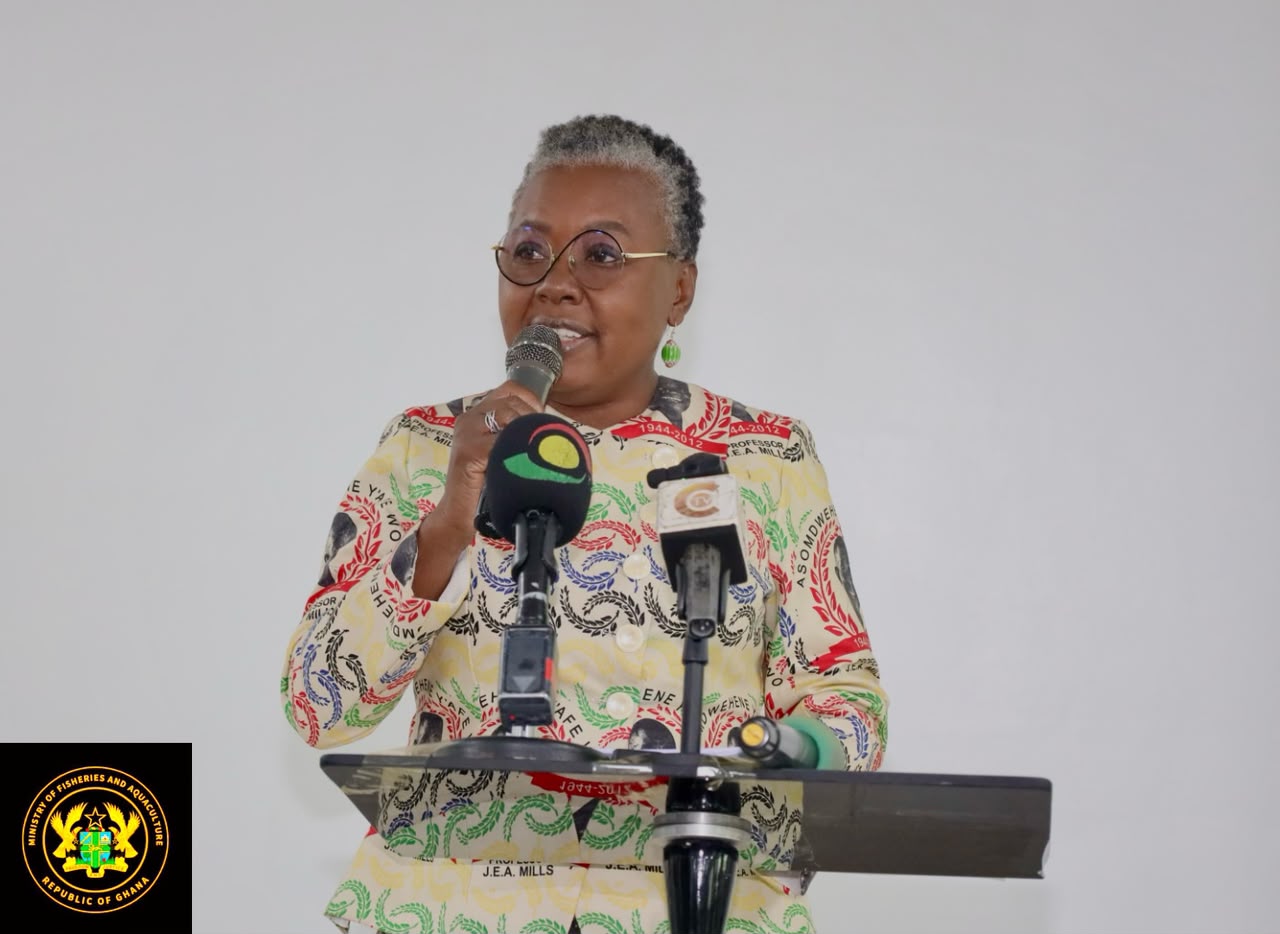
Speaking at the Ministry’s Mid-Year Media Engagement in Accra, the Minister for Fisheries and Aquaculture, Emelia Arthur, said the reform agenda, which has been implemented since January 2025, seeks to reverse years of declining fish stocks, combat illegal fishing, improve service delivery, and build a more resilient and sustainable fisheries sector.
She described the fisheries industry as one of Ghana’s most strategic economic sectors, noting that it supports the livelihoods of more than three million people while providing approximately 60 percent of the country’s animal protein needs.
“The future of Ghana’s fisheries depends on sustainable management, stronger enforcement and increased investment in aquaculture. These reforms are intended to secure that future while creating new economic opportunities for our people,” the Minister said.
One of the centrepieces of the government’s reform programme is the enactment of the Fisheries and Aquaculture Act, 2025 (Act 1146), which replaces the Fisheries Act of 2002 and introduces sweeping institutional and regulatory changes.
According to the Minister, the new law significantly strengthens the Fisheries Commission by providing it with broader regulatory and enforcement powers.
The legislation also establishes a dedicated Fisheries Enforcement Unit to improve compliance with fisheries regulations and tackle illegal, unreported and unregulated (IUU) fishing activities.
Other key provisions include the establishment of a Fisheries and Aquaculture Development Fund to support sector financing, the creation of aquaculture development zones to boost fish farming, and the extension of the Inshore Exclusion Zone to 12 nautical miles to better protect artisanal fishers and critical fish breeding habitats.
The government believes these measures will contribute significantly to rebuilding fish stocks while ensuring long-term sustainability of Ghana’s marine resources.
As part of efforts to restore marine ecosystems, the Minister announced the establishment of Ghana’s first Marine Protected Area (MPA) at Greater Cape Three Points.
The protected area spans approximately 704 square kilometres and is expected to benefit 21 coastal communities through improved fish stock recovery, biodiversity conservation and enhanced climate resilience.
Marine Protected Areas are globally recognised as effective tools for allowing fish populations to regenerate, protecting breeding grounds and supporting sustainable fisheries management.
However, the Minister expressed concern over illegal mining activities around the Cape Three Points Forest Reserve, warning that pollution from galamsey operations poses a serious threat to the marine ecosystem.
She said contaminated water flowing into rivers and eventually the sea could undermine conservation efforts and negatively affect fish reproduction and biodiversity.
The Minister reiterated government’s commitment to eliminating illegal fishing, describing it as one of the greatest threats facing Ghana’s fisheries sector.
She said authorities have strengthened surveillance through improved logistics, electronic vessel monitoring systems and enhanced enforcement operations.
According to her, recent prosecutions of offenders demonstrate government’s resolve to enforce fisheries laws without compromise.
Illegal fishing, particularly practices such as light fishing, the use of prohibited nets and chemicals, and industrial vessels operating illegally within artisanal fishing zones, has long contributed to declining fish stocks and reduced incomes for coastal fishing communities.
The Ministry believes stronger enforcement under the new legal framework will help restore confidence in fisheries management while protecting legitimate fishers.
Premix Fuel Reforms Improve Transparency
The Minister also highlighted reforms in the premix fuel distribution system, describing them as a major step toward improving accountability.
Between January and June 2026, government supplied 22.41 million litres of premix fuel to fishing communities across the country an increase of more than 58 percent compared with the same period in 2025.
She attributed the improvement to reforms that include digital tracking systems, automated fuel dispensing stations and stronger financial oversight mechanisms.
The new system, he said, is helping reduce leakages, improve transparency and ensure that subsidised premix fuel reaches genuine beneficiaries.
To reduce Ghana’s dependence on imported fish and increase domestic production, the Ministry is accelerating investment in aquaculture.
Among the flagship initiatives is the Komfueku Aquaculture Project, which is converting abandoned clay and quarry pits into productive commercial fish farms.
The initiative is expected to increase fish production while creating employment opportunities for young people and communities located near former mining sites.
The Minister said government is also encouraging private sector participation in fish farming to meet the country’s growing demand for fish.
In another significant development, Ghana has issued its first provisional licence for commercial offshore mariculture.
The licence paves the way for commercial farming of high-value marine species including cobia, red snapper and pompano.
The Ministry believes offshore mariculture has enormous potential to diversify fish production, reduce pressure on wild fish stocks and attract investment into Ghana’s emerging Blue Economy.
Industry experts have identified marine aquaculture as one of the fastest-growing food production sectors globally, offering opportunities for exports, job creation and technology transfer.
Blue Economy Strategy Completed
The Minister further disclosed that government has completed a National Blue Economy Strategy and Policy Framework aimed at unlocking investment across ocean-based industries.
The framework covers fisheries, aquaculture, maritime transport, coastal tourism, marine conservation and other sectors that rely on sustainable use of marine resources.
According to him, the strategy will guide public and private sector investments while promoting environmentally responsible economic growth.
Looking to the future, the Minister said the Ministry’s priorities include intensifying the fight against illegal fishing, accelerating aquaculture development, modernising fisheries infrastructure, strengthening scientific research and fisheries management, and fully implementing the Fisheries and Aquaculture Act.
She stressed that achieving these goals would require strong collaboration among government agencies, fishing communities, development partners, investors, civil society organisations and the media.
“The transformation of Ghana’s fisheries sector cannot be achieved by government alone,” she said. “It requires collective commitment to protecting our marine resources while ensuring they continue to provide livelihoods, food security and economic opportunities for future generations.”
With the new reforms now taking shape, government hopes to reverse years of declining fish stocks and build a fisheries sector that is more productive, sustainable and capable of contributing significantly to Ghana’s broader economic transformation under its Blue Economy agenda.