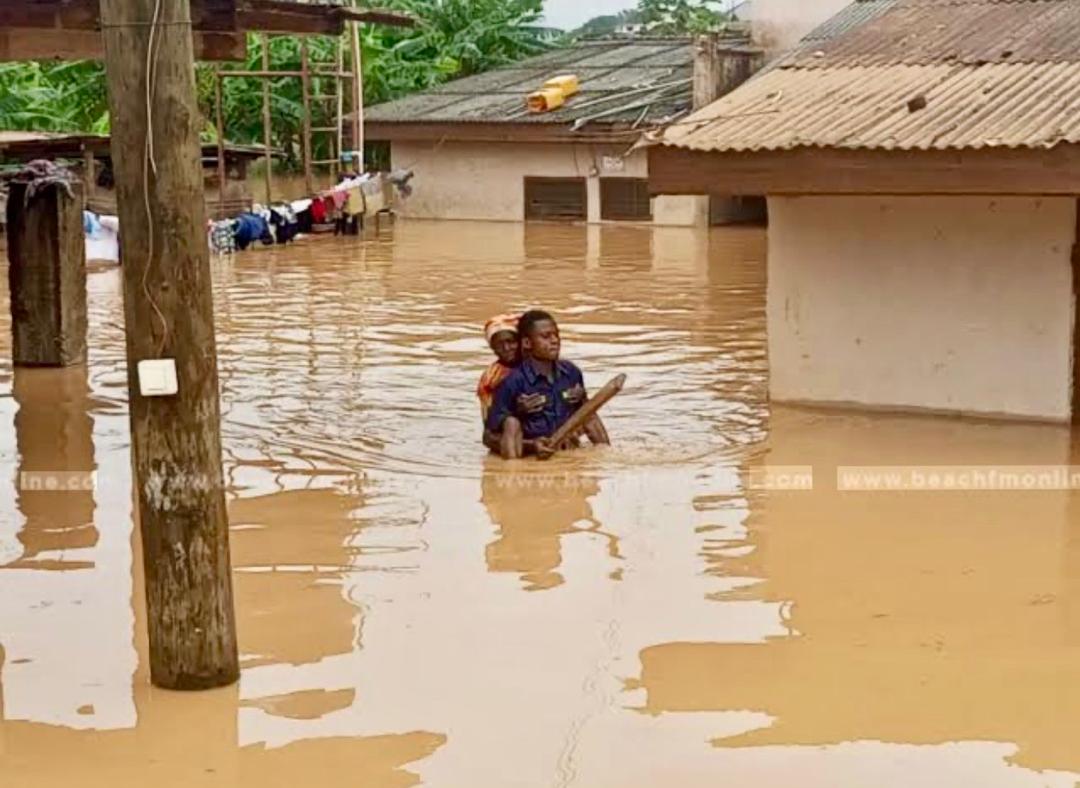

An Urban Development advocate is calling for an urgent citywide drainage audit in Sekondi-Takoradi.
He makes the point that authorities have been asking the wrong questions about flooding while ignoring the most critical one: Where does the water go?
Richard Addison, Ghana Country Lead for the Commonwealth Alliance of Young Entrepreneurs – Africa (CAYE Africa), says recurring floods across the metropolis cannot be solved by simply desilting gutters or blaming indiscriminate development.
Instead, he believes authorities must comprehensively trace the entire drainage network, from roadside gutters and culverts to the streams, wetlands, lagoons and the sea where stormwater is ultimately expected to discharge.

His call comes at a time when flooding-related incidents have once again exposed the vulnerability of Sekondi-Takoradi’s infrastructure.
Within the past week, torrential rains triggered a mudslide that caused the collapse of a storey building at Pariscoa in Sekondi. The same rains also contributed to a landslide at the Albert Bosomtwi-Sam Fishing Harbour, toppling a high-voltage electricity pole onto a premix fuel station and sparking a devastating fire that destroyed several properties.
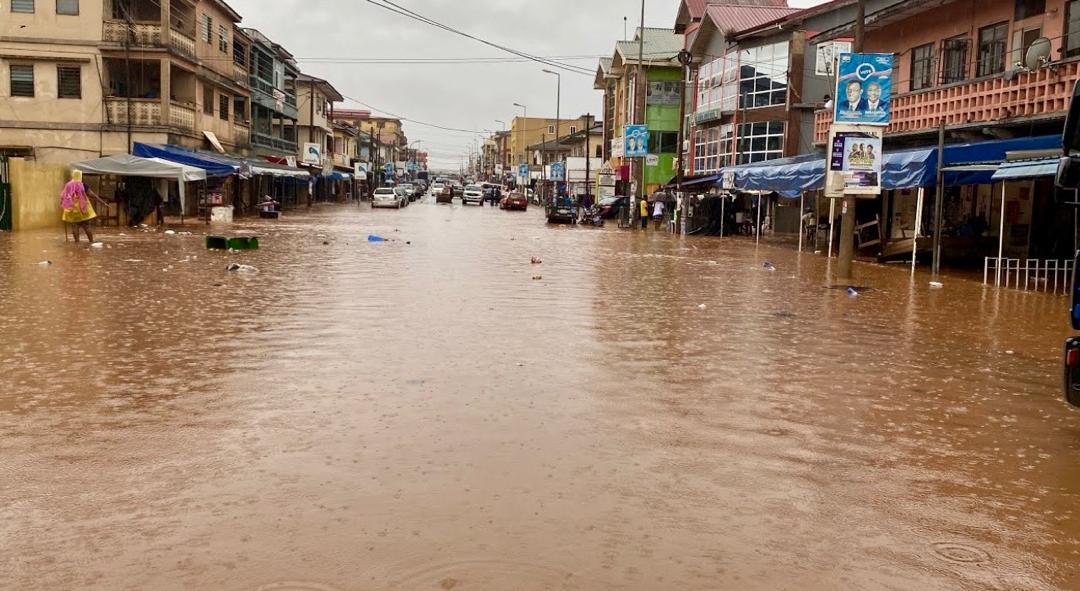
In recent weeks, concerns have also been raised over flooding at the Sekondi Central Prisons, while engineers have been battling blocked waterways beneath the newly constructed Apremdo Bridge after one of its three spans became obstructed, restricting the free flow of the Whin River and increasing flood risks in surrounding communities.
Against this backdrop, Richard Addison argues that discussions about flooding have become overly focused on symptoms rather than the underlying hydrology.
“Whenever flooding occurs, we often hear the same explanations: people are building on waterways, drains are choked with waste, silt and rainfall is becoming more intense. All of these are valid concerns,” he said in a letter copied to ConnectNews.
“But I believe we are overlooking a more fundamental question: Where does the water go?”
According to him, Sekondi-Takoradi already has an extensive network of gutters, culverts and storm drains. The real issue, he argues, is whether these engineered systems still connect to functioning natural drainage pathways.
“Rainwater naturally flows from higher elevations through streams, rivers, wetlands and lagoons before emptying into the sea. However, when these natural channels are narrowed, blocked, silted up or encroached upon by development, stormwater loses its exit routes and inevitably spills onto roads, into homes and across entire communities.”
To address the problem, he is proposing a comprehensive citywide drainage audit to answer five critical questions:
• Where does every major drain in Sekondi-Takoradi end?
• Are the discharge points clear and functioning?
• Have natural streams and waterways been encroached upon?
• Are lagoons and coastal outfalls capable of handling heavy rainfall?
• How frequently are these drainages and their routes inspected and maintained?
He believes the findings would provide city authorities with a scientific basis for restoring blocked waterways and protecting the natural systems that have historically conveyed stormwater safely to the sea.
“If we can map, restore and protect the pathways that carry water from our communities to the sea, we would solve a significant part of the flooding problem in Sekondi-Takoradi and many other parts of Ghana.”
The proposal comes as public debate over flooding intensifies nationwide, with experts increasingly arguing that government must move beyond reactive desilting exercises towards integrated urban water management that combines engineering, environmental protection, land-use planning and routine maintenance.
For Mr. Addison, the distinction is an important one. “Flooding,” he argues, “is not simply a drainage problem. It is a water management problem.”
By Eric Yaw Adjei