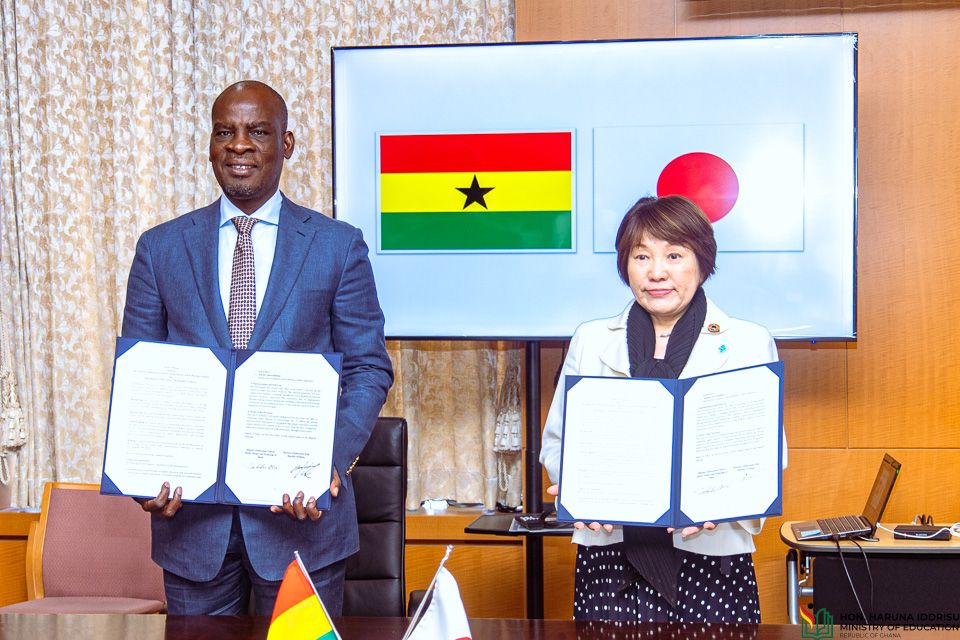

Ghana and Japan have cemented a new era of educational cooperation aimed at promoting sustainable development, digital innovation, and inclusive learning.
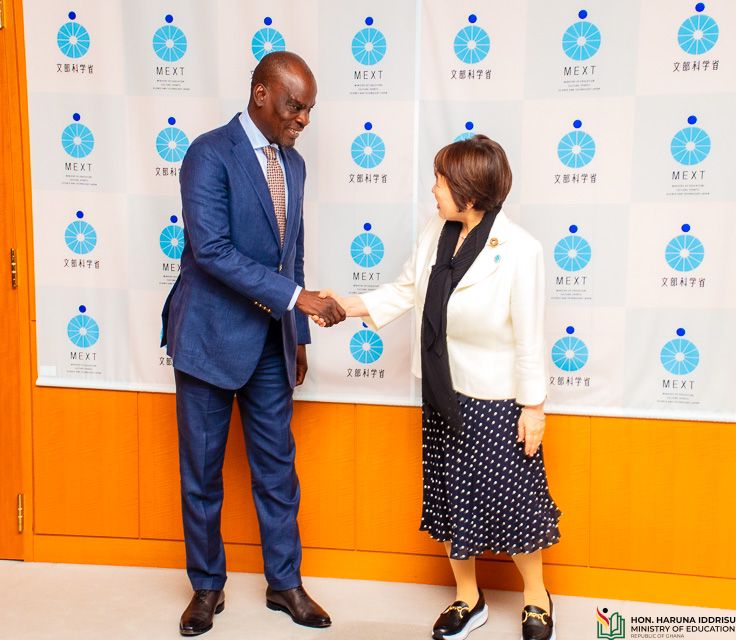
The historic bilateral agreement was formally signed in Tokyo by Ghana’s Minister for Education, Haruna Iddrisu, and Japan’s Minister of Education, Culture, Sports, Science and Technology ( MEXT), ABE Toshiko.
The agreement outlines a bold, forward-looking vision to transform Ghana’s education landscape by integrating key principles of Education for Sustainable Development (ESD), enhancing digital literacy, and expanding opportunities in science, technology, engineering, and mathematics (STEM).
Key priorities under the partnership include:
• Strengthening teacher training and co-developing curricula to build institutional capacity
• Promoting green skills development in Technical and Vocational Education and Training (TVET)
• Scaling up STEM education and digital innovation to foster environmental awareness and problem-solving
• Facilitating student exchanges and joint research at the tertiary level to tackle global sustainability issues
• Embedding ESD values in schools and communities to cultivate globally responsible citizens

A standout feature of the agreement is the introduction of comprehensive coding courses across Ghanaian schools, aimed at equipping students with vital digital competencies for the future job market.
Minister Iddrisu lauded Japan’s long-standing support for Ghana’s education sector, describing the partnership as “strategic, timely, and transformative.” He highlighted Japan’s global leadership in ESD, particularly through initiatives such as the UNESCO ESD Centre in Okayama and the regular hosting of World Conferences on ESD.

“This collaboration reflects our shared conviction that education is the cornerstone of peaceful, resilient, and sustainable societies,” Minister Iddrisu said. “Japan’s community-based learning models and environmental stewardship offer valuable inspiration for Ghana’s education reforms.”

The agreement aligns with Ghana’s Education Strategic Plan (ESP 2018–2030) and broader efforts to transition to a knowledge-based economy. It also reinforces Ghana’s commitment to achieving the UN Sustainable Development Goals, especially SDG 4: quality education for all.
Japan’s support through the Japan International Cooperation Agency (JICA), the Sakura Science Exchange Program, and teacher development projects continues to drive substantial impact in Ghana’s education system.
As both nations commit to deeper collaboration, the partnership is expected to deliver long-term benefits not only for Ghana and Japan but also for global efforts to create more equitable and sustainable education systems.