
A new study by UNICEF Ghana has revealed that Ghana is investing too little, too late, and unevenly in children, particularly during the critical early years of life when investments yield the greatest returns.
The report, titled “Unlocking Potential Early: Rebalancing Public Spending for Children in Ghana,” is the country’s first age-based analysis of public spending on children from pregnancy through age 17.
According to the study, children aged zero to five receive only 13 percent of public spending despite making up about one-third of Ghana’s child population. It also found that children from the wealthiest households receive nearly twice as much public investment per person as those from the poorest families.
The findings show that while Ghana has made progress in areas such as immunization, under-five mortality reduction and pre-primary education, major gaps remain in nutrition, birth registration, child protection and social welfare services.
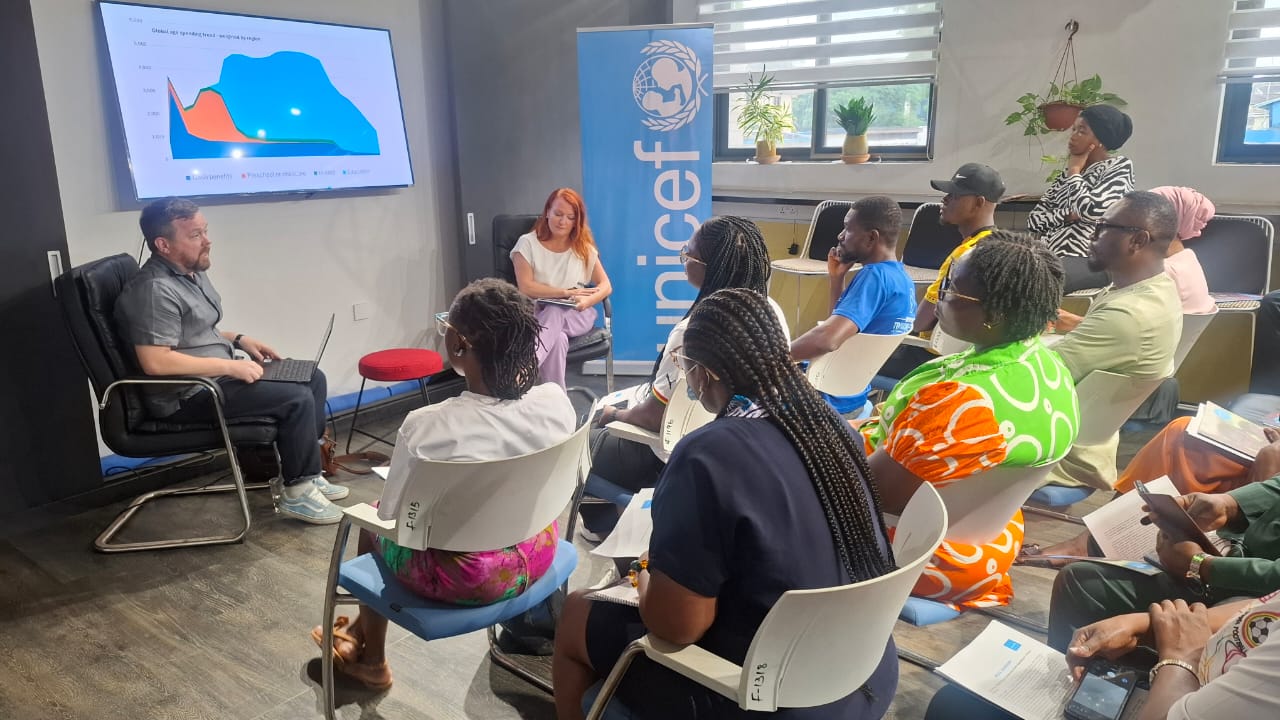
During a media briefing on June 18, UNICEF officials said public spending remains heavily concentrated in education, which receives 3.1 percent of GDP, while social protection, health and child protection sectors receive significantly less funding.
The Chief Social Policy, UNICEF Ghana Pauliina Sarvilahti is certain Government can do better to make a difference.
“When public investment arrives late and is unevenly distributed, inequalities begin early and become harder and more costly to reverse. The study shows that public spending choices can either reinforce disadvantages or help break its cycle, particularly for children from poorer households.
The government needs to spend more, spend earlier, and spend more fairly across childhood. The economic benefits remain enormous studies has proven. ’’ She noted.
The report comes as Ghana begins implementing its Early Childhood Care and Development Policy and argues that investing earlier and more fairly in children could transform outcomes nationwide.
Dominic Richardson, Lead Researcher and Managing Director of the Learning for Well-being Institute who made a presentation of the study maintains Implementing reforms gradually and strategically, using the Early Childhood Care and Development (ECCD) Policy (2025–2035) as the framework for sequencing and scale up is one sure way to go.
‘‘Our modelling shows that a comprehensive, balanced package of investments, estimated at 7.2% of GDP could produce rapid and measurable gains. Child poverty would be eliminated within three years. Up to 18,000 premature child deaths would be averted. Significant reductions in stunting and 100% vaccination coverage. Achieve near universal birth registration. Improved school readiness and enrolment as more children enter school prepared to learn.’’ He emphasized.
Researchers estimate that a comprehensive child-focused investment package costing about 7.2 percent of GDP could eliminate child poverty within three years, prevent up to 18,000 premature child deaths, reduce child stunting, achieve full vaccination coverage and improve school readiness across the country.
UNICEF is urging policymakers to increase investments in young children and ensure resources reach the most vulnerable families to secure Ghana’s future human capital development.
By Sarah Apenkroh